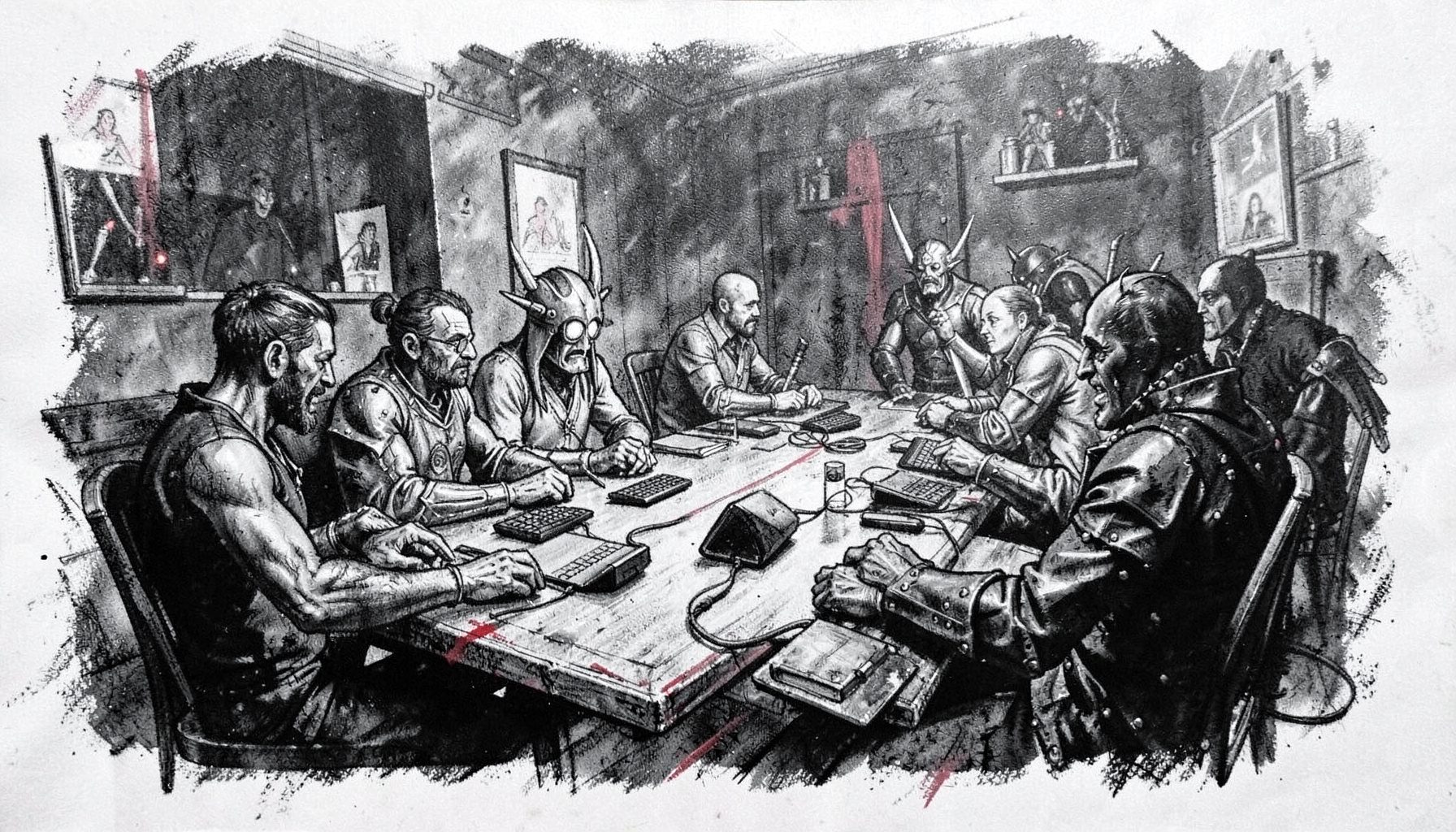
A first-timer's guide to LARP combat etiquette in Australia
Most Australian live-action roleplay groups welcome newcomers warmly, but the unspoken rules of LARP combat can feel opaque the first time you swing a foam sword. Etiquette is not about being precious or pedantic; it is the shared language that keeps the blow firmly on someone else's shoulder instead of their eye. Get it right and you build trust, make fast friends, and get invited back to the next skirmish.
Australia has its own flavour of live combat, blending American system imports such as Amtgard and Belegarth with homegrown fantasy and post-apocalyptic campaigns. Climate, gear availability, and the local habit of softening requests with "no worries, mate" all shape how the scene runs in cities from Melbourne to Perth. Knowing the broad strokes before you turn up means you can focus on the story rather than fumbling through the marshalling protocol.
What LARP combat looks like across Australia
The Australian LARP landscape is fragmented by distance. Live Combat branches run in most capital cities, and you will also find distinct fantasy quests in regional Victoria, light-touch combat in suburban Brisbane parks, and full-contact campaigns scattered through Western Australia. Different groups favour different rule sets: Amtgard chapters emphasise fast-paced martial tournaments using boffer weapons, while Belegarth-influenced events lean into heavier fantasy skirmishes with latex-coated blades. Some Aussie groups run shorter one-shot days at hireable scout halls, while others run weekend-long narrative battles.
If you are weighing up a major international event for comparison, the HLG Con LARP track gives a useful sense of how American conventions run dedicated combat programming. Local equivalents here tend to be smaller, more volunteer-driven, and frequently staged at scout halls, adventure parks, or rural campgrounds where camping gear and a decent esky are part of the kit list.
The gear check that happens before the first swing
Most Australian groups run a mandatory pre-game inspection. Weapons are pulled from bags, flexed by hand, and given a clean thwack against the marshal's forearm. Any blade showing a hard core, exposed point, or weak seam gets pulled out of play until repaired. This ritual exists because Australian weapon laws sit in a peculiar grey zone: foam weapons are generally welcome at private events, but public parks sometimes require genuine boffer construction, and some councils draw the line at openly carried latex blades. Always check the rules of the venue and the state you are playing in.
Personal protective gear is non-negotiable for full-contact systems. Expect to wear closed-toe boots, a fitted fencing mask, and sturdy gloves. Many Aussie groups insist on ASTM-rated fencing masks, especially for younger players. Off-the-shelf kits in AUD vary widely, so borrow where you can before committing to a full setup, and remember that taping down loose straps takes thirty seconds and prevents most of the boring injuries.
Calling your hits and responding to safety calls
The single most important combat habit is calling your own hits honestly. Every Australian system you will encounter runs on an honour model: you shout "Hit!" or tap the spot, and the opponent drops as if struck. No one is hiding behind a tree waiting to ambush without consent, and no one is denying a clean shot. Disputes are settled by marshals, slow-motion replay on a phone, or quiet conversation off the field.
You will also hear "Hold!" and "Safety!" called across the battlefield. "Hold!" freezes everyone in place when a real-world hazard pops up, such as a snake in the grass, a kid on a bike, or a dropped weapon someone is racing to retrieve. "Safety!" flags that a strike landed somewhere sensitive, like the groin, throat, or back of the head; the player takes the hit but adjusts their positioning afterwards. Treat every safety call as immediately binding and never argue one in the middle of the action.
Stances, range and moving through the field
Good stance is the unsung hero of LARP safety. Feet roughly shoulder-width, knees soft, weapon held so its tip sits at your opponent's shoulder height when parried. Overextended lunges are dangerous because they encourage both players to lean into a strike zone. Most Australian groups frown on grappling, full-body checks, or any move that requires you to be airborne, and organised combat sports such as bohurt-style duels run on stricter contact rules than open-field battles.
Engagement range matters more than people realise. Close enough that your blade, at full extension, lands within a hand-span of their torso; too far and you reach, too close and your weapon becomes a poking stick rather than a sword. Hot Australian summers add an extra wrinkle: foam gets slicker when sweaty, dust from dry grass softens protection, and the call for water breaks is constant. Listen to the marshal when they call a heat pause, because pushing through is how people get hurt.
Staying in character without crossing the line
In-character combat stays in character. You can growl a war-cry, feint aggressively, or perform a flashy finishing move, but you cannot follow it up with real-world trash talk. Australian players tend to mix larrikin humour with roleplay, and the line between banter and offence is usually respected through body language as much as words. If a player steps offline with the phrase "off-game" or touches your shoulder with an open palm, the scene pauses for both of you to sort yourselves out.
Real names stay outside the ring. Mix your character's personality generously, lean into accents if that is your thing, and leave modern slang at the gate. Treat the currency of etiquette the same as you would in any other storytelling circle: never describe your opponent's reaction in a way they cannot consent to, especially regarding romance, permanent injury, or humiliation. Consent-based combat is the rule, not the exception.
Working with marshals and other players
Marshals are referees, not referees-on-the-take. They watch for dangerous play, resolve hit disputes, and hold the pace of the engagement. In Australia, volunteering as a marshal is one of the fastest ways to learn a system and earn the trust of regular groups. Speak to a marshal as a beginner and you will usually find yourself partnered with one for the first hour, which means less guesswork and more actual fighting.
Disagreement happens. An Aussie player will often call "ref" loudly, then go for a chat. Keep the conversation off the field, off-character, brief, and focused on what you saw rather than what you think happened. If you cannot resolve it, the marshalling team decides and everyone moves on. Bringing a real grievance back into a tavern scene ruins the night for everyone, so save it for the post-game debrief at the local pub.
After the fight: sportsmanship and gear care
Post-game etiquette is as Australian as it gets. Players shake hands, swap tips, share a drink, and check on the newer fighters to see how they went. If you took someone down in a memorable duel, buy them a lemonade at the nearest servo; small gestures of respect carry further here than grand speeches. Some groups even host a quick "lessons learned" circle on the grass after the final call, which is the fastest way to absorb local nuance.
Look after your kit before you leave the field. Patch any tape jobs, shake the dust out of masks, and leave loaner gear cleaner than you found it. Public liability insurers for major sites often inspect gear on the way out, especially for younger players. If you are weighing up formal event participation, look at how convention booking flows handle waivers and sign-ups before you commit; pages such as HLG Con's registration hub give a reasonable template of what a clear, beginner-friendly sign-up process looks like for larger events.
| Weapon type | Construction | Common in | Durability | Approx. AUD cost |
|---|---|---|---|---|
| Boffer | PVC core, foam pipe insulation, duct tape | Amtgard, Belegarth, intro kits | Moderate, repairs easy | $15 to $45 |
| Latex-hybrid | Foam blade dipped in latex | Live Combat Australia, some Bel chapters | High | $60 to $180 |
| Padded single-piece | Compressed foam, no internal core | Beginner events, park one-shots | Moderate | $20 to $55 |
| Calimacil-style | Layered foam with reinforced latex | Empire, Dystopia Rising, premium fantasy | High | $80 to $250 |
| Replica-blank blade | Aluminium or rubber training blade | Rare in Australian LARP, more common in HEMA | High | $80 to $200 |
Quick etiquette checklist before the first fight
- Bring a mask, gloves, and a water bottle. The first fight is rarely the last of the day, so plan for sun and heat.
- Arrive ten minutes early for the gear check. Marshals love a newcomer who has already skimmed the rules PDF.
- Bow or salute before and after each engagement, even a quick one. The ritual cements the boundary between play and reality.
- Call your own hits loudly enough for the opponent to hear across the field. Quiet calls invite confusion and bad feeling.
- Step out of bounds the moment you hear "Hold!". Do not finish your swing, even if it is mid-arc.
- Ask after the fight is over. A simple "good scrap?" travels further than any tournament victory.
- Patch your kit on site, not in the car park on the drive home. Most groups keep a community repair kit for exactly this reason.
Good etiquette lives in the gaps between the rules, and it pays off well past the next skirmish. Treat the day as a small apprenticeship: bow, call your hits, hydrate, ask the marshal one good question, then patch your kit before you load the esky. Do this once and the field will treat you like a local by the next gathering.