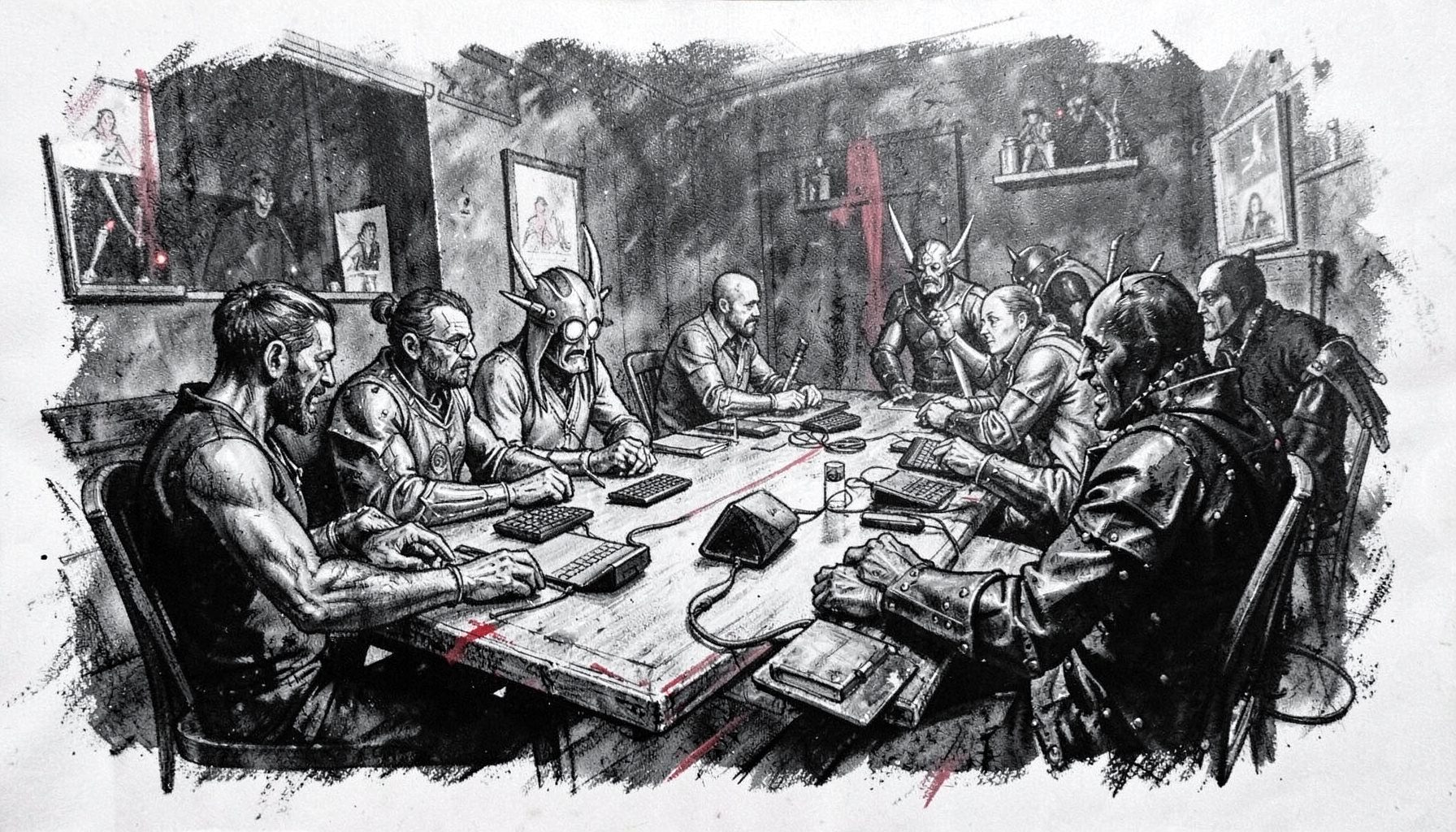
Crowdfunding your tabletop game: lessons from the HLG Con floor
The Crowdfunding Your Tabletop Game Project panel at High Level Games Convention (HLG Con) 2018 pulled a standing-room-only crowd into one of the smaller programming rooms at the Showboat Hotel. Five creators, all running or about to launch campaigns on Kickstarter, BackerKit Crowdfunding, and Gamefound, swapped notes about timelines, fulfilment, art budgets, and the hidden labour of running a public pre-order. The conversation ran well past the scheduled ninety minutes, with audience members trading tips in the hallway afterwards.
This recap distils the most useful threads from that discussion. It is written for Australian creators in particular, since shipping tiers, GST obligations, and platform availability all shape the local market in ways that US-focused guides rarely cover. The advice below is meant to complement, not replace, the practical sessions already documented in resources like a guide to running a small press RPG booth.
The voices at the panel
The panel moderator was a veteran of the indie RPG scene who had shipped seven successful campaigns since 2014, including several physical zine-sized titles. Beside him sat a Melbourne-based solo creator whose narrative horror game had crossed its funding goal in 19 hours, a Sydney couple running a deluxe tarot-deck-adjacent oracle project, a Brisbane-based artist-publisher launching a hexcrawl anthology, and a Perth designer workshopping a sci-fi heartbreaker that was still two months from going public.
What made the discussion stick was the range of scales on display. The Melburnian had shipped his game to backers in eleven countries and now operates a small warehouse in Brunswick. The Brisbane pair were running their second campaign after a modest first outing that taught them the cost of premium packaging. The Perth designer was candidly asking the room about whether to even use Kickstarter, given her modest audience of about 400 newsletter subscribers and tight margins on a small print run.
Picking the right crowdfunding platform
Choosing where to host a tabletop game campaign is less about prestige and more about audience fit, fees, and post-campaign tools. The panel compared four commonly discussed options used by Australian creators, drawn from their own production pipelines:
| Platform | Best suited to | Fees and currency | Post-campaign tools | Australian creator considerations |
|---|---|---|---|---|
| Kickstarter | Established communities, big physical rewards | 5% platform fee, ~3-5% processing; charges in USD | BackerKit pledge manager integration, no built-in PM | Funds arrive in USD; conversion eats roughly 2-4% depending on bank |
| BackerKit Crowdfunding | Niche RPGs and comics, audience that prefers one-page checkout | 3% platform fee, payment processing extra | Native BackerKit pledge manager after the campaign | Payouts in AUD via Stripe; cleaner GST reconciliation |
| Gamefound | Indie board games and zines, EU-friendly audience | 5% plus payment fees, EUR/USD/AUD | Built-in pledge manager and shipping tax tools | Strong EU reach but smaller Australian backer base |
| Pozible | Creatives, low-dollar narrative projects | 5% over $10k AUD, otherwise nil | Manual fulfilment through creator | All-AUD accounting and consumer protections familiar to local backers |
Each panelist had a story about a platform feature that saved or sank their campaign. The Melburnian credited BackerKit's add-on store with turning a modest overfunding into 30% more revenue than expected, while the Sydney pair said they would never launch another Kickstarter without a pledge manager attached.
Building an audience before the banner drops
One of the clearest through-lines was that the campaign begins twelve months before launch day, not twelve days. The Melburnian walked through his own funnel: weekly TTRPG Actual Play streams on Twitch from a home studio in Brunswick, a Substack with deep design diaries, paid playtest slots through Start Playing Games, and a presence at local conventions including the tabletop sections of PAX Australia in Melbourne.
The Perth designer used a different approach. She had built her audience by running a long-running home campaign that she serialised into a podcast and posting weekly maps to a Patreon. When she eventually announced a game, she had roughly four hundred paying subscribers and a waitlist that filled her first-week funding goal before the timer started.
Practical habits the panelists recommended for audience-building in Australia included attending smaller state shows like SMG Con in Sydney, BrisCon in Brisbane, and Convict Way in Hobart before chasing the bigger expos. Opening your mailing list to local game stores such as Mindgames in Melbourne or Guf in Sydney was framed as a partnership channel, while commissioning cover art from Australian illustrators kept production local and offered visible artist collaborations to document, a topic covered in the program guide feature on HLG Con artists.
Money, shipping, and the Australian reality
The most practical block of the panel was a frank walk-through of what a tabletop campaign actually costs in Australia. The panelists agreed on a few figures that often surprise first-time creators. Print runs quoted by manufacturers in China typically come back in USD, and currency hedging through services like OFX or Wise eats into margins unless you batch payouts. Shipping within Australia is broadly affordable through Australia Post or Startrack, but international rates quoted by BackerKit can spike by 40-60% during the November peak.
Then there is the regulatory layer. Australian creators who hit $75,000 AUD in turnover must register for GST, and once you cross that threshold every backer pledge technically counts as taxable consideration. The panel discussed whether to register earlier in order to claim input credits on shipping supplies, art commissions, and platform fees. A few had structured their first campaign under the threshold deliberately, using a stretch goal to bridge into a registered second project once revenue stabilised.
The Brisbane pair shared a cautionary tale about packaging upgrades. They had promised linen-wrapped hardcovers in their stretch goals without accounting for the heavier dimensional weight, and ended up reimbursing more than fifty backers for additional postage. The lesson crystallised into a piece of advice that came back several times during the convention: never promise a tier before quoting the shipping carton.
Communication and creative voice
A second block of the session focused on how creators talk to backers. The moderator pushed back gently on the instinct to write every update like a press release, arguing that the updates themselves are the product. The Sydney couple had used a monthly developer diary with hand-drawn maps, and found that open rate stayed above 60% well past fulfilment. The Melburnian favoured weekly internal essays tagged for backers only, treating the campaign as a long-running serial rather than a single product launch.
For creators documenting their process for marketing and backer outreach, a clear style guide saves hours of dithering. The panel referenced the kind of internal documentation curated for community-facing projects, including a practical style guide for transparent writing, as a useful starting point for tone and structure. Several attendees asked about how to handle negative comments and refund requests, and the consensus was that a brief, non-defensive reply posted publicly tends to defuse most disagreements.
Pitfalls the panel had lived through
The closing thirty minutes were given over to mistakes, and the panelists seemed almost relieved to share them. One had failed to trade-mark a logo before launch and spent six months fighting a clone campaign with a similar name. Another discovered mid-fulfilment that their print-on-demand partner in Adelaide had quietly raised unit prices by 18%, leaving her with a stretched budget and a difficult choice between dipping into personal savings or shipping later. A third had funded successfully but refused every post-campaign retail enquiry for a full year, accidentally signalling to distributors that his studio was hard to work with.
The group agreed on a short list of habits that would have softened those blows, which they offered as concrete starting points for first-time creators about to launch within the year.
Practical steps for Australian creators preparing to fund their first or next tabletop project:
- Run a soft launch with two tester tiers and a closed beta at least four weeks before public to stress-test fulfilment math
- Factor GST registration timing into your stretch goal ladder, not after the campaign closes
- Quote shipping from your actual fulfilment warehouse, not from a calculator, and add a 25% buffer for peak surcharges
- Reserve a budget line for legal trade-mark searches on the title, subtitle, and any prominent artwork before the campaign goes live
- Build a one-page tone-of-voice sheet for updates, customer service replies, and post-campaign marketing
- Set a personal cap for evenings spent on community moderation, and stick to it to avoid burnout during the final 72 hours
- Treat your convention circuit as research, not just sales; walking booths and talking to publishers at shows such as SMG Con is a free education in what is being stocked, what art styles shelve, and which distributors are actively hunting for new Australian titles
The most lasting message from the panel was that a tabletop campaign is less a product launch and more a long, public, two-year conversation about what kind of publisher you want to be. The room left with the practical reminder to budget energy for that two-year arc, pick a community that shares your working rhythm, and ship on the timeline you would expect as a backer yourself. That is the rhythm the Australian indie scene is still learning to protect, and it is the work that begins the day you start building your list rather than the day you press launch.