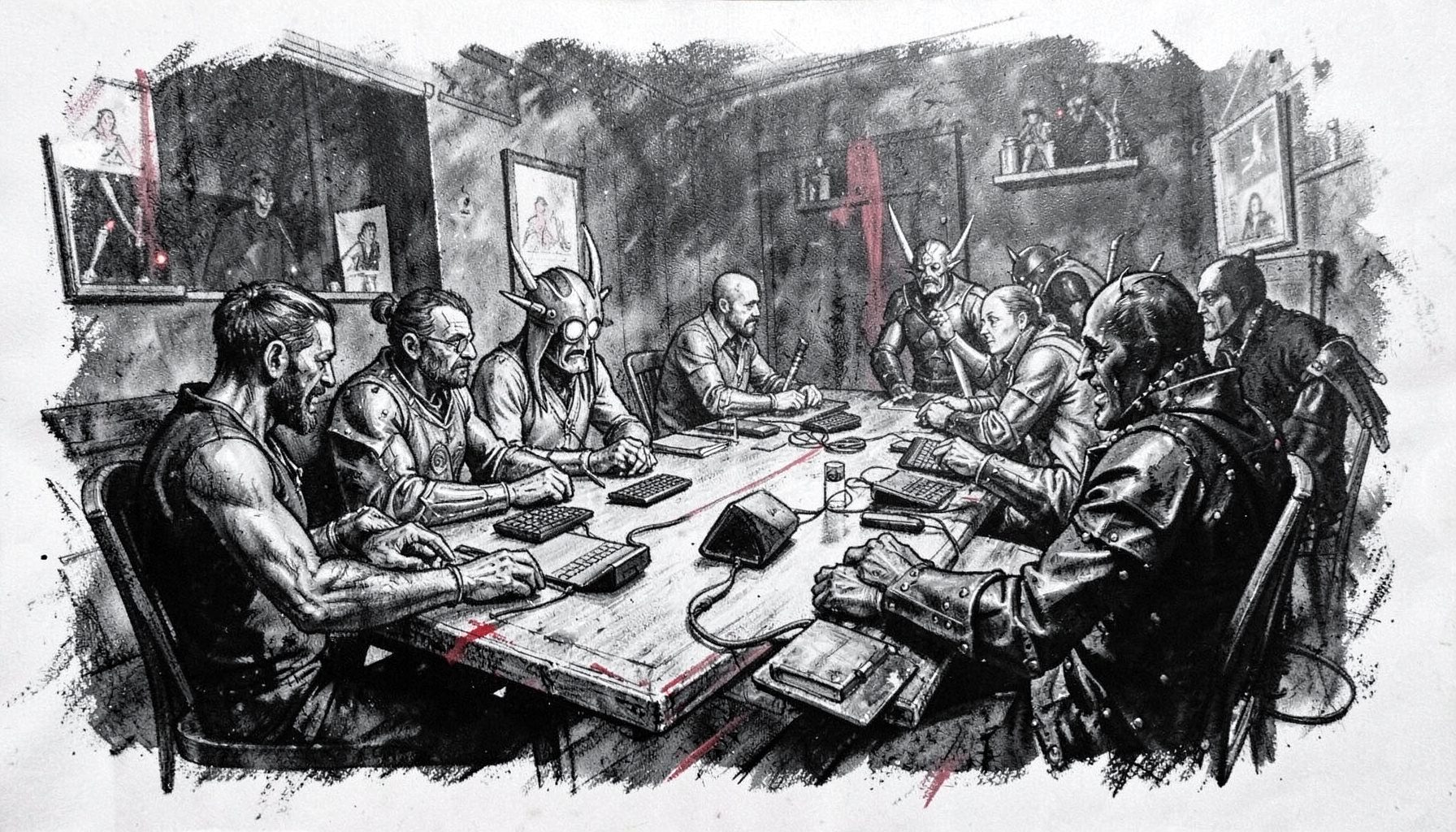
Improv wisdom for gamers from the HLG Con workshop
The Showboat Hotel in Atlantic City buzzed with dice clatter and animated conversation during High Level Games Convention in 2018. Tucked into a busy corridor, the "Improvisation for Gamers" workshop drew a packed crowd of dungeon masters, players, and curious onlookers. The session promised to translate improv theatre techniques into practical tools for tabletop role-playing games, live-action role-play, and collaborative storytelling. Run by experienced facilitators, the workshop blended exercises, games, and conversation in the kind of format that rewards participants who show up ready to play. Between sessions, attendees could wander the exhibitor hall or grab a meal nearby, with dining near the Showboat covering plenty of options within walking distance.
Many Australian tabletop groups already embrace a casual, story-first style of play, whether they meet in Brisbane loungerooms, Perth gaming cafes, or community halls in regional towns. The lessons shared at that workshop resonate far beyond Atlantic City, offering practical advice that fits neatly into how Aussies game. Below are the key insights from the session, paired with ideas any player or GM can bring to their own table.
Embracing "yes, and..." at the table
The most famous improv rule made its way into the workshop's opening exercise, and for good reason. "Yes, and..." means accepting whatever a scene partner offers and building on it rather than blocking or contradicting it. At the gaming table, this translates into a GM accepting a player's clever reinterpretation of a clue instead of shutting it down, or a fellow player building on a wild plan rather than dismissing it. The facilitator walked the room through short scenes where one player would propose an impossible situation and the next would accept it completely, then add a new layer.
This principle dissolves the friction that can creep into long campaigns. When players feel heard, they lean further into the fiction. When GMs accept the unexpected directions players push toward, the world feels alive instead of scripted. A player who suggests their cleric has secretly been a closet cartographer can change the campaign tone for the better, provided the table says yes and asks what maps they have been drawing.
| Improv principle | Traditional RPG habit | Better table outcome |
|---|---|---|
| Yes, and... | Saying "no, that doesn't work" | Players take creative risks |
| Active listening | Waiting for your turn to act | Scenes respond to each other |
| Failing forward | Stopping play after a failed roll | Story keeps moving |
| Status work | Flat character voices | Memorable NPCs |
Listening as a tactical tool
The workshop's second core lesson reframed listening as an active, tactical skill. In improv, listening means noticing word choices, emotional cues, and physical offers a scene partner makes. The facilitator argued the same attention helps at the table. When a player describes their character hesitating before crossing a threshold, the GM who hears that small detail can build the whole next encounter around it. When a player asks an offhand question about the local economy, the GM who catches the hint can seed a side quest naturally.
Many Australian GMs already excel at this kind of attentive play, partly because home campaigns often run small and intimate. A group of four or five mates meeting weekly in a Sydney sharehouse tends to know each other's rhythms well. The workshop pushed that familiarity further, suggesting that listening is not passive but a deliberate choice to notice what is offered and weave it into the world. Players benefit from the same habit, since a quiet barbarian who listens carefully can pick up clues the chatty bard misses entirely.
Failing forward with style
Failure at the table traditionally means a botched roll and a lost action. The improv approach reframes failure as a story opportunity rather than a dead end. The workshop facilitators demonstrated how a failed check can shift the narrative rather than halt it. A thief who fails a lockpick attempt might still open the door, but in a louder, messier way that draws unwanted attention. A diplomatic roll that fails could harden the NPC's heart, opening a new branch of the quest.
This mindset, sometimes called failing forward, pairs neatly with how many Australian groups run lighter rules systems. Indie RPGs popular at Australian conventions like PAX Aus often bake this principle into their core mechanics. The lesson for GMs running heavier systems is to apply the same spirit, treating failure as a prompt for the next scene rather than a wall. Over a long Saturday arvo session, a table that fails forward can pack in three or four plot turns instead of stalling at the first obstacle.
Building scenes that breathe
A third exercise focused on pacing. The facilitators split participants into small groups and asked them to run three-minute scenes, then debriefed what made some feel rushed and others feel spacious. The takeaway was that scenes need breath, moments where characters react before acting. Without those pauses, scenes collapse into exposition and dice rolls.
Translating this to RPGs means leaving space for players to react to environmental details, NPC body language, and quiet moments. A GM who lets a haggard innkeeper refill a tankard in silence creates texture that no skill check can replace. This style of pacing is particularly valued in narrative-focused games popular in Melbourne's growing indie scene, where long-form play over a Saturday arvo can include as much conversation as combat. A table that learns to breathe will find that even dungeon crawls gain atmosphere when the GM lingers on torchlight and distant echoes.
Adapting to wild player choices
Perhaps the most entertaining portion of the workshop came when facilitators invited players to derail a scene on purpose. Each participant had to introduce an unexpected element every few exchanges: a sudden storm, a long-lost relative, an NPC turning into a duck. The point was not chaos for its own sake, but the practice of integrating surprises without losing the thread.
Australian gamers have a particular fondness for this kind of playful derailment. Whether a group in Adelaide decides to adopt a random goat as a party mascot, or a Brisbane crew insists their rogue is secretly a pastry chef, the ability to roll with the absurd is part of the culture. The workshop's advice is to treat those wild choices as gifts. They reveal what players find fun, and a GM who leans in often discovers the campaign's most memorable beats. Back in Atlantic City, the exhibitor hall offered plenty of inspiration for those offbeat ideas, with the rare dice and minis sellers often sparking the next character concept over a long lunch break.
Practical drills to practice between sessions
The closing portion of the workshop offered short exercises any group can run between sessions to keep their table responsive and creative.
- Run a five-minute scene where each player must incorporate the previous player's last sentence as a literal element.
- Hand out three random prompts before a session and require the GM to weave at least one into the night's events.
- After every failed roll, ask the player to describe how their character succeeds in a different way, even if mechanically the action fails.
- Schedule one "improv night" per campaign, where rules are set aside and the table plays pure collaborative storytelling.
- Rotate who runs the session so every player practices GM-style active listening.
- Finish each session by asking the group which moment felt most alive, then plan the next session around extending that feeling.
These drills work well for groups short on time. A quick exercise before the main session can warm up the table without eating into the evening, especially for groups juggling busy arvos around work and family commitments.
The workshop ran roughly ninety minutes, but its lessons linger longer than the weekend. Several attendees spoke about how a single "yes, and..." moment during the session changed how they thought about their ongoing campaigns. One participant mentioned that she had been stuck on a plot thread for months, and a stranger's offhand comment about loose witches had unblocked her. That kind of accidental inspiration is exactly what improv offers the gaming table: permission to be surprised.
Anyone preparing for a future convention should skim the event policies and guidelines before signing up for ticketed activities, since some workshops fill up fast and require early registration.
For Australian groups, the next concrete step is to pick one improv exercise from the workshop and run it at the next session, even if it means adding fifteen minutes before character creation. A small change in how the table responds to each other's offers is often the start of a more memorable campaign.