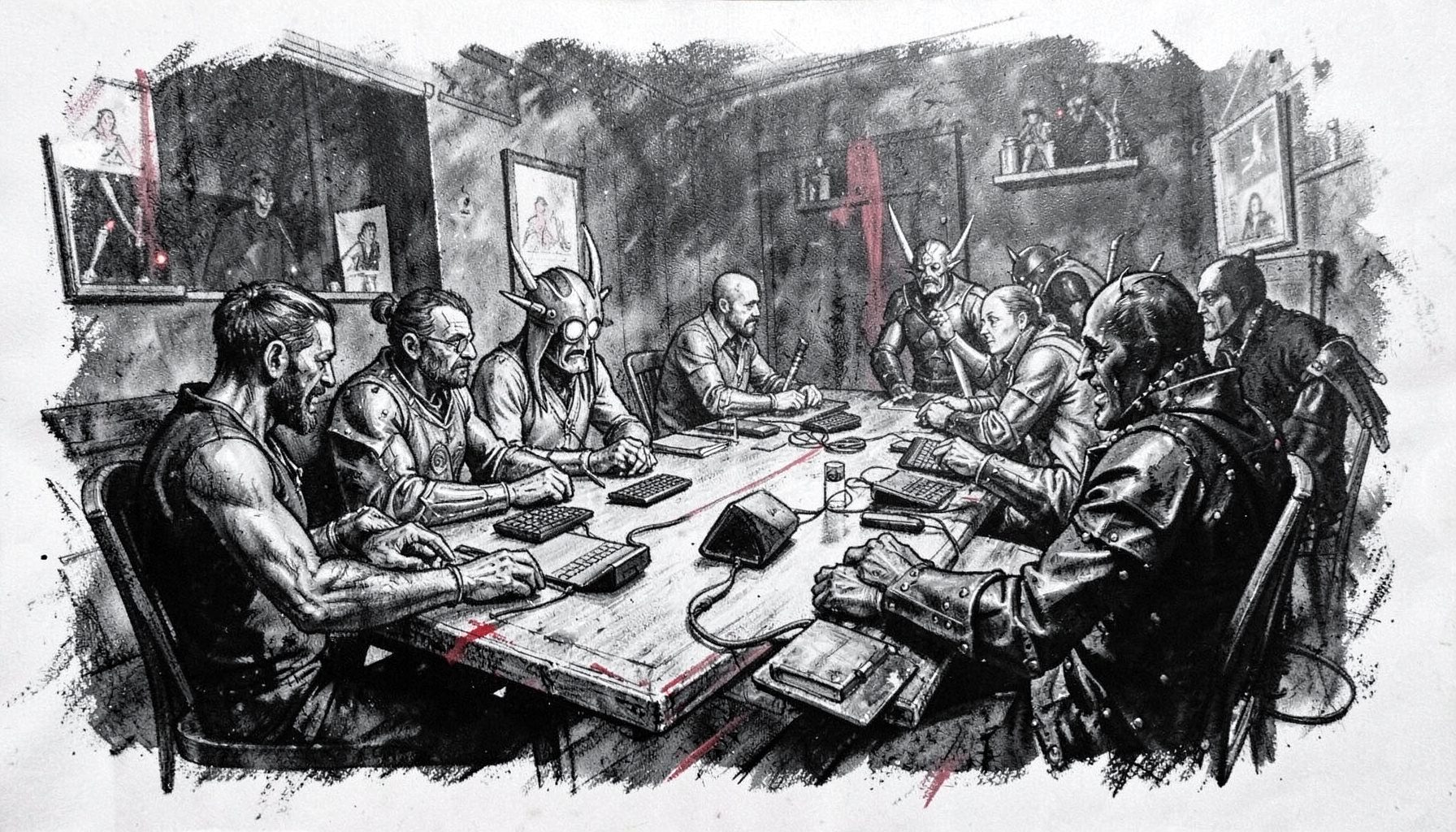
Rare Dice and Custom Minis Vendors at HLGCon 2018
Walking the exhibitor floor at the Showboat Hotel during HLGCon 2018 felt less like browsing a trade hall and more like wandering through a curated gallery of gaming craftsmanship. Dozens of small studios and solo artisans had set up tables alongside larger publishers, each offering a tactile reminder of how much the tabletop hobby has grown beyond rulebooks and cardboard. Vendors specialising in rare dice and custom miniatures drew some of the longest queues, and for good reason: many of these makers only travel to a handful of events each year.
For Australian hobbyists, the appeal of seeing these vendors in person is heightened by the realities of importing artisan goods. Customs duties, international postage, and goods and services tax applied to imports can push a single set of gemstone dice well past three hundred dollars once it lands in Brisbane or Perth. Catching a maker face-to-face at an event like HLGCon effectively turns the convention floor into a duty-free showroom.
What follows is a closer look at the dice makers, the miniature sculptors, and the few vendors who blurred the line between gaming accessories and immersive art. The article also covers the broader convention context, from escape room partnerships to the etiquette guides that kept the event welcoming for first-timers and veterans alike.
Rare Dice Vendors at the Showboat
The dice tables at HLGCon were a study in material contrasts. One booth displayed precision-machined metal sets in gunmetal and bronze, each face deep-etched and balanced for fair rolls. A few steps away, a maker offered hand-poured resin sets with dried flowers and metallic foil suspended inside, each pair a one-off. Prices for the most coveted sets climbed into the AUD 250-450 range once currency conversion was factored in, which tracks with what Australian buyers typically see on Etsy or at weekend markets in Sydney's inner west.
The most interesting conversations at these tables were about failure rates. Polymer clay masters and gemstone cutters both spoke openly about the percentage of sets that crack during cooling, and how that loss gets baked into the final price. A few vendors ran small workshops on the convention floor, letting attendees sand and polish a blank d20 they could take home as a memento.
Materials worth tracking down when meeting a rare-dice artisan in person:
- Hand-cast resin with inclusions like pressed flowers, holographic foil, or crushed opal that photographs beautifully on a streaming setup
- Solid metal alloys in brass, copper, or zinc that develop a patina over years of regular play
- Natural stone sets carved from amethyst, lapis, or obsidian, with each pip slightly uneven by design
- Sharp-edge precision sets with point-perfect faces favoured by competitive Pathfinder and D&D players
- Lab-grown crystal dice offering the visual depth of natural stone at a more approachable price point
Custom Miniature Makers Behind the Tables
Just past the dice tables, the custom miniature sculptors occupied a stretch of the hall that always seemed to have a small crowd leaning in for a closer look. The work on display ranged from 3D-printed fantasy heroes to traditional pewter regiments painted in studio finishes. Several vendors offered on-the-spot commissions, sketching a character concept on a tablet and quoting a turnaround of six to twelve weeks.
For Australian buyers, the appeal of meeting these sculptors in person goes beyond the sculpt itself. Many of the larger studios now run pickup-only options at events like PAX Australia in Melbourne, where a commission can be discussed, a deposit paid in AUD, and the finished mini shipped domestically. That sidesteps the customs headaches and the long queues that come with importing from overseas. Local sculptors based in Sydney and Adelaide have also started appearing on the HLGCon vendor lists in recent years, building a small but steady trans-Tasman circuit.
A handful of the booths focused specifically on replacement parts: weapon swaps, alternate heads, and campaign-specific gear packs designed to retrofit popular plastic kits. These were particularly popular with players running long-running campaigns who wanted their characters to look the part at every level.
Comparing the Vendor Categories
While every artisan at the convention worked in a different medium, the vendors fell into recognisable categories based on materials, lead times, and price brackets. The breakdown below summarises the key differences a buyer should weigh before committing at the booth.
| Vendor Type | Typical Materials | Price Range (AUD) | Lead Time | Best For |
|---|---|---|---|---|
| Hand-cast resin dice | Resin, inclusions, foil | $80 - $250 | In stock or 2-4 weeks | Collectors, themed builds |
| Metal and stone dice | Brass, zinc, gemstone | $180 - $450 | In stock | Heirloom sets, gifts |
| 3D-printed minis | Resin, PLA | $25 - $120 | In stock or pre-order | Custom characters |
| Sculpted pewter minis | Pewter, white metal | $40 - $200 | 2-8 weeks | Skirmish armies |
| Commissions | Mixed, client choice | $150 - $600+ | 6-12 weeks | Personal heroes, NPCs |
The pattern that emerged at the convention matched what Australian buyers have been reporting online for years. Dice vendors tended to deliver instant gratification, while miniature sculptors asked for patience in exchange for personalisation. Both models depend heavily on direct contact with the artist, which is exactly what an event like HLGCon provides.
Beyond Dice and Minis: Immersive Add-ons
Several of the exhibitors at HLGCon straddled the line between vendor and experience provider. Escape room operators ran pop-up scenarios in adjacent meeting rooms, and the dice tables occasionally partnered with them, offering custom reward sets for teams that cleared the timed puzzles. The collaboration was a smart way to showcase how the tactile craft of a hand-made d20 ties into the larger world of immersive play.
Anyone curious about what those timed puzzles actually involved can read a detailed walkthrough of the escape room challenges without encountering a single spoiler. It captures the puzzle design ethos well, and helps frame why vendors stocked so many small-format sets: escape room teams often need compact, high-contrast dice that read clearly in low light.
The escape room vendors also brought a slightly different customer base to the convention. Many were first-time tabletop buyers who walked into the hall, watched a dice pour demo, and left with a starter set tucked under their arm. For artisans used to selling to seasoned players, that kind of crossover is gold.
Style, Spoilers, and Convention Etiquette
The convention's reputation for inclusivity came through in the small details. Vendors were briefed on avoiding spoilers for unreleased modules, and a printed style guide sat at every registration desk. Players were encouraged to keep their character sheets folded, their campaign notes private, and their dice bags shut when moving between tables.
A copy of the no-spoilers-style-guide was available at the entrance, and it covered everything from table etiquette to photography permissions. For an Australian visitor unfamiliar with the North American convention scene, that kind of onboarding document makes a real difference. The first PAX Australia I attended years ago left me guessing at the unwritten rules; a printed guide removes that friction entirely.
The vendors themselves reinforced the spirit of the guide. Several offered to set aside a particular mini or dice set for a player running a specific module, holding it at the booth until the campaign wrapped so the surprise was not ruined at the table. It is a small gesture, but it speaks to a community that takes its storytelling seriously.
Sourcing Artisan Goods in Australia
For Australian hobbyists who could not make it to Atlantic City, the next best thing is keeping tabs on the maker circuit closer to home. A few of the HLGCon vendors maintain Australian stockists, and a small but growing number ship directly from studios in Sydney, Brisbane, and Melbourne.
Local conventions and communities worth bookmarking for rare dice and custom mini restocks:
- Good Games stores across capital cities, which carry a rotating range of indie dice and often host sculpting demos
- Melbourne's Animaga and PAX Australia in October, both featuring artisan alleys with international vendors
- Sydney's Tabletop Gaming Convention at the Australian Technology Park, a smaller event with a heavy dice presence
- Brisbane's QUTE Con and local RPG meetups that occasionally invite vendors to set up tables
- Perth's Standing Stone Games store, known for sourcing limited-run metal sets from overseas makers
- Adelaide's Maelstrom Games and a handful of independent sculptors who take pre-orders at regional events
The lesson from HLGCon is that the artisan dice and mini market is no longer a niche corner of the hobby. It is a global craft network, and the 2018 Showboat floor was a small but vivid snapshot of what is available to anyone willing to travel, queue, and chat with the makers. For Australian players, building a relationship with one or two of these vendors is often the most reliable way to keep a collection growing without the sting of repeated import fees. A single annual order consolidated with a fellow hobbyist, or a pre-order placed at a local convention, tends to pay for itself in saved postage and reduced customs paperwork.