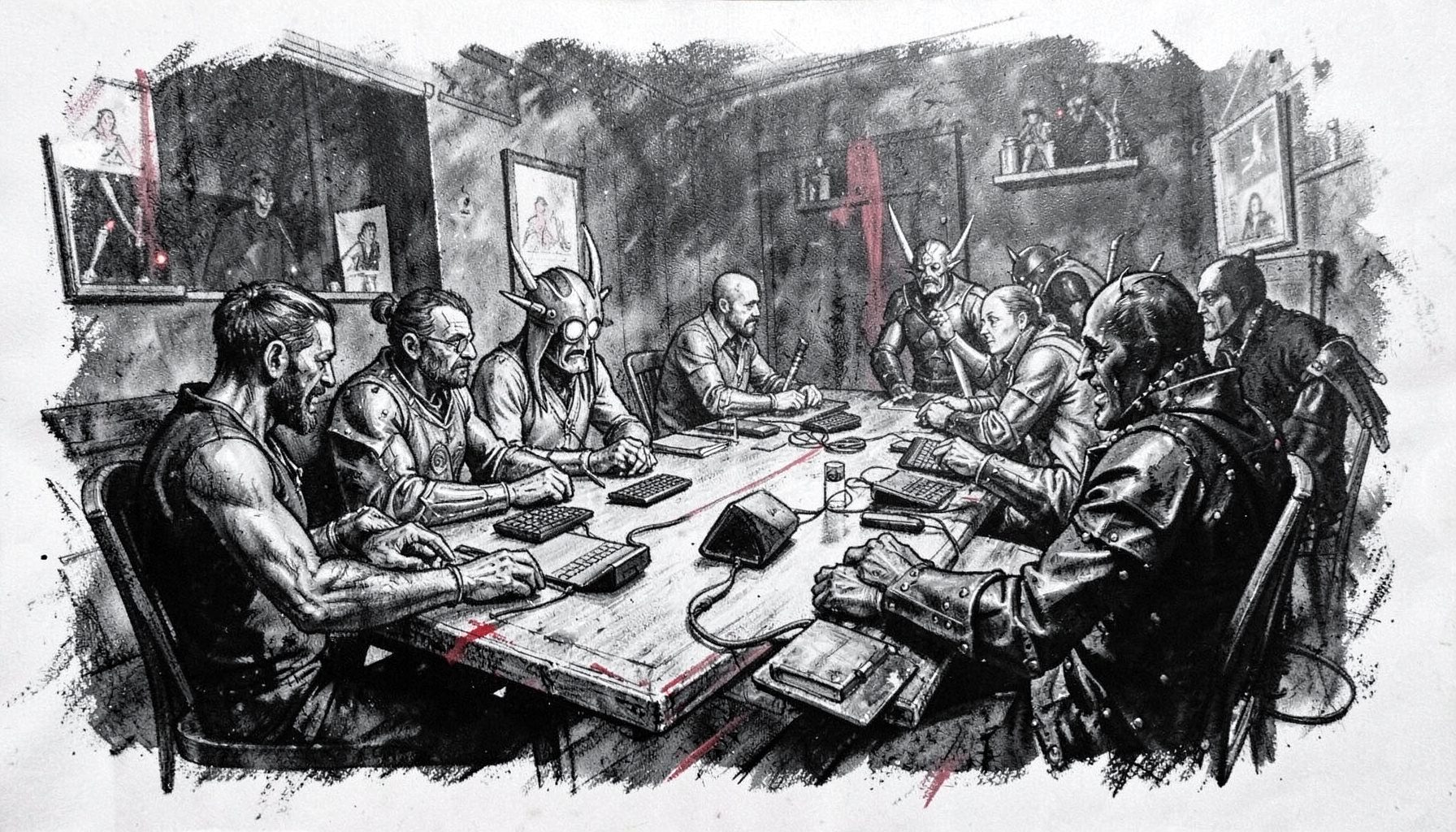
How HLGCon lifted independent game stores and small press publishers
In the spring of 2018, the Showboat Hotel along the Atlantic City boardwalk opened its doors to something a little different. High Level Games Convention gathered tabletop role-players, live-action enthusiasts, game designers, artists, and small press publishers under one very loud roof. For three packed days, the venue became a marketplace of prototypes, dice, foam swords, and freshly printed zines.
Independent game stores have long been the quiet backbone of tabletop culture. They host weekly sessions, run beginner nights, and stock the kind of odd little games that never make it onto a major distributor's catalogue. Without them, the hobby tends to drift toward digital platforms and away from the in-person storytelling that gives it soul. Conventions that back these shops and the publishers who supply them keep the ecosystem alive.
Australian readers will recognise the same pattern at home. Melbourne's grungy arcades and tabletop lounges, Sydney's sprawling LARP community, and Brisbane's compact network of friendly local game stores all rely on the same fragile chain. The volunteers who run megagame days in Perth and part-time publishers working out of shared studio spaces in Adelaide have more in common with the indie vendors at HLGCon than they might assume. Both scenes thrive when small retailers are treated as partners rather than afterthoughts.
This piece walks through the practical ways HLGCon 2018 backed local game shops and small publishers, from the show floor layout to the panels that were programmed. The lessons translate easily to Australian conventions, store owners, and press operators who want to grow the same kind of supportive environment.
Floor space built around local retailers
The exhibitor hall at HLGCon was not arranged in long anonymous rows of identical booths. Sections were grouped by community role instead. Local game stores from the New Jersey, Pennsylvania, and New York tri-state area sat near the entrance, while small press publishers occupied a quieter wing that opened onto the panel rooms. The layout gave foot traffic a reason to slow down and engage rather than rush past the table.
Stores brought more than inventory. Many ran demonstration tables where newcomers could try a pickup-and-go RPG or a beginner card game before committing to a purchase. The convention supplied the table, the chairs, and a small stipend to cover staff travel. For small operations, that kind of logistical cover is the difference between attending and staying home. Australian store owners who trek to PAX Australia in Melbourne with boxes of stock know exactly how much that breathing room matters.
Workshops that built real publishing skills
Beyond the sales floor, HLGCon programmed a string of practical workshops aimed at independent creators. Sessions covered layout in InDesign, print-on-demand economics, hiring a freelance illustrator, and the legal basics of setting up a small press. Attendance was capped, and a small fee covered the cost of bringing in working publishers as instructors. The result felt closer to a trade school than a fan event.
For a one-person press in Adelaide or a hobbyist publisher working from a kitchen table in Hobart, that kind of focused teaching is hard to find. Most learning happens through forum posts and expensive trial and error. HLGCon recognised that giving makers better tools would, in turn, give local stores better products to stock. The cycle fed itself.
LARP spaces as cross-promotion
Live-action role-play at HLGCon was not confined to a single field or a back room. The convention used immersive experiences, including a LARP character build guide for newcomers, to drive participants into the retail and publisher areas between sessions. Players returning from a scenario often stopped at nearby booths to grab a related sourcebook, a prop, or a print zine. Vendors reported that LARP-adjacent items sold particularly well because participants wanted to extend the experience beyond the scheduled block.
This kind of cross-pollination is familiar in Australian LARP circles. The long-running games in regional Victoria and the active groups in Hobart have always relied on the gear and rulebooks sold by small retailers. HLGCon's model of weaving live-action play into the shopping flow gave publishers a built-in audience, and it gave the LARP community a way to put money back into the shops that supported them.
Panels and the open submission process
The panel track at HLGCon was curated to give independent creators air time. Instead of leaning entirely on industry celebrities, the schedule included conversations about self-publishing, the realities of running a part-time press, and case studies of small stores that had survived a difficult year. Sessions were filmed and later posted online, giving the content a longer shelf life than a single weekend.
The convention also published its event submission form well in advance, and the criteria for what made a strong session were shared openly. Independent publishers could pitch a panel, a demo, or a reading, and were taken seriously even if they had never run an event before. For a small press, a recorded panel becomes a marketing asset that can be shared on a store's website, embedded in a Kickstarter update, or quoted in a pitch to a distributor. Australian publishers from smaller markets such as Darwin or regional Tasmania often struggle to reach a national audience because travel costs are steep, and recorded content helps close that gap.
Community grants and travel stipends
A convention that wants to support small businesses needs to put money where its principles are. HLGCon offered a small grant programme that covered travel and accommodation for vendors travelling more than a certain distance. It also waived booth fees for a handful of first-time publishers and gave discounts to stores that agreed to run at least one beginner-friendly demo during the weekend.
The amounts were modest, but the symbolism was significant. Independent stores and presses are used to paying full price for everything, and a gesture that lowered the bar sent a clear message. Australian conventions that have trialled similar schemes through state gaming associations have seen attendance diversify and vendor satisfaction improve. The principle holds whether the convention sits in Atlantic City or Adelaide.
Relationships that lasted past the show floor
The most durable form of support was the relationship-building the convention enabled. Buyers from regional stores met publishers face to face. Solo designers found collaborators. A small press could pitch a wholesale arrangement on the spot. Many of the connections made in 2018 continued through the following year's release calendar, and a few stores in the broader region reported that their indie section grew measurably after the convention.
Australian retailers can borrow the same playbook. Attending a regional convention as a vendor, hosting a publisher in-store for a launch, or running a joint demo with a nearby hobby group are all ways to recreate the HLGCon effect locally. The weekend ends, but the supplier network does not have to.
Practical moves Australian stores and presses can make
The HLGCon approach translates well to Australian conditions with a few small adjustments. Local stores and publishers who want to capture the same energy can start with focused, low-cost actions that build momentum over time.
- Pitch a panel or demo to a regional convention, even a small one, and follow the submission criteria closely.
- Offer a beginner-friendly table at the next in-store game day, then invite a local publisher to run a short session.
- Pool travel costs with two or three nearby retailers when attending a major convention, splitting the booth fee and cartage.
- Record any panels or workshops you host and share them online so the reach extends beyond the audience in the room.
- Negotiate a small wholesale discount with a local press, then feature the title at the front of the shop for a month.
- Apply for state gaming grants or sponsorship programmes that lower the cost of attending conventions further from home.
- Build a simple post-event debrief with every vendor you meet so the next interaction starts with context, not a cold introduction.
The story of HLGCon 2018 is ultimately a story about a convention that treated independent shops and small publishers as the core of the experience rather than a sideshow. Atlantic City was the venue, but the real geography was the network of relationships that stretched across a tri-state region, and now reads easily to anyone running a game store in Fitzroy, Parramatta, or Fortitude Valley.
When conventions lower the bar for small operators, the hobby grows in directions no distributor could plan on its own. The takeaway is straightforward: support the people who already carry the local scene, and the rest of the weekend tends to look after itself.