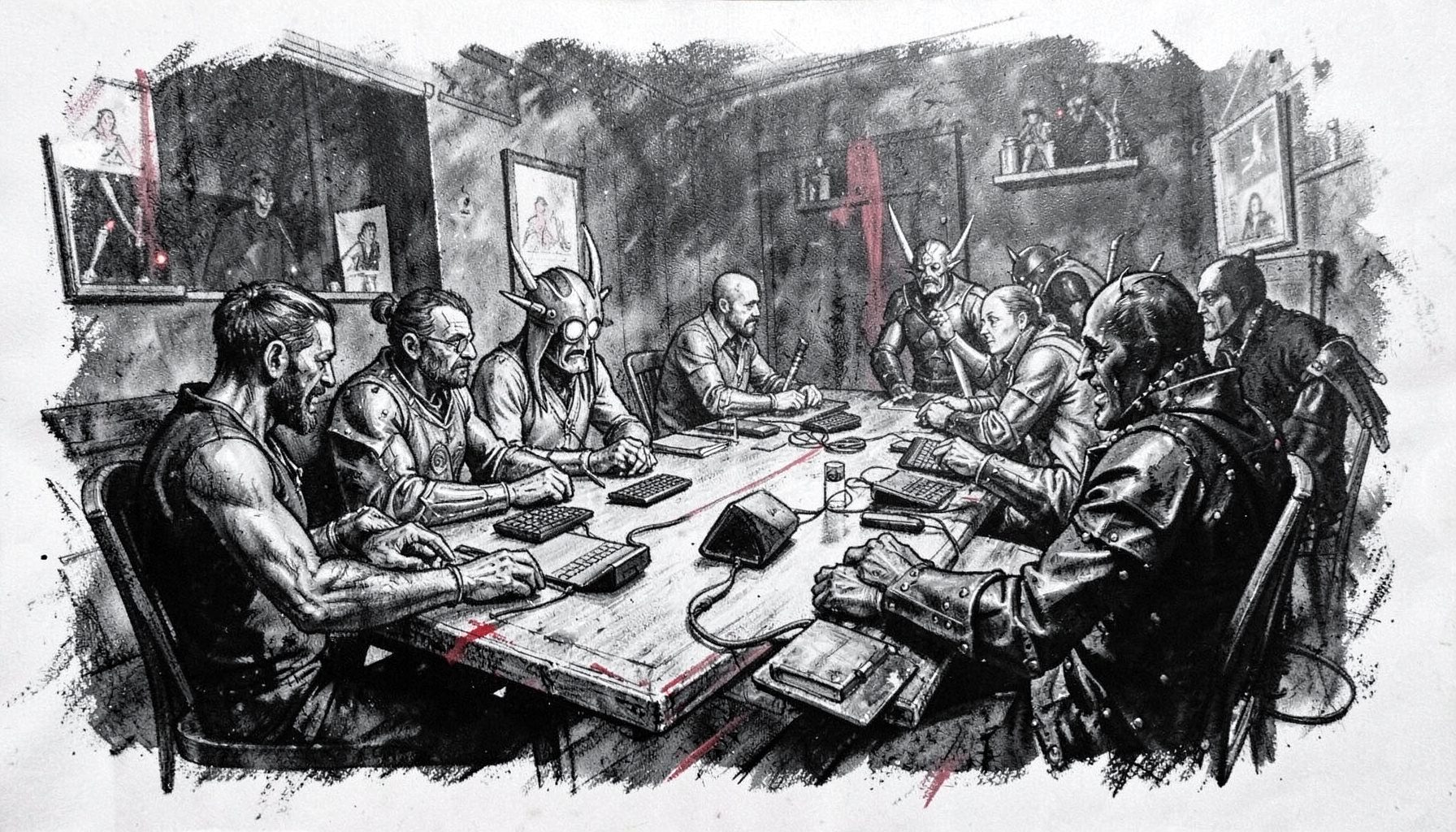
Where dice meet data: tabletop roleplaying in a digital age
The panel discussion "The Future of Tabletop Roleplaying in a Digital Age" unfolded at HLG Con 2018 with a room full of designers, players, and curious newcomers. The Showboat Hotel buzzed with energy as panelists explored how digital tools were reshaping the way people gather around tables with dice, character sheets, and imagination.
Moderated by designers who had spent decades watching the hobby evolve, the conversation tackled everything from virtual tabletops to streaming platforms. The central question echoed through the Atlantic City ballroom: as software grows more sophisticated, what happens to the social fabric of roleplaying? Panelists pointed to the convention's broader programming to illustrate how immersive storytelling adapts to new formats.
The discussion carried weight for communities worldwide, including the tight-knit gaming scenes scattered across Australia. From the bustling tabletop stores of Sydney's CBD to weekend meetups in regional towns, Australian players have been navigating the digital shift in distinctive ways, often blending online tools with face-to-face sessions in local pubs and community halls.
Setting the scene: tradition meets change
HLG Con 2018 arrived at a curious moment for tabletop gaming. The rise of streaming platforms, actual play podcasts, and virtual tabletops had pushed the hobby into mainstream visibility, yet conventions continued drawing record numbers. The Atlantic City gathering reflected this duality, offering both cutting-edge digital demonstrations and immersive experiences that only work when people share physical space.
The panel featured a mix of veteran designers, a streaming producer who had built a following broadcasting games online, and a community organiser from the live-action roleplay scene. Their shared starting point was simple: tabletop roleplaying has always adapted to new mediums, from zines to forums to Discord servers, without losing its core identity. Visitors wanting to see how the schedule balanced these elements could check the full event schedule for the weekend's offerings.
The conversation quickly established that the digital age was not a threat to be defended against but a set of tools to be embraced thoughtfully. This framing set the tone for the rest of the discussion, which avoided doomsaying in favour of practical questions about integration, accessibility, and creative possibility.
The digital toolkit: virtual tabletops, streaming, and AI
Virtual tabletop platforms like Roll20 and Foundry have become standard infrastructure for many groups. The panel discussed how these tools enable play across time zones and bring together players who would otherwise never meet. One designer described how her group meets online every arvo after work, their sessions running smoothly thanks to shared digital maps and integrated voice chat.
Streaming and actual play content have transformed how people discover the hobby. Shows like Critical Role and The Adventure Zone have introduced millions to tabletop roleplaying, and panelists noted the local surge of Australian creators building followings through home productions filmed in loungerooms and garages. This visibility drives tangible effects, sending new players into local game stores and convention halls.
Artificial intelligence entered the conversation with both excitement and caution. Some panelists saw it as helpful for managing world-building notes or generating procedural content. Others warned against over-reliance, arguing that the messy, collaborative nature of roleplaying is precisely what makes it valuable. The panel agreed that AI should remain a tool in the GM's kit, not a replacement for human creativity.
The case for physical presence
Even as digital tools expand possibilities, the panel returned to the irreplaceable value of sitting across from someone. Body language, spontaneous improvisation, and the simple act of looking a friend in the eye after a dramatic reveal are difficult to capture through microphones and webcams. Conventions exist precisely to create these moments at scale.
This resonated strongly with Australian gamers, many of whom travel long distances for events. Players fly from Perth to Sydney, drive across the Nullarbor, and plan trips around PAX Australia in Melbourne. The cost and effort involved reflect how much the physical experience matters. When someone travels fifteen hours for a weekend of gaming, they are voting with their passport for shared presence.
The panelists discussed how physical gaming creates memories that digital play struggles to replicate. The smell of dice on the table, the rustle of character sheets, the nervous laughter when a plan falls apart—these sensory details anchor the emotional core of the hobby. No amount of digital polish can substitute for the warmth of a friend's laugh across a table.
Building community across the distance
Australia's geographic spread creates unique challenges and opportunities. With major population centres thousands of kilometres apart, online tools are a necessity rather than a luxury. Groups in Hobart regularly connect with players in Brisbane, and regional gamers in towns like Wagga Wagga rely on Discord servers and virtual tabletops to find regular games.
The discussion highlighted how digital infrastructure enables local communities to thrive. A regional game store might host in-person sessions once a week while maintaining an active online presence that keeps players connected between meetups. Australian retailers like Milsims Games and Mighty Ape have built business models that recognise this blended reality, offering both physical products and digital services to their communities.
This blended approach reflects Australian attitudes toward social connection. The "she'll be right" attitude applies to technical hiccups, but the commitment to showing up for mates remains strong. Whether someone is chucking a sickie to attend a one-shot at a local convention or scheduling a virtual session for Sunday arvo, the priority on maintaining social bonds comes through clearly.
LARP and immersive storytelling
Live-action roleplay emerged as a key case study. LARP requires physical presence in ways that tabletop roleplaying does not, yet it has benefited enormously from digital tools in pre-game preparation, community building, and post-event storytelling. HLG Con's LARP track demonstrated this balance, as explored in this what made HLGCon's LARP track unique among east coast cons review.
The panelists discussed how LARP communities have used digital tools to coordinate complex events, share character backstories, and document outcomes. Online forums and group chats allow players to develop relationships between events, making the immersive experiences themselves richer and more meaningful. The physical gathering becomes the culmination of ongoing digital community work.
For Australian LARPers, digital coordination is particularly valuable given the distances involved. A LARP event in the Blue Mountains might attract players from across New South Wales and beyond, with online platforms handling everything from character creation to logistics coordination. This integration of tools and traditions offers a model for how the hobby can evolve without losing its essential character.
Inclusivity, accessibility, and new voices
Digital tools have democratised tabletop gaming in ways the panel celebrated enthusiastically. Virtual tabletops allow players with mobility issues, social anxiety, or geographic isolation to participate fully. Text-based play options enable those who find voice acting intimidating to contribute to the story. Streaming and actual play content show newcomers that the hobby welcomes them.
The panel discussed how these accessibility benefits align with broader cultural shifts toward inclusive gaming. Conventions have worked to create welcoming spaces, and digital tools extend that welcome beyond the convention walls. An Australian player in a regional town can find a group that fits their needs, schedule, and personality, regardless of local demographics.
The conversation acknowledged that digital tools are not a panacea. Online spaces can be hostile, moderation is essential, and the anonymity of the internet sometimes enables bad behaviour. Yet the overall trajectory remains positive: more people can find their people, tell their stories, and experience the joy of collaborative imagination than ever before.
Lessons from the Showboat
The panel closed with predictions and practical advice. Tabletop roleplaying will continue growing, supported by digital tools that make it more accessible while conventions and local groups keep the social core vibrant. The future is not digital or physical but integrated, with each supporting the other. The hobby thrives because players have always been willing to adapt, to embrace new tools, and to show up for each other—whether across a table or across a continent.
For those following how the conversation has evolved since 2018, archives and event documentation remain available through the HLG Con homepage, offering a window into how one convention approached these questions during a pivotal moment for the hobby. The most valuable takeaway for any player, whether running their first game or their hundredth, is to stay curious about new tools while protecting the human connections that make the hobby worth the effort.