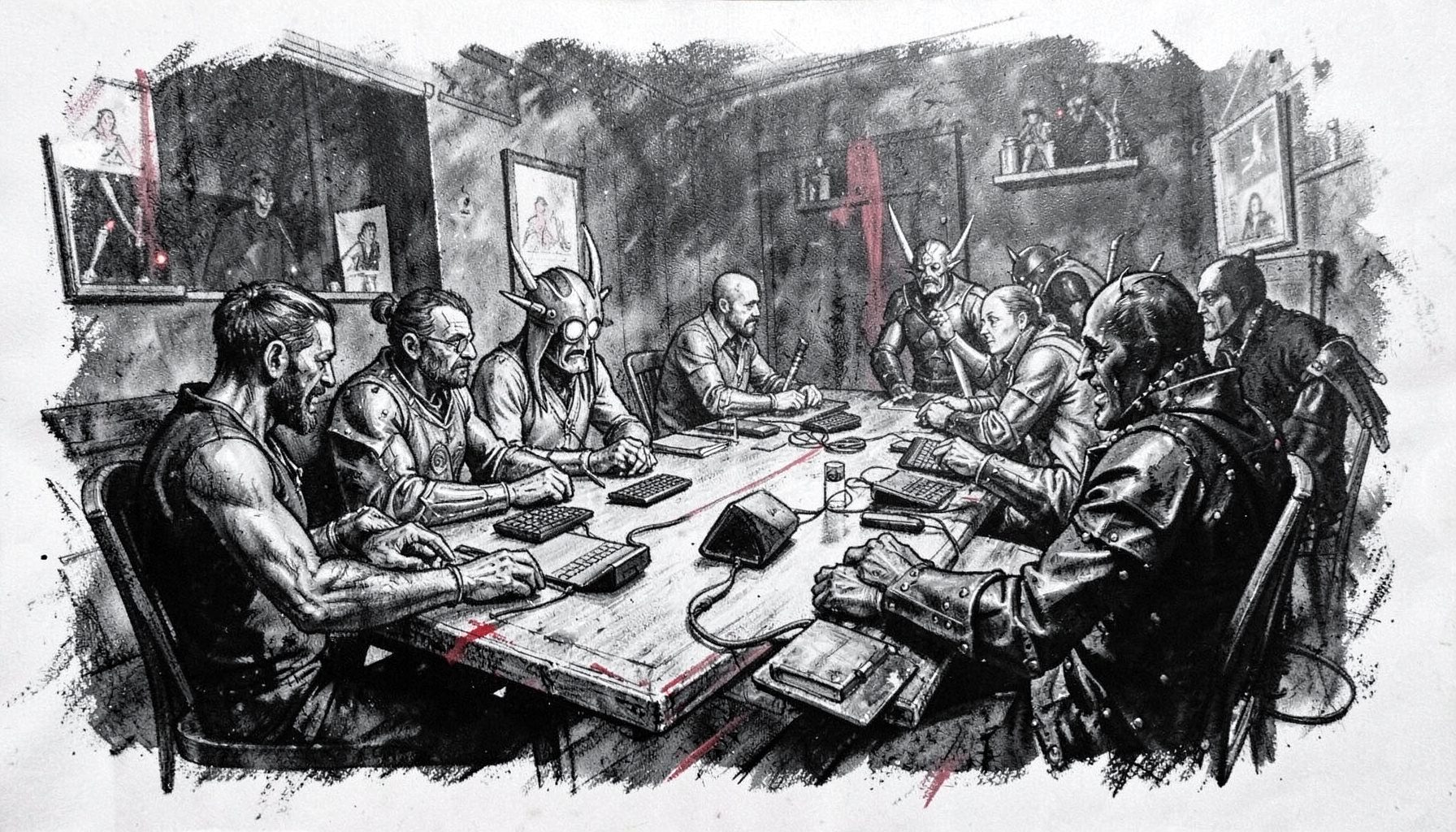
How Music and Sound Shape the Soul of Live Action Role Play
Live action role play lives in the spaces between words. A whispered conversation across a tavern table, the wind that seems to pick up just as the moon rises on a fictional kingdom — these are the textures that turn a weekend in a community hall into a memory that follows you home. Too often, though, the auditory layer gets treated as wallpaper, set to a playlist and forgotten, when in truth the right music and sound design can dictate the emotional temperature of an entire event.
Down under, the live action scene has been quietly thriving. Melbourne crews have run sprawling weekend events in the Dandenong Ranges, Brisbane groups have built steampunk airship narratives, and Canberra's Northern Lights has become a fixture for those who want their larps to feel like living fiction. Conventions like PAX Australia in Melbourne give designers a chance to swap notes, and a coastal gathering such as the one run at the Showboat is a fair place to hear what runners are doing with soundscapes, from hand-drummed battle cues to quiet forest ambiences piped through a single bluetooth speaker.
Building the Audio Blueprint Before the First Blow
The work of crafting an immersive LARP atmosphere begins long before anyone ties on a tabard. A thoughtful game runner builds an audio brief that mirrors the event's emotional arc, choosing tracks that underscore the calm before a quest and swell toward the climactic battle on the second day. Think of it like scoring a film: the music should know things the players do not, foreshadowing betrayal with a minor key, or signalling safety with a recurring motif whenever a healer appears.
In Australia, where many groups meet at scout halls, showgrounds, and the occasional regional pub back room, gear has to be portable and weatherproof. A common setup among Victorian runners is a couple of rugged speakers strapped to milk crates, a small mixer hidden behind a gamemaster screen, and a tablet loaded with a curated playlist plus a few looping ambience tracks. This lean rig is mirrored at smaller events from Adelaide to the more elaborate productions hosted at university campuses in Sydney.
The brief itself should map the event's beats: arrival, briefing, roleplay, combat, resolution. Each beat deserves its own sonic palette. Some Australian crews commission local indie composers to create custom stings, a practice that has produced genuinely moving tracks heard at events like Wildwinter.
Ambient Sound As Invisible Set Dressing
Where music tells the story, ambient sound does the heavy lifting of world-building. The soft hoot of an owl, the distant clatter of a market, the hum of a magical artefact — these layered textures convince the brain that the fiction is real. A clever audio designer will scatter small speakers through a venue so the sound actually moves with the player, a trick that costs almost nothing to set up and rewards the listener with a sense of place that flat stereo playback cannot match.
Aussie larps have a particular fondness for bush ambience. There is something about a gum tree forest in the Yarra Valley that lends itself to a fantasy soundscape, and runners at outdoor sites know that a well-timed recording of kookaburras can do more for immersion than a thousand words of briefing. The trick is to mix recorded wildlife sparingly, so it reads as the bush rather than a nature documentary.
The same principle applies indoors. A Sydney group running a cyberpunk event last summer used the recorded drone of a ventilation system, layered with distant traffic, to make a community hall feel like a megabuilding. Players walked in expecting a gym and walked out believing they had spent three hours in a corporate tower. That is the transformation good ambient design delivers, and it requires nothing more than a pair of speakers, a decent library of free sound effects, and patience during sound check.
Music Cues That Move the Action
When combat breaks out or a major plot moment hits, music cues take over from ambience. A well-timed swell of drums can transform a chaotic free-for-all into something that feels choreographed and mythic. The key is contrast, a soft eerie build followed by a sudden percussive hit when the boss monster drops the final blow. Players remember the moment the music changed, and that memory becomes part of the event's lore.
Australian combat larps, particularly the Amtgard chapters in Queensland and the Belegarth-adjacent groups in regional NSW, have a long tradition of running with a dedicated sound table. Often this is a single volunteer crouched behind a tarp, queuing tracks and adjusting volume on the fly. The best read the field the way a good referee reads the play, raising the tempo when fighting stalls and pulling back for a tense standoff. Some have become minor celebrities in their local scenes, with players asking after them by name at the next event.
The cues themselves should be deliberate. A repeated leitmotif for a recurring villain, a slow waltz for a diplomatic negotiation, a sudden silence before a betrayal — these musical fingerprints give players anchors in the narrative. The diversity and inclusion conversations shaping Australian gaming culture have pushed designers toward more representative cue libraries, with playlists drawn from global traditions rather than default fantasy tropes. The panel recap on diversity and inclusion in gaming captures the texture of that debate well.
The Player's Voice and the Sounds They Make
No soundscape is complete without the players themselves, and the way a group uses its collective voice matters enormously. A LARP where everyone speaks in a low present-tense murmur feels fundamentally different from one where players declaim like Shakespearean actors. Good runners establish a vocal culture early in the pre-event briefing, giving players permission to commit to the bit and modelling the energy they want to see.
Australian players have a gift for blending larping with larrikin humour, and the best soundscapes leave room for that. A well-placed "yeah nah" or "fair dinkum" can break tension in a way that deepens immersion, because the players are clearly present in the fiction. A good audio lead knows when to drop the music entirely so a single player's voice carries the scene.
Vocal presence also extends to non-player characters. Casting a few standout voice actors as recurring NPCs and giving them each a small audio cue, a signature laugh or a particular cadence, builds characters players talk about for years. Some of the most beloved NPCs in Australian LARP history are remembered as much for the sound of their voice as for their plot role, and that is no accident. It is the result of a community that takes the auditory layer of the craft seriously.
Sound for Every Body
The final piece of the puzzle is accessibility. A soundscape that only works for players with full hearing, full vision, and a single processing style leaves people at the door. Inclusive sound design means providing visual cues alongside audio ones, ensuring important plot moments are signalled through more than one channel, and offering quiet spaces where players can decompress when the noise gets overwhelming.
Australian conventions have generally been quick to adopt these practices, partly because the country's larping community is small enough that word travels fast when something works. A growing number of events now publish accessibility guides listing trigger warnings, ambient noise levels, and quiet room locations, and many of these guides are shared openly between groups. It is a fair dinkum collaborative spirit, the kind that makes the local scene feel less like a competition and more like a co-op.
For runners, the practical steps are small but meaningful: a captioned version of the opening briefing projected onto a screen, vibrating pagers that buzz during important cues, and a printed schedule with clear visual icons alongside the audio prompts. The payoff is a LARP that welcomes neurodivergent players, players with hearing aids, and anyone who needs a moment away from the thump of the battle mix.
The next time a LARP is still in pre-production, block out a single hour to score one moment from beginning to end. A combat scene, a tavern negotiation, a villain's reveal. Treat it as the pilot episode of the event's soundtrack, and let the rest of the weekend's audio follow that lead.