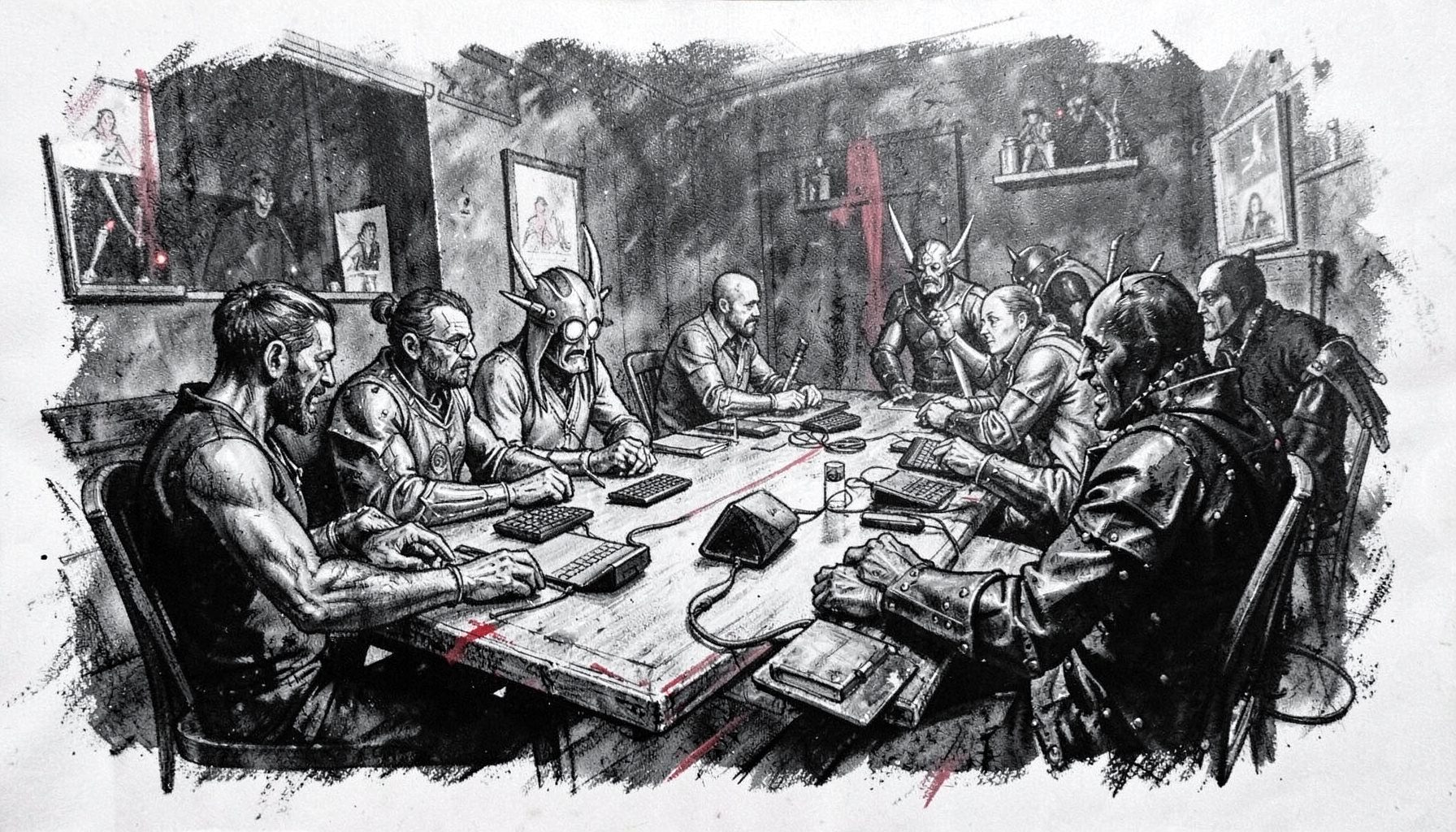
Workshop highlights: writing your first RPG adventure module
The first adventure module I ever wrote was an embarrassing 40-page mess filled with inconsistent maps, half-finished NPCs, and a plot that collapsed the moment players asked reasonable questions. Looking back, what would have saved me was the kind of structured workshop I attended at High Level Games Convention back in Atlantic City, where experienced designers broke the process into manageable steps.
That workshop remains one of the most useful sessions for newcomers I have encountered in over a decade of running tables in Australia. Whether you are plotting a one-shot for your local gaming group in Melbourne, drafting a sandbox for a Brisbane convention, or designing something you hope to release through a small Australian press, the fundamentals translate cleanly across systems and styles.
Building a strong foundation for your adventure
Every well-received module begins with a single, sharp premise. Not a sprawling world, not a detailed timeline of fictional kingdoms, but a single "what if" question that can be explained in one sentence. "What if a small town discovers that its founding myth is literally true and the buried hero is waking up?" is a premise. "Generic fantasy kingdom with magic crystals" is not. The premise should generate immediate tension, suggest a clear mood, and leave room for player interpretation. If you can pitch it in under thirty seconds and your playgroup leans forward, you are on solid ground.
From that premise, sketch a three-act skeleton before you write a single stat block. Act one establishes the hook and drops players into the situation. Act two presents escalating complications and meaningful choices. Act three forces a climax that feels inevitable in hindsight yet surprising in the moment. This structure is not unique to Western RPG design and you will find it echoed in Australian convention favourites such as the heist scenarios run at PAX Australia sessions, where every act ends with a twist that reframes the previous encounters. Keep your acts tight; even a four-hour one-shot rarely supports more than nine or ten scenes without the pacing sagging.
Crafting NPCs and locations players remember
Players forget hit points. They remember the half-orc innkeeper who spoke in proverbs, the lighthouse keeper who refused to leave even when the danger was obvious, and the abandoned mining town whose only working light was a single lantern swaying in the rafters. NPCs need two things: a visible want, and a secret that contradicts that want. The innkeeper wants to be left alone (visible) but is actually searching for a runaway apprentice (secret). The contradiction creates drama every time players interact with that character, because every conversation is a small negotiation between the surface and the hidden.
For locations, follow the Australian sensibility of "less is more, but make it count." Australian dungeon masters often take inspiration from the country's varied geography, from the red dust roads of the Outback to the laneway bars of Melbourne's inner suburbs, and design spaces that feel grounded in a specific time and place. Give each location one sensory anchor: a smell, a sound, a texture, a colour. A temple smells of wet stone and old incense. A forest outpost hums with insects and distant turbines. That single anchor, repeated when players return, builds a mental map far more effectively than a ten-room grid. Avoid stacking locations without purpose; if a room exists only to hold a random encounter, cut it and move the encounter elsewhere.
Balancing player agency with narrative direction
The trick to satisfying player agency is to prepare situations, not solutions. When I ran a brief demo at the convention, I showed attendees how a single villain with three goals can produce twenty different plot outcomes depending on what the party investigates first. The villain wants to acquire a relic, hide their identity, and escape the city. If players confront them directly, the escape becomes a chase. If players ignore them, the relic ends up somewhere players must chase later. If players investigate the identity, the villain's network becomes the adventure.
This approach echoes themes explored in the art of collaborative storytelling in tabletop RPGs, where writers and designers discussed how giving players genuine choices requires the GM to hold multiple prepared outcomes rather than a single linear path. Resist the urge to over-plan. A common mistake among first-time writers, and one I have made myself while running tables at Brisbane's BrisCon, is scripting the players' actions. The result is frustration when the party does something unexpected. Instead, prepare three to five possible outcomes for every major scene, and let the dice and the players choose between them. Linear modules feel like books; modular modules feel like worlds.
Playtesting, feedback, and iteration
Writing the module is roughly a third of the work. Playtesting is the other two-thirds. Run your adventure at least three times before considering it finished, and try to vary the table each time. The first playtest confirms that your premise works and your pacing holds. The second reveals where players get stuck or bored. The third shows whether your revisions actually fixed the issues, or simply shuffled them around. Each session should be followed by a five-minute debrief with your players, asking three questions: what did you enjoy, what confused you, and what would you change?
Feedback from Australian playtest groups tends to be refreshingly direct, partly because of the country's no-nonsense tabletop culture and partly because smaller scenes in cities like Adelaide or Hobart mean the same faces show up across multiple events. Take notes during the debrief, not after. Players often say something brilliant and then immediately walk it back, so capturing their raw reactions matters. If a particular NPC fell flat, give them a sharper motivation. If a location confused players, add a sensory anchor or a visible landmark. If a combat dragged, either reduce the number of enemies or give the enemy a goal that ends the fight when achieved.
From draft to finished module
Once playtesting is done, the production phase begins. Layout matters more than many first-time writers expect. A beautifully written module with cramped fonts, missing page numbers, and no index will gather dust on a distributor's shelf, regardless of its content. Invest a weekend learning basic page layout, or collaborate with a designer who can handle the visual side. Australian indie presses such as those active in the Melbourne and Perth scenes have shown that a clean, two-column layout with consistent stat blocks and one page of handouts will sell far better than a 60-page manuscript full of typos.
When your module is ready, think carefully about where to share it. Local gaming stores in Brunswick, Newtown, or Fortitude Valley will often stock community-designed zines on consignment, and events like PAX Australia's tabletop showcase draw publishers looking for fresh talent. If you are attending conventions in person, bring physical copies and a small printed run of quick-start rules, and consider connecting with featured guests whose work you admire. Digital distribution through itch.io or DriveThruRPG remains a powerful option, particularly for reaching readers in regional Australia where the nearest hobby store might be a three-hour round trip.
Adventure module formats at a glance
| Format | Typical length | Best for | Prep time | Player commitment |
|---|---|---|---|---|
| One-shot | 4 to 12 pages | Convention slots, demo nights | 2 to 4 weeks | Single session |
| Mini-campaign | 20 to 40 pages | Local gaming groups | 6 to 10 weeks | 4 to 6 sessions |
| Full module | 60 to 120 pages | Published release | 3 to 6 months | 8 to 15 sessions |
| Zine | 8 to 16 pages | Indie press, festival tables | 3 to 5 weeks | 1 to 3 sessions |
| Hackable sandbox | 30 to 80 pages | Experienced groups | 2 to 4 months | Open-ended |
Recommendations for first-time module writers
- Start with a single-sentence premise and test it on your group before writing anything else
- Build a three-act skeleton, then fill in only the scenes you genuinely need
- Give every NPC one visible want and one contradicting secret
- Playtest at least three times with different tables, and capture feedback notes during the session
- Invest in clean layout, consistent stat blocks, and at least one piece of handout art
- Submit your finished module to local consignment shelves in Melbourne, Sydney, or Brisbane gaming stores, or upload to itch.io for a wider Australian and international audience
The writers who finish modules are not the most talented; they are the ones who keep playtesting after the first draft disappoints them. Pick your premise, draft a tight three-act skeleton, run it three times, and polish the layout until you would happily hand it to a stranger. Your first module will not be perfect, but it will be finished, and finishing is the skill that separates published designers from the many GMs who never quite get past chapter two.