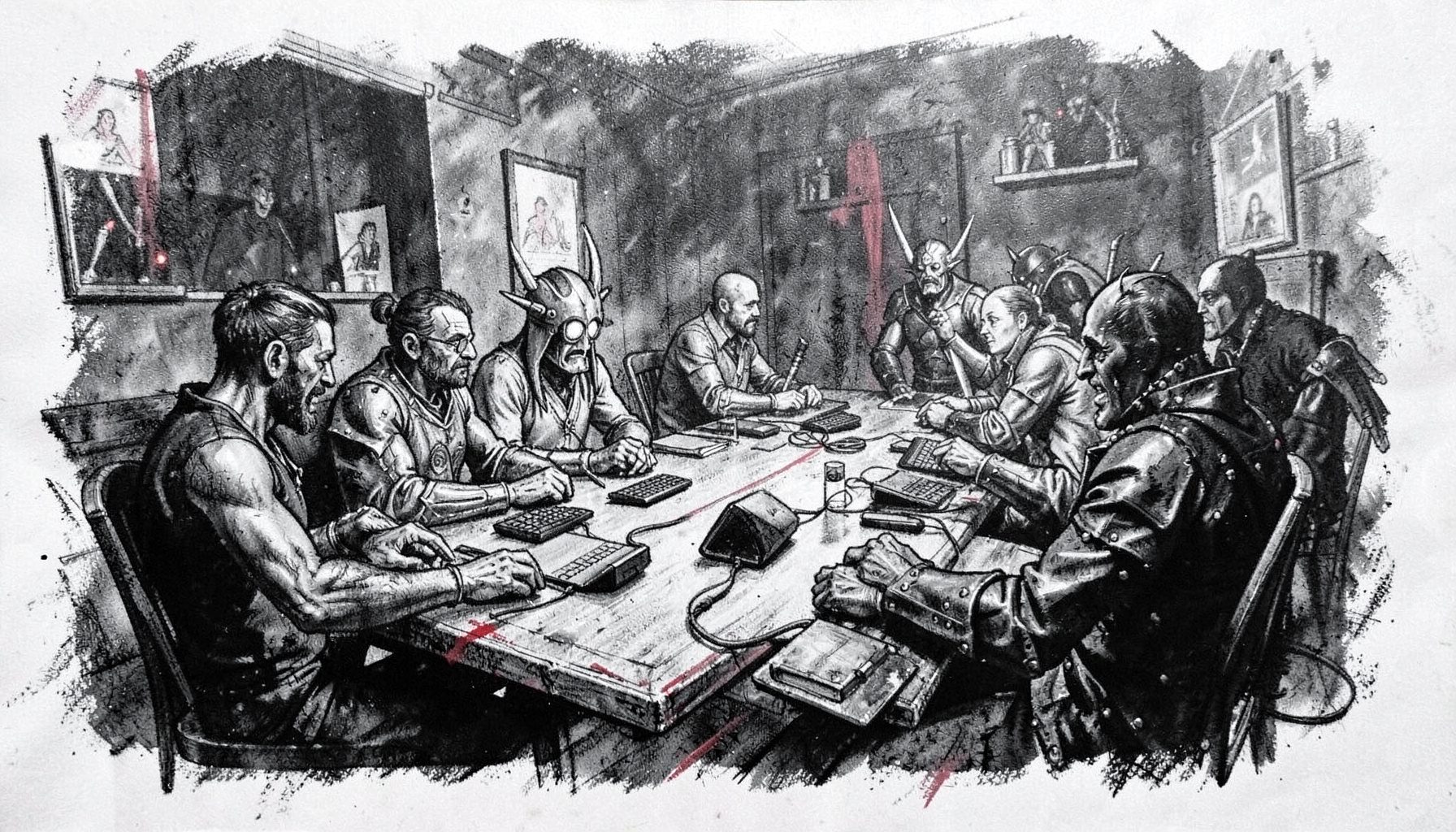
How to Ask Great Questions as a Player, Not Just a Character
Great questions at a gaming table do more than reveal secrets. They turn uncertainty into a decision, invite another player into the fiction, and keep the shared world moving. The best inquiries are not demands for privileged information; they are clear requests whose answers give the group something meaningful to play.
The 2018 High Level Games Convention, held at Atlantic City’s Showboat Hotel in New Jersey, gathered tabletop role-players, live-action players, designers, artists, publishers and vendors for LARP experiences, sessions, panels, workshops, an exhibitor hall and escape rooms. Its emphasis on inclusive participation and collaborative storytelling offers a useful lens for Australian groups, whether they meet in a Melbourne game shop, a Sydney community hall or a Brisbane convention room.
Questions Keep the Table Moving
Thinking as a player does not mean bypassing the fiction. It means taking responsibility for clarity, consent and momentum. A character may ask who owns the bridge; a player may ask whether the bridge is an established objective or merely flavour. Both levels matter, but they should serve the same shared story.
Strong questions perform a job. They identify a clue, test an interpretation, request a rule ruling or expose the cost of a choice. “What is the mayor’s secret?” creates little leverage. “Which rumour would make the harbour watch close the gate?” gives the group a specific answer to use, invites speculation and can sharpen everyone’s next move.
Conventions make that collaborative habit possible across formats. When designers, publishers and artists share space with players, questions can move from a game into a demonstration or panel. The organiser’s event sponsorship details shows how commercial support can sustain those shared forums, where expertise is exchanged rather than withheld.
Frame Every Question for a Purpose
Before speaking, filter an inquiry through four checks: purpose, perspective, cost and response. Purpose asks what decision the answer should unlock. Perspective identifies whether the speaker is the character, the rules or the group facilitator. Cost considers what the question reveals or risks. Response defines whether a yes-or-no answer is enough or whether a clue is needed.
Reframing turns vague demands into playable requests. “Can I pickpocket the duke?” becomes “What visible cue tells my character the duke is vulnerable, and what happens if I act on it?” “Can the shadow cross consecrated ground?” becomes “Which rule or house ruling governs that movement?” “What will the innkeeper believe?” becomes “What trust-building action would make the innkeeper cooperate?”
Keep the tone collegial. Ask in character when possible, declare a rules pause when needed, and separate genuine ambiguity from an attempt to trap the facilitator. The familiar Australian pub trivia comparison helps: good questions build points for the whole team rather than stealing the spotlight. The same courtesy lets a rules lawyer and a reluctant newbie hear the same useful answer.
Turn Answers Into Play
Good inquiry often follows an information ladder: atmosphere, clue, rumour, then consequence. Players rarely need the full truth at once. A sensory detail can confirm danger; a rumour can suggest motive; a consequence creates a decision. Ask for the smallest response that supports the next action, and the facilitator can reveal information without turning the exchange into a giveaway.
Different needs call for different phrasing:
| Inquiry need | Strong example | Main benefit |
|---|---|---|
| Rules clarification | “Does the ward apply before or after the resistance roll?” | Prevents a later dispute |
| Character context | “What does this local symbol suggest to my character?” | Grounds the answer in perspective |
| Shared inference | “Which of our clues points most strongly to the smuggler?” | Combines player knowledge |
| Stakes | “What changes if we ignore the warning?” | Turns lore into choice |
| Table comfort | “What should we keep out of this scene?” | Supports inclusive play |
The result matters more than the wording alone. If the answer is yes, can it include one detail that prevents a wasted attempt? If it is unknown, is the uncertainty intentional, or does someone need to check a rulebook? A concise follow-up keeps the exchange moving while preserving mystery.
Adapt Questions to Your Group
Question style should follow the format. In a tabletop RPG, a player may need to separate knowledge from mechanics. In LARP, a useful question may be asked through a character while coordinating privately with the group. In an escape room, players benefit from asking what can be tested, what can be inferred and what evidence is missing. Board games need the same discipline, especially when hidden information is protected by design.
For players interested in that side of convention play, the Pandaemonium programme offers a natural reference for experiences where atmosphere, teamwork and active curiosity meet. Asking “What can we observe?” can be better than “What is behind this door?” because it directs attention towards evidence the players can act upon rather than demanding a solution.
Across Australia’s local hobby market, game shops and convention exhibitors may stock both current and pre-loved editions, while event listings and stall fees are commonly quoted in Australian dollars. Groups in Melbourne, Sydney or Brisbane can therefore benefit from naming the edition, house rule or source material before turning an apparent contradiction into an argument.
Prepare the Table to Ask Well
A group can make good inquiry safer and more productive before play begins. Agree on how rules clarifications, challenges and safety concerns will be raised. This is especially helpful for mixed-experience groups, where silence may mean “I did not follow,” not “I disagree.” A short check-in also lets the facilitator avoid turning a simple misunderstanding into a public confrontation.
Before the Session
- Confirm the rules source, edition and any house rulings the group expects to use.
- Agree on a clear signal for pausing play, checking a rule or stepping out of a scene.
- Ask players for one uncertainty they hope to resolve without requesting a specific outcome.
- Establish that clarification questions are welcome and challenge questions should target the rule, not the person.
- Check whether anyone wants extra explanation of a mechanic before the first encounter.
These habits protect inquiry without fixing the story in advance. They also give newer players permission to ask plainly, which is often more useful than performing confidence they do not have.
During the Game
- Name the purpose: “I need to know whether this clue is safe to follow.”
- Keep in-character questions anchored to what the character can perceive, know or reasonably ask.
- Request the smallest useful answer, such as one detail, a category or a yes-or-no ruling.
- Invite another player’s interpretation before asking the facilitator to settle every ambiguity.
- Confirm shared facts briefly out of character, then return promptly to the action.
In Australian community clubs and conventions, this approach supports the welcoming, team-oriented culture many groups value. It also reduces the chance that a forceful questioner dominates while quieter participants wait for permission to contribute.
Carry the Habit Into Your Next Session
After play, distinguish useful inquiry from extraction. Did the answer enable a choice, reveal a meaningful distinction or improve shared understanding? If not, the question may have been framed too broadly, offered too many hidden assumptions or ignored whose perspective mattered. A short review helps the group sharpen future prompts without blaming the facilitator.
Players can keep a campaign wiki, margin note or group-chat record of settled rulings and confirmed clues. This prevents an old answer from returning as a surprise and lets new players ask, “Has this already been established?” The habit respects continuity while leaving space for genuine reinterpretation when the fiction changes.
The practical takeaway is compact: before raising your hand, name the decision your answer should support, choose the perspective with the greatest authority, and ask for the smallest response that moves play forward. That routine turns curiosity into collaboration and keeps every participant involved in making the next choice.