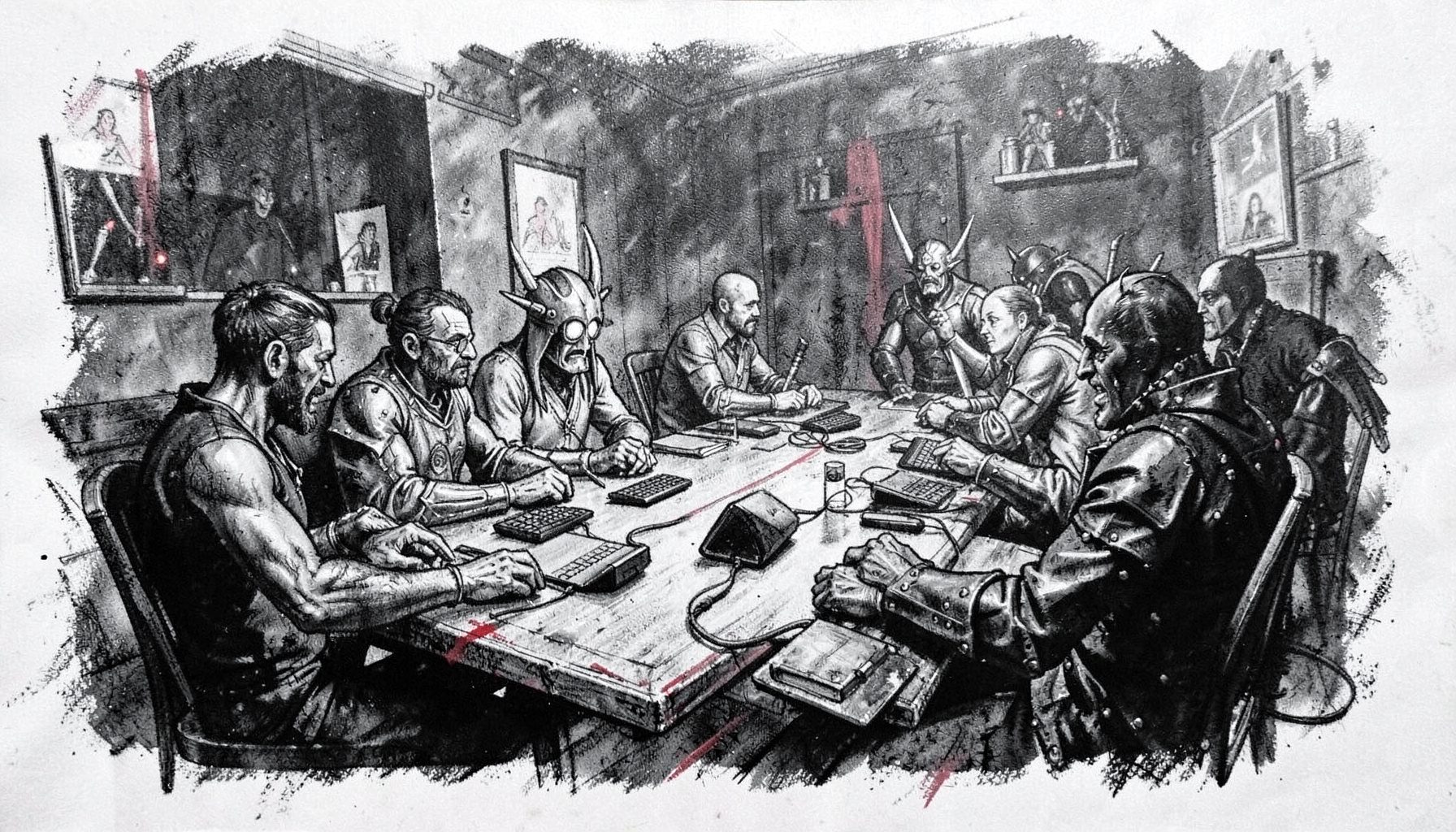
The quiet days after a live-action adventure
The emotional aftermath of a multi-day LARP can be surprisingly deep. A player may leave the venue carrying grief over a character’s final choice, excitement about a new friendship, physical fatigue and a strange sense that the fictional world has continued without them. Sleep, travel and ordinary responsibilities rarely process all of that at once, so the return home can feel like living between two realities.
Recovery is not a single mood, and it need not mean that the event was unsuccessful. Some people feel a warm post-LARP glow; others feel empty, irritable or tearful. The High Level Games Convention at Atlantic City’s Showboat Hotel in 2018 illustrates the breadth of experiences that can shape this transition, from tabletop sessions and live action to panels, workshops, vendors and immersive challenges.
The first morning back
The first morning back often exposes the gap between the character’s final scene and an ordinary breakfast. Muscle soreness and sleep debt are easy to notice, but narrative residue is subtler: a player may keep hearing a warning from the game, default to in-character gestures or feel an urge to protect someone who exists only in the story.
| Point in the transition | What it can feel like | A supportive response |
|---|---|---|
| Final hours | Adrenaline, unfinished business or sudden deflation | Agree an endpoint and leave together |
| First 72 hours | Euphoria, fatigue, grief or restlessness | Sleep, hydrate, eat and contact a trusted friend |
| Following weeks | Nostalgia, distance or renewed motivation | Share selected memories and revisit chosen story threads |
These stages can overlap, and an intense release may be followed by a crash that resembles low mood. Participants sometimes mistake physical exhaustion for sadness, or character grief for a personal failure. A brief physical check helps: water, food, daylight and a shower may settle the body without resolving the emotional thread.
Leaving the venue with other players can provide immediate safety. Walking to a café, waiting for a train together or arranging a familiar Australian pub night can turn a private comedown into a shared one. It also helps to name the boundary: the story is over for now, even if its questions remain.
Why the story stays in the body
Stories are embodied, so they do not always end when a facilitator calls time. Voice, movement, costumes and group trust create sensory cues that can reactivate a character’s fear, loyalty or shame. The 2018 convention highlights show live action sitting alongside tabletop play, panels, workshops and vendors at High Level Games Convention, reinforcing that each activity can leave a different emotional residue.
Character bleed is the ordinary phrase for this carry-over: a player feels cautious in a safe car park, misses a fictional friend or responds as though an in-world insult were personal. It can also be positive. Confidence gained during a LARP may support communication and trust. The aim is integration rather than erasure; the person should retain the experience without letting the character dictate every later choice.
Australian geography can intensify the transition. A player returning from a Sydney convention to regional Victoria may face several hours of driving, while trips between Melbourne, Brisbane, Canberra and coastal towns can place a full day of travel around the event. Long travel gives unwanted thoughts more room, yet it also creates a useful bridge for talking through what mattered before sleep arrives.
Shared bonds and ordinary Australian life
Community bonds often deepen faster than online acquaintances because LARP groups share secrecy, physical trust and improvised stories. That closeness makes reunions valuable, whether the group meets at a local game store, a makerspace or a house party. Organisers designing another event can review the registration details as one model for collecting attendance information, while still checking access needs and contact preferences directly.
The local market for Australian roleplayers is broad but often relies on independent game shops, community-run conventions, small publishers, costume makers and online sellers. Physical books, dice, audio props and locally designed scenarios circulate through those networks. At home, an arvo coffee, a walk beside the harbour or a quiet round of pub trivia can provide familiar structure without demanding a serious debrief every hour.
Not every emotional low needs a formal debrief. Some players want ordinary conversation, music or company; others need silence and time alone. A useful check-in asks for preference rather than pressure: company, quiet, distraction or discussion. Respecting that choice preserves trust after the event, especially when players live far apart and may have only one chance to reconnect properly.
When the high becomes a low
The sharpest post-event drop can follow a triumphant finale because expectation, performance and collective attention end together. Someone who felt essential onstage may feel ordinary the next morning; another may miss a person they were never supposed to meet outside the game. These reactions are not automatically problems. They become harder to manage when shame, panic, blame or prolonged exhaustion enters the story.
Organisers have responsibilities under state and territory Work Health and Safety laws when supervising minors or running physical activities, while alcohol service is governed by each jurisdiction’s liquor laws and licence conditions. Clear consent rules for combat, touch, photography and character boundaries matter just as much after the weekend. A safe event includes a way to report a concern without forcing an immediate group confrontation.
Legislation also shapes how organisers handle photographs, contact lists and sensitive character disclosures. The federal Privacy Act generally applies to covered organisations, and consent should still be explicit when an image or story could be misunderstood outside its fictional context. If someone remains distressed, withdrawn or unable to function, organisers should point to a trusted person and appropriate professional support rather than turning the concern into gossip.
A grounded recovery practice
A grounded recovery plan is small, flexible and built around the days that actually follow. It recognises that celebration can include rest, that debriefing can be private, and that some feelings need time rather than analysis. The aim is steadiness: enough sleep, food, connection and space for the story to settle.
Signs that integration is beginning include:
- You can talk about a character without automatically speaking or acting as them.
- Sleep, appetite and concentration begin returning to their usual pattern.
- New friends make plans that exist outside the fictional world.
- You can revisit one powerful scene without reliving every scene from the weekend.
These are signs of integration, not a test to pass. A player can grieve, feel socially awkward and still be moving toward stability. The opposite pattern—persistent panic, hopelessness, severe sleep disruption or fear of returning to ordinary settings—deserves prompt support from a qualified health professional.
A compact aftercare checklist keeps the next steps manageable:
- Agree how the group will check in during the next 48 hours.
- Keep one reminder of the event somewhere that will not trigger constant checking.
- Confirm before sharing photographs, recordings or private character details.
- Seek trusted and professional support if distress persists or affects work, study or relationships.
Aftercare also extends to future events. Future organisers can build explicit endings and recovery time into an event schedule rather than leaving players to discover the transition only after the last scene. If you facilitate, protect the days around a convention from extra obligations; if you play, let the final quiet be part of the experience.
Returning to the everyday deliberately
Returning to everyday life need not erase the weekend. A photo, voice note or shared memory can hold the best parts without keeping every emotional hook active. Some participants keep a character journal with one lesson, one unresolved question and one moment they want to remember; others simply keep a prop, ticket or item of clothing that prompts a gentler recollection.
Expect waves rather than a straight line. A quiet Tuesday can bring renewed sadness, while a humorous story shared months later can restore the joy of the weekend. This variability is easier to navigate when players have already decided what support looks like: a message, a meal, a walk, a game session or no contact for a while. Specific offers are easier to accept than vague demands to keep talking.
The most useful final act is to close one loop before returning to another roleplay. Send the message you meant to send and agree on photos that can be shared. Before leaving for your next LARP, put a twenty-minute debrief with a trusted friend and a ten-minute walk after the final session into your calendar.