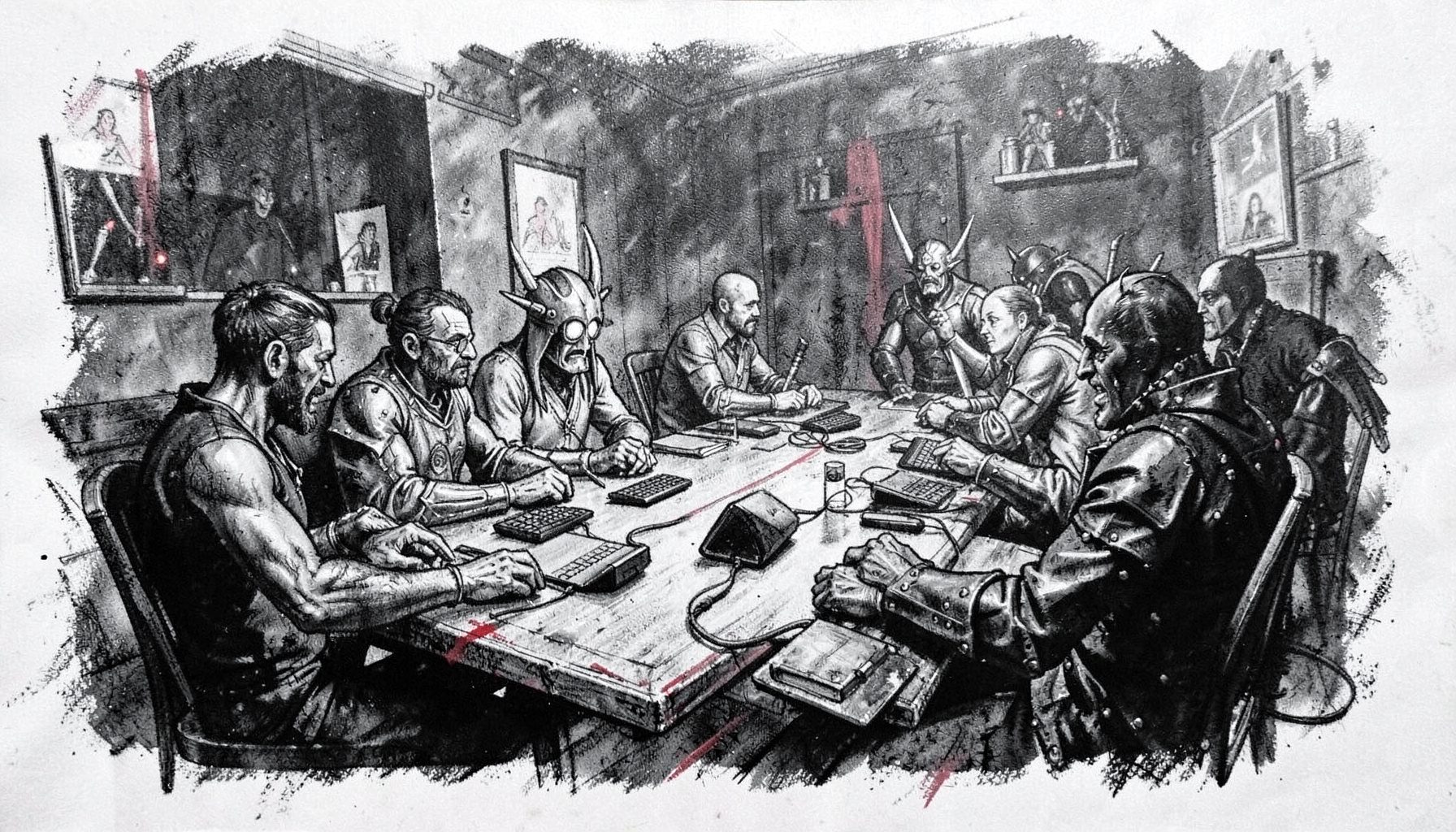
How to Promote a Game Demo at an Australian Convention
Conventions give a game demo a short, crowded window to earn attention. A trailer can start a conversation, but a well-run demonstration lets an attendee feel the mechanics, make a choice and imagine an evening with the game. Strong convention marketing therefore treats the booth as an experience rather than a display case.
High Level Games Convention, held at the Showboat Hotel in Atlantic City in 2018, brought together tabletop role-players, live-action players, designers, artists, publishers and vendors. Its published full event schedule shows the range on offer, from LARP experiences and workshops to panels and escape rooms. A promoter can learn from that mix: a promising demo still needs a precise slot, a defined audience and a reason to stay for what comes next.
At PAX Aus in Melbourne, Supanova at Sydney’s International Convention Centre or smaller events such as Brisbane Games Fest, attendees often choose between several simultaneous sessions. A pitch that works in one sentence can be understood in seconds, then rewarded with a few minutes of play. Casual Australian convention speech is usually relaxed and direct, so calling someone keen or inviting them to give it a go suits the room better than formal sales language.
The local market also shapes the budget. Australian studios and publishers often operate with small teams, making booth staffing, travel and printed materials worth careful consideration. Prices, supplier quotes and applicable GST should be planned in Australian dollars, while every completed play, qualified sign-up and post-event booking represents a useful commercial return.
Set one memorable promise
Choose the single idea you want visitors to repeat when they return to their friends. Describe the game through its central pleasure rather than its entire rules system: a tense negotiation, a cooperative rescue or a puzzle that changes the battlefield. “A two-player dungeon crawler where every door locks behind you” gives someone a clearer picture than a paragraph of features.
Show the real decision as soon as possible. A demonstration communicates faster when attendees see players weighing alternatives, making mistakes and recovering. Limit the introduction to roughly a minute, then let the game’s mechanics carry the pitch. A short, complete scenario creates more excitement than an unfinished sequence with no resolution.
Make the invitation accessible. Explain whether beginners can join, how long each demonstration lasts and whether reading, fast reactions or physical contact are required. Offer clear rules, a low-sensory route and an observer role where possible. People are more likely to participate when they can see their way in before committing.
Build a promotion path before doors open
Begin with coordinated promotion across email, social channels and community groups. Post short clips featuring a decisive game moment, publish demonstration times and link every post to one landing page with the venue, schedule and registration details. Coordinate with panels, creators and exhibitors so the demo is mentioned where attendees already plan to spend time.
On-site signage should work from a distance. Use large type, high contrast and an unmistakable location for the booth, with the start time visible from the aisle. Avoid burying essential details in a footer or crowding the entrance with sponsor logos. A friendly invitation can accompany the practical information, but the schedule and directions must remain effortless to read.
Prepare the team before opening. Assign someone to greet attendees, someone to run each demonstration and someone to manage the queue or capture opted-in content. Establish a sensible capacity for each round so play remains comfortable. Rehearse a 15-second pitch and a one-minute explanation, then let visitors ask questions without feeling pressured.
Match the format to the audience
Different formats create different reasons to stop. The strongest choice depends on how much time an attendee has, how easily the game can be understood and whether the publisher wants immediate participation or a deeper conversation.
| Format | Strongest use | Audience experience | Main trade-off |
|---|---|---|---|
| Hands-on tabletop demo | Complex systems and cooperative play | Players complete a short scenario | Long queues during peak periods |
| Three-minute challenge | High foot traffic and broad appeal | Players reach one goal and see a result | Less room for detailed explanation |
| Narrated showmatch | Story-heavy or cinematic games | Viewers watch a dramatic scene unfold | Spectators may never play |
| Open table with spectator roles | Role-playing and social deduction games | Observers vote, advise or take a role | Explaining roles takes time |
| Guided roleplay scenario | Live-action and immersive games | Attendees solve an in-character task | Requires space and simple costumes |
Design each round around one satisfying moment. A rapid challenge can feature one goal, one meaningful choice and one visible outcome, while a role-playing demonstration can begin with a brief briefing and an immediate character decision. Provide a host who keeps the pace moving and explains actions in plain English. Track started and completed sessions separately, since a busy booth with many interruptions may produce plenty of foot traffic but few finished plays.
Give attendees reasons to join and share
Promotion works hardest when the experience itself creates stories. Give visitors a moment worth describing, a clear explanation of what they handled and an easy way to bring others into the next session. That combination of hands-on engagement and visible enthusiasm gives exhibitors stronger promotion than repeated announcements over a loudspeaker.
A practical demo promotion checklist
Before the doors open
- Publish a 20–30 second clip built around one decisive game moment.
- List demonstration times with the relevant Australian time zone.
- Supply organisers and community channels with ready-made promotional graphics.
- Train staff on a short pitch, a clear explanation and common attendee questions.
- Separate interest, contact permission and future-session registration in sign-ups.
During each demonstration
- State the genre, player count, duration and whether newcomers can join.
- Show at least one meaningful decision and how it changes the outcome.
- Invite observers to vote, advise or take an active role.
- Capture reactions, photographs and playthrough clips only after clear consent.
- Close with one specific next step, such as a scheduled session or group booking.
Make sharing specific and consensual rather than merely asking people to post. Pair the invitation with a short reminder of the convention code of conduct and your own rules for photography, recording and player boundaries. A branded caption template can help, but it should not replace permission. Clear expectations allow enthusiastic attendees to help spread awareness without turning the booth into an intrusive content set.
Follow up while the energy is still warm
Send a thank-you message within 24 hours of the convention ending. Include the most useful demonstration material, a clear invitation to the next available session and the name of the person who ran the game. Segment recipients according to what they actually did: someone who watched briefly may need a general introduction, while a player who completed the scenario may want a group booking.
Measure outcomes that connect promotion with interest. Track qualified sign-ups, completed plays, demonstration bookings and repeat referrals rather than counting every person who glanced at the screen. Compare those results with the cost of staffing, travel and materials. This reveals whether the chosen format deserves another appearance or should be redesigned for a different audience.
Digital participation can extend the reach beyond the convention floor. Because Australia stretches from Perth to Sydney, a scheduled remote session or downloadable scenario gives regional supporters a practical way to participate. Keep the transition simple by sending one clear joining link with the appropriate local time.
The practical takeaway is to build one continuous path: a plain-English promise, a short hands-on proof, a visible sharing step and a specific follow-up.