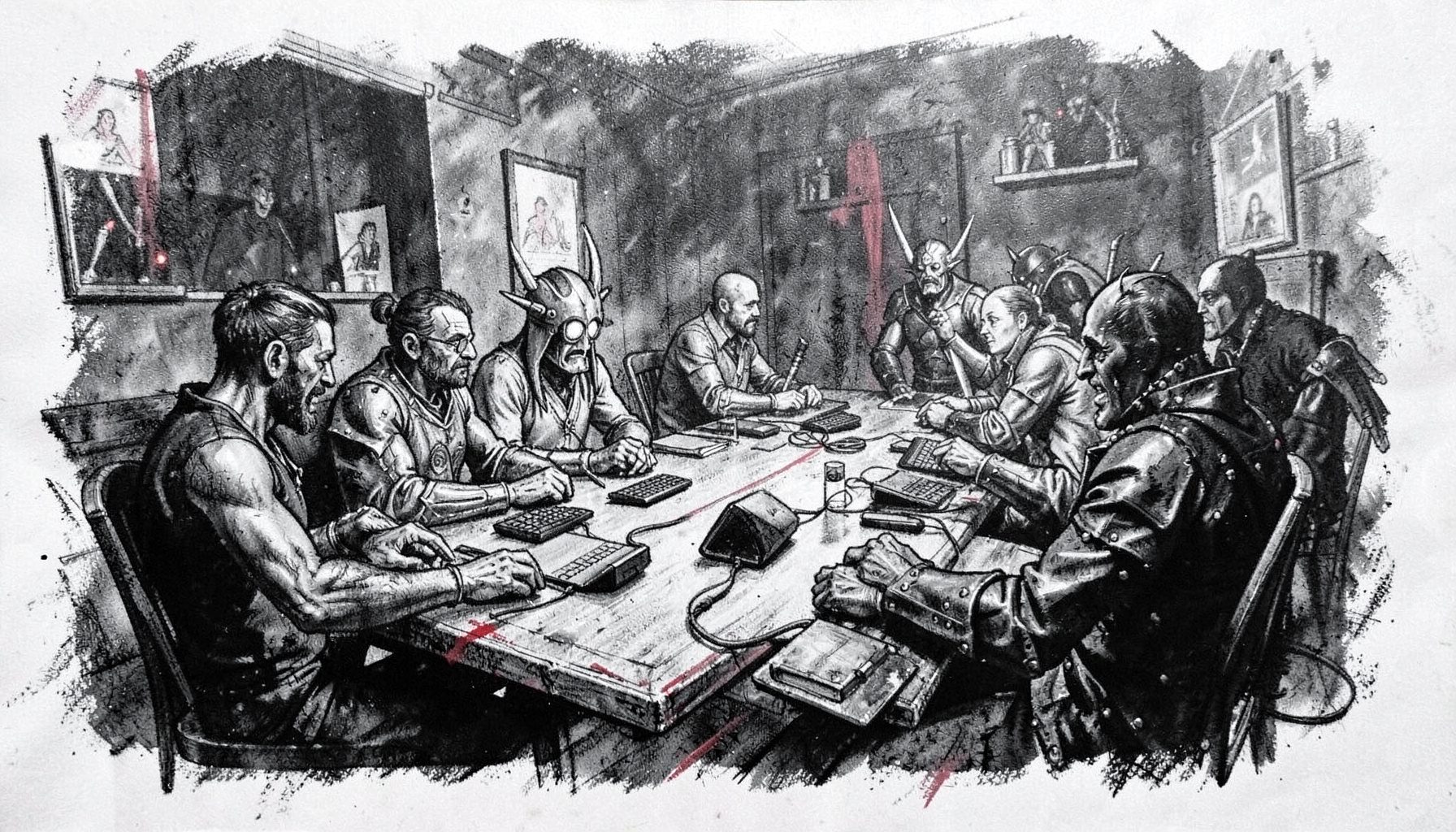
Making Convention Games Accessible to Every Player
An accessible convention game gives people with disability genuine ways to participate, rather than asking them to adapt quietly to a fixed format. At a tabletop session, that may mean readable character sheets, flexible time limits and a room with enough space for mobility aids. In a live-action role-playing game, it may involve alternative ways to move, gesture, fight, communicate or portray a character.
Accessibility also covers less visible needs. Players may have chronic pain, autism, ADHD, hearing loss, low vision, anxiety, a speech disability or a condition affected by noise and crowded spaces. A well-designed game makes its expectations clear, offers meaningful choices and treats access requirements as ordinary event planning rather than a special favour.
The spirit of a gathering such as High Level Games Convention is especially well suited to this approach. Collaborative storytelling, workshops, panels, vendors and immersive activities can all be designed around shared participation. The goal is a welcoming game in which a player can make decisions, contribute ideas and enjoy the fiction without having to disclose more personal information than they choose.
Design Access Before Players Arrive
Start with an access statement that explains the game in practical language. Include the expected duration, noise level, lighting, physical movement, touch, strong scents, scary themes, food, seating and any time-sensitive elements. Explain whether players will need to read small text, speak loudly, stand for long periods or respond quickly. Clear information lets people assess suitability privately and reduces uncertainty before they reach the venue.
Registration should include an optional access-needs field with useful choices, such as step-free entry, a quiet waiting area, captioning, an Auslan interpreter, assistance with written materials or permission to take breaks. Avoid asking for a diagnosis. A player usually needs an accommodation, not an explanation of their medical history. Provide a contact method for discussing details confidentially, and make sure that the person handling those requests has the authority to act.
In Australia, organisers should consider the Disability Discrimination Act 1992 alongside state and territory requirements. Legal compliance is a baseline, not the full measure of a good experience. A venue may technically have an accessible entrance while the route is blocked by boxes, the accessible toilet is locked or the lift cannot be reached without crossing a crowded gaming area. A pre-event walk-through can identify these practical failures.
Food and travel information are part of access planning too. For an Atlantic City event, publishing realistic details about nearby meals and breaks can help players manage medication, fatigue and dietary needs; a useful guide to nearby food options can sit alongside the game listing rather than being treated as unrelated tourism content.
Build Choice Into Rules and Roles
Inclusive mechanics give players several ways to affect the story. A player who cannot run, crawl or handle props should still be able to lead a negotiation, solve a puzzle, direct another character or describe an action. In a LARP, offer equivalent fictional outcomes for physical tasks: a character can use strategy, technology, magic, a companion or a declared ability instead of completing an obstacle physically.
For tabletop role-playing, provide pre-generated characters in accessible formats and allow players to customise complexity. Some people may prefer a simple character sheet with a few clear abilities, while others enjoy detailed options. Use high-contrast text, generous spacing, plain language and large-print copies. Digital files should work with screen readers, and important information should never be communicated through colour alone.
Flexible pacing helps a wide range of players. Give permission to pause, ask for a rule to be repeated, use a device, step outside or continue an action after a short break. A visible timer can be stressful for some players, so use private time cues where possible. Replace elimination with a recovery or support mechanic, allowing a player to remain involved if concentration, stamina or communication becomes difficult.
Safety tools should be explained as part of the rules briefing, not introduced only after a problem occurs. A content note, an X-card, a pause signal, a script-change option and an anonymous feedback method can work together. The spoiler-free style guide offers a useful model for explaining game information without revealing surprises, which is valuable when access notes need to be detailed but the experience should remain intact.
Make the Venue Legible and Comfortable
A game space should be easy to understand from the moment a player arrives. Use clear signs with large text, strong contrast and consistent symbols. Keep accessible routes free from cables, merchandise and loose chairs. Arrange tables so wheelchairs and mobility scooters can turn and park without blocking other players. Do not assume that a player wants to transfer from a wheelchair to a standard chair; offer choices.
Lighting needs careful attention. Avoid strobing effects, sudden blackouts and harsh glare on glossy character sheets. If atmospheric lighting is important, provide a well-lit alternative area or explain the effect in advance. Sound can be managed with lower background music, microphones, written instructions and a quiet space away from the main hall. A quiet room should be genuinely available, rather than a storage area filled with staff conversations.
Australia’s convention market includes major events in Melbourne, Sydney, Brisbane, Perth and Adelaide, along with smaller regional gatherings. Travel conditions vary widely: a player may arrive by accessible train, bus, rideshare or car, and a venue’s final approach can be more difficult than the main transport route. In cities where people commonly plan around public transport and long walking distances, publish distances, ramps, lift access and rest points instead of saying simply that the venue is “easy to reach.”
Everyday hospitality habits matter as well. Many Australian attendees expect to buy coffee, bring a water bottle and take informal breaks between sessions, so allow drinks at the table where spills can be managed safely. Mark a place for medication, mobility equipment and service animals. A practical venue map should show toilets, low-stimulation areas, food outlets, lifts and emergency exits without turning access information into an afterthought.
Support Communication and Social Safety
Game masters and volunteers shape the social environment through small decisions. Face the person speaking, use a microphone when needed and describe visual information aloud. Read aloud cards, handouts and important gestures when requested. Give players time to respond rather than interpreting a pause as disengagement. For deaf or hard-of-hearing participants, captions, written prompts and good sightlines can make group conversation far easier.
Do not rely on one person to remember every accommodation. Brief the whole facilitation team on privacy, respectful language, assistance animals, accessible routes and the agreed procedure for breaks or support. Staff should know how to help without grabbing a wheelchair, moving mobility equipment or speaking to a companion instead of the player. Ask before assisting and accept “no” without making the moment awkward.
Social accessibility is equally important. Explain whether the game includes shouting, close physical proximity, deception, audience participation or in-character conflict. A player should be able to opt out of touch and still remain part of the scene. For activities involving costumes or props, provide alternatives for people who cannot wear particular materials, grip objects or tolerate masks and strong smells.
Immersive games can offer powerful participation when their boundaries are clear. A LARP such as Pandaemonium experience can use role descriptions, safety briefings and opt-in intensity levels so that players know what kind of emotional and sensory engagement to expect. A dramatic setting does not require unpredictable access barriers; atmosphere can be created through story, sound, language and choice.
A Practical Access Checklist
Access works best when it is built into the production schedule. Test the game with people who have different access needs, pay them for their expertise and revise the design based on what they identify. A checklist cannot replace lived experience, but it can stop essential details from disappearing during a busy convention week.
Use these checks before opening the table, room or activity:
- Publish access information covering movement, lighting, sound, touch, themes, timing, seating and breaks.
- Offer large-print, digital and screen-reader-friendly materials, with colour-independent instructions.
- Provide more than one way to complete physical, social and communication-based challenges.
- Keep routes, toilets, lifts, quiet spaces and emergency procedures clear and usable.
- Train facilitators to use consent-based assistance, respectful language and agreed safety tools.
- Collect private feedback after the session and record specific changes for the next event.
For Australian organisers, include a named access coordinator and a realistic budget for captioning, interpreters, support workers, accessible printing and venue adjustments. The Companion Card programme may be relevant for eligible attendees, while NDIS funding arrangements can vary and should never be assumed by event staff. Make prices, refund rules and companion policies visible so cost does not become another hidden barrier.
The strongest test is simple: can a player understand what will happen, choose how to participate, pause safely and leave with their dignity intact? Before publishing the event listing, invite an access consultant and at least one disabled playtester to review the game, the venue route and the player information together.