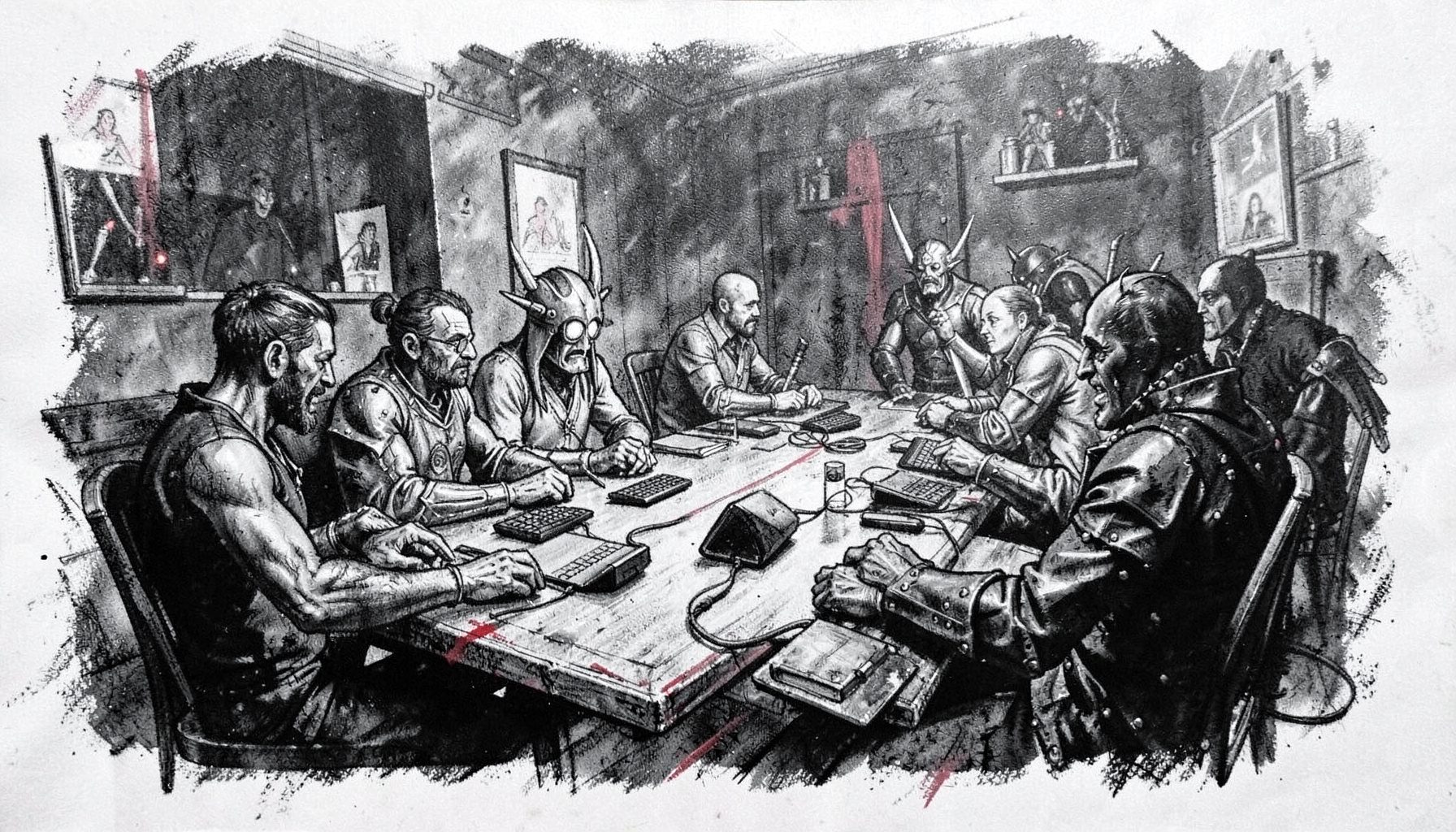
How HLGCon’s Live Actual Play Brought Stories to Life
High Level Games Convention gathered tabletop role-players, LARP participants, designers, artists, publishers and curious newcomers at the Showboat Hotel in Atlantic City in 2018. Among the many scheduled activities, the live-streamed actual play offered a compact view of what made the convention special: collaborative storytelling performed in front of a community, then shared with viewers beyond the venue.
Actual play sits between gaming session, theatre and friendly conversation. The players make genuine decisions at the table, while the audience watches rules, character choices and unexpected complications shape the narrative. HLGCon’s broadcast captured that balance without treating the game as a polished stage production with every outcome predetermined.
For viewers in Australia, the stream also created a useful bridge across distance and time zones. Someone in Melbourne, Brisbane or Sydney could experience a taste of the convention from home, perhaps with a late-night cup of tea or a second monitor open beside a character sheet. The result was an accessible snapshot of an event built around participation rather than passive spectatorship.
What the Stream Brought to HLGCon
The strongest feature of the broadcast was its sense of presence. The camera did more than record people rolling dice; it showed a table responding to one another in real time. A pause before a risky decision, a sudden change in tone from the game master, or a laugh after an unexpected rules interaction all helped viewers understand the social rhythm of role-playing.
That rhythm reflected the wider convention. HLGCon included panels, workshops, an exhibitor hall, escape-room-style activities and LARP experiences, so the actual play was part of a larger ecosystem. It demonstrated how a story can begin with a set of rules and become something personal through trust, improvisation and shared attention.
A streamed game also made the convention’s inclusive spirit visible. Experienced players could appreciate tactical choices, while newcomers could observe how table conversation works before joining a local group. The emphasis remained on building a story together, rather than proving who knew the rules best.
A Table Built for Shared Storytelling
The session worked because every participant contributed a different kind of energy. The game master provided setting, pressure and consequences, but the players supplied the emotional direction. A seemingly minor choice could redirect the scene, giving the audience a clear example of collaborative authorship in action.
Actual play is especially effective when the table allows room for uncertainty. Viewers do not need to know the final destination if they can see the choices matter. The suspense comes from watching characters negotiate danger, friendship, conflicting goals and the limits of their resources.
That approach has particular value for Australia’s tabletop market, where many groups are spread across large distances. A regular game in Perth, Adelaide or Hobart may rely on online tools when local players cannot meet. A convention stream offers more than entertainment in that setting: it becomes a practical demonstration of tone, pacing and table etiquette that a group can adapt for its own campaign.
Why the Broadcast Worked for Remote Viewers
A live feed carries a different energy from a recorded session. Viewers know that the players are reacting in the moment, and that a technical interruption, rules question or unexpected twist cannot simply be edited away. That imperfection made the stream feel connected to the convention floor rather than packaged after the fact.
The format also suited the way many Australian audiences consume gaming content. Viewers in eastern cities could watch during an evening window, while those in Western Australia faced a different start time and might catch the session later. Clear scheduling, reliable audio and an accessible archive become important when an event reaches across several Australian time zones.
For organisers considering a future broadcast, the lesson is practical. The table needs microphones that separate voices, a camera angle that shows expressions and play materials, and a moderator who can explain terminology without interrupting every exchange. The best production choices support the game instead of competing with it.
The People Behind the Performance
A successful actual play depends on preparation that viewers rarely see. Players need enough information to make confident choices, the game master needs a manageable scenario, and the production team must understand when to focus on the fiction rather than the equipment. HLGCon’s wider programme helped establish a setting where those roles could work together.
Community standards matter just as much as technical planning. Because a public stream can be watched by people outside the room, organisers need clear expectations around consent, recording, respectful conduct and the treatment of sensitive themes. Australia’s privacy framework includes the federal Privacy Act for covered organisations, along with state and territory rules that can affect recording conversations, so permission should be explicit rather than assumed.
The same care applies when games include younger participants or public-facing convention activities. Organisers working in Australia may need to consider child-safety procedures, venue requirements and Working with Children Check obligations, depending on the state and the role being performed. These details rarely appear in the exciting moments of a broadcast, yet they help make participation safe and sustainable.
Details That Made the Recap Memorable
The broadcast’s appeal came from a combination of dramatic play and ordinary human reactions. A recap should remember both. The most revealing moments were often the small ones: players checking an interpretation, celebrating a clever idea or pausing to make sure everyone understood the stakes.
Useful details to carry into a viewing recap include:
- The contrast between planned scenario elements and genuinely improvised player decisions
- The way the game master used questions, descriptions and consequences to maintain momentum
- The visible cooperation between players when a scene became difficult
- The balance between rules discussion and character-focused storytelling
- The sense that the audience was observing a convention community, not a detached studio production
That balance is valuable for Australian groups comparing online and in-person play. A club in Canberra may have access to a regular venue, while a group in regional New South Wales may depend on Discord or streamed sessions. Both can use the broadcast as a model for keeping the table welcoming, legible and focused on shared enjoyment.
The stream also sat naturally beside HLGCon’s exhibitor and creator culture. Designers, publishers and artists could see how a game’s ideas behaved in play rather than only in a product description. For a smaller Australian publisher, that distinction matters in a market where demonstration sessions and community recommendations can carry significant weight.
From Convention Floor to Living Room
The actual play did not exist in isolation from the event’s practical infrastructure. A convention requires people who coordinate rooms, schedules, equipment, accessibility, guest logistics and community expectations. The stream extended that work to viewers who could not travel to Atlantic City, giving them a window into the event’s collaborative atmosphere.
It also showed why sponsorship can support more than signage or promotional space. Funding can help cover streaming equipment, recording staff, accessibility measures and the time required to prepare presenters. Organisations interested in the event’s partnership model can review the sponsorship information while considering how support can improve the audience experience.
For Australian conventions, the financial details deserve careful attention. Ticketing, merchandise and paid workshops may involve Goods and Services Tax, while consumer-facing promises can be affected by the Australian Consumer Law. A clear refund policy, accurate event description and transparent pricing are useful whether the convention is held in Melbourne, on the Gold Coast or in a smaller regional centre.
The broadcast format can also reduce some barriers to participation, though it cannot replace physical access planning. Captions, readable overlays, good sound levels and content notices help remote viewers engage on their own terms. In-person attendees still need accessible rooms, suitable seating and clear pathways through the venue.
What the Stream Left Behind
The most lasting achievement of the session was its invitation to participate. Viewers were shown that role-playing does not require perfect acting, encyclopedic rules knowledge or an elaborate collection of miniatures. It requires a group willing to listen, make choices and accept that another player’s idea may change the direction of the story.
That principle connects to the convention’s broader submission and programming culture. Future contributors can consult the event submission form when proposing a panel, workshop, game or streamed session. A strong proposal should explain the intended audience, accessibility needs, technical requirements and the kind of interaction participants can expect.
The Australian scene can build on that model through local conventions, game stores and online communities. A Sydney club might stream a beginner-friendly one-shot, a Brisbane LARP group could record a safety briefing, or a Hobart designer might run a playtest for viewers in other states. Each format extends the invitation while preserving the central value of face-to-face or voice-to-voice collaboration.
Before launching a public game, organisers should also read the community policies and adapt their own expectations to the venue and audience. Agreeing on boundaries, recording consent, content warnings and respectful communication before play protects the players and gives the audience confidence in the space.
The live-streamed actual play remains a useful recap of what HLGCon did well: it made gaming visible as a social art, connected convention-floor creativity with remote audiences and showed that an unscripted story can be compelling when everyone at the table has room to contribute. The practical takeaway is simple: prepare the technology and policies carefully, then give the players enough trust and freedom to create the moments worth watching.