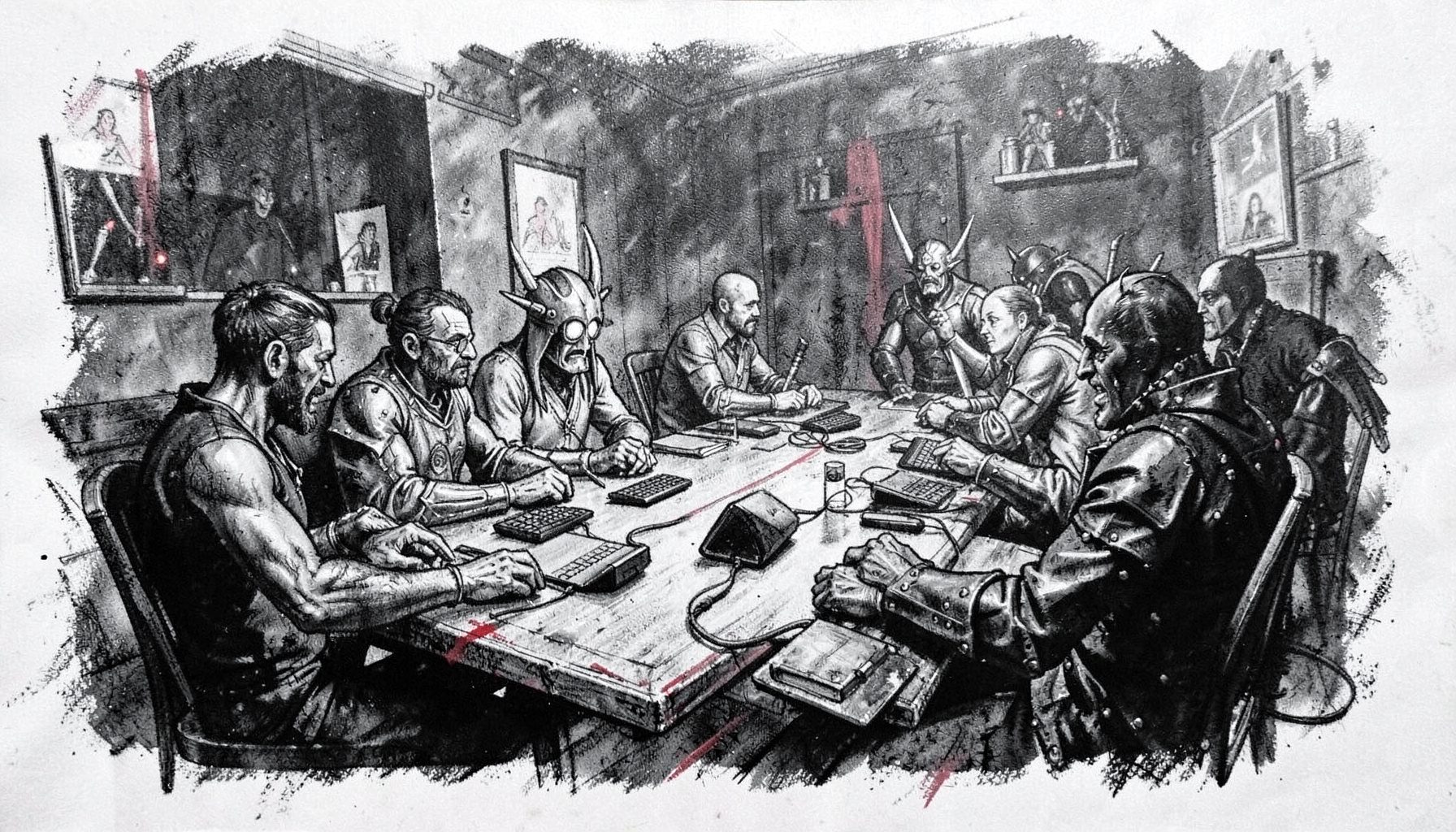
Tracking Engagement Across HLGCon Workshops
High Level Games Convention brought tabletop role-players, LARP participants, designers, artists, publishers and vendors together at the Showboat Hotel in Atlantic City in 2018. Its workshops sat within a wider programme that included gaming sessions, panels, escape rooms and an exhibitor hall, so attendance alone could never explain the full participant experience. Learn more about Con Policies Code Conduct.
A useful review of workshop engagement must therefore connect headcounts with behaviour. Session bookings, late arrivals, questions, collaborative activity, repeat participation and post-event feedback can reveal whether a workshop attracted a curious audience, developed genuine involvement or helped people move into other parts of the convention. Public event details on the HLGCon event site provide the setting; a careful measurement model supplies the interpretation.
Workshop Data Has More Than One Story
The simplest figure is the number of people registered for each workshop. It is useful, but limited. A session with 30 bookings may have 22 attendees, while another with 15 bookings may achieve full attendance and generate a lively discussion. Comparing only registration totals would make the larger session appear more successful, even if the smaller group produced stronger learning or community connection.
A robust dataset can combine operational, behavioural and reflective measures. Operational data includes capacity, bookings, attendance and waiting-list movement. Behavioural data covers participation during the session, completion of practical tasks and movement into related activities. Reflective data comes from ratings, written comments and follow-up surveys. These categories should remain distinct so that organisers do not turn an easy-to-count measure into a claim about quality.
For HLGCon, the surrounding programme matters as well. A workshop placed beside a busy exhibitor area may receive walk-in interest, while a session scheduled against a popular LARP activity may experience lower attendance for reasons unrelated to its content. Time, location and competing events are necessary fields in any serious analysis.
What Counts As Engagement
Engagement begins before the workshop starts. A participant who reads the session description, books a place and checks accessibility information has already shown a different level of interest from someone who notices a sign and joins at the door. These actions do not prove satisfaction, but they help explain the route by which people enter the session.
During the workshop, useful indicators include punctuality, retention, contributions to group tasks and interaction with the facilitator. In a collaborative storytelling activity, engagement may appear as character development, scene building or peer feedback. In a design workshop, it could be prototype completion, critique participation or the number of ideas tested. The measure should match the activity rather than impose a single standard on every format.
Afterwards, the strongest evidence often comes from linked behaviour. Did attendees visit a related panel, join another game, speak with a designer or return for a second workshop? A short exit survey can ask about learning, enjoyment, confidence and intention to participate again. A later survey can test whether those intentions became action, although response rates usually fall as time passes.
Signals Worth Recording
Workshop teams do not need a complicated analytics platform to begin. A shared spreadsheet, consistent sign-in process and short feedback form can produce a useful baseline, provided every facilitator records information in the same way. The following fields offer a practical starting point:
- Booked places, actual attendance, walk-ins and no-shows
- Arrival time, departure time and full-session retention
- Capacity, waiting-list numbers and repeat attendance
- Participation in activities, discussions or collaborative tasks
- Accessibility requests, language needs and support provided
Attendance should be recorded in a way that avoids unnecessary personal information. A unique booking code can link registration and feedback without requiring organisers to retain a person’s full profile. For a convention community, this approach is especially valuable because participants may attend under a preferred name, share devices or move between several event roles.
Facilitators can also use a simple engagement scale, provided they apply it consistently. For example, “observed,” “participated” and “led” may describe involvement in a group exercise. These labels should describe behaviour, not personality. A quiet attendee may be deeply engaged through careful listening and written work, while a highly vocal participant may dominate without helping the group progress.
Comparing Workshop Formats
Different formats generate different patterns of participation. A rules seminar may have strong concentration and few spoken contributions. A LARP workshop may involve movement, improvisation and short bursts of intense collaboration. A publishing session may attract questions after the formal presentation rather than during it. Data needs to preserve these distinctions.
The comparison below shows how a common set of measures can be interpreted across four workshop types. The figures are illustrative measures, not claimed HLGCon results; the important point is that each format needs an appropriate definition of success.
| Workshop format | Useful engagement signals | Likely limitation | Strong follow-up measure |
|---|---|---|---|
| Rules or mechanics session | Attendance, questions, scenario completion | Quiet concentration can look inactive | Confidence applying the rules |
| LARP skills workshop | Participation, task completion, peer interaction | Physical activity may be difficult to count consistently | Use of the skill in a later game |
| Game design workshop | Prototypes, critique, iteration and retention | Output quality requires facilitator judgement | Continued development of the project |
| Community or safety panel | Attendance, submitted questions, resource uptake | Sensitive topics may reduce visible participation | Perceived safety and access to support |
A useful dashboard should present both volume and depth. “Attendance was high” is a volume statement. “Most attendees completed the practical activity and reported greater confidence” is a deeper account. Neither replaces the other, and neither should be used without noting the session’s capacity, duration and audience.
For Australian organisers, this distinction is familiar from events such as PAX Aus in Melbourne, where a packed session may reflect venue appeal, a major guest or timetable pressure rather than the content alone. The same principle applies when comparing a workshop in Atlantic City with a future event in Sydney, Brisbane or Melbourne.
Reading Participation In Australian Context
The Australian tabletop market is geographically dispersed. A participant travelling from Perth or Adelaide may plan around flights and accommodation, while someone in inner Melbourne or Sydney may decide at short notice based on public transport, weather or the rest of the convention schedule. Travel distance can affect booking confidence, no-shows and willingness to attend an early morning workshop.
Local convention habits also shape the dataset. Australian audiences are accustomed to mixed programmes that combine scheduled sessions with an open hall, casual demos and social play. At a major event, people may protect time for browsing publishers and independent creators, then choose workshops opportunistically. A walk-in rate may therefore signal timetable flexibility rather than weak advance promotion.
Currency and market size are relevant when interpreting commercial workshops. An Australian designer may be testing a game for a comparatively small domestic audience, with different distribution costs and GST considerations from a United States publisher. Feedback about price, availability or production may reflect local purchasing conditions rather than a judgement on the game’s creative quality.
Guardrails For Ethical Analysis
Engagement tracking involves people, so the quality of the dataset depends on trust. Attendees should know what is being recorded, why it is collected, how long it will be retained and whether comments may be quoted. Consent should be clear for photographs, recorded sessions and identifiable testimonials. Aggregated results are usually enough for programme planning.
Community standards also matter when analysing participation. A code of conduct gives organisers a basis for responding to harassment, exclusion or disruptive behaviour, while measurement should never treat a report as an engagement failure. HLGCon’s community conduct policy is a useful reminder that participation must be considered alongside safety and access.
Practical safeguards include:
- Report totals in groups large enough to protect individual identities
- Separate accessibility information from general attendance reporting
- Avoid ranking facilitators using raw survey scores alone
- Explain how behavioural observations will be used
- Offer a private route for complaints and sensitive feedback
Demographic information requires particular care. If collected, it should have a clear purpose, use optional responses and avoid categories that make individuals identifiable in a small session. Organisers should also examine who is missing from the data. A high response rate from experienced gamers may conceal barriers faced by newcomers, disabled attendees or people uncomfortable with public participation.
Turning Attendance Into Insight
The most useful analysis connects workshop evidence to decisions. If a session has a long waiting list, organisers might increase capacity, repeat it or schedule a second version. If attendance is strong but retention drops sharply after the first activity, the description, pacing or format may need review. If a small session receives detailed, positive feedback and produces repeat participation, it may deserve protection even without a large audience.
Facilitator notes can add context that numbers cannot. A record might explain that a room change delayed the start, a microphone failed, or an advanced session attracted beginners who needed additional support. These notes prevent future organisers from treating every low score as a content problem and help identify operational improvements.
The final report should show uncertainty. State how many people responded, distinguish booked places from actual attendance and identify measures that were estimated or inconsistently recorded. A transparent account is more valuable than a polished score with no explanation. For HLGCon-style events, the goal is to understand how workshops contribute to collaborative storytelling and community participation within the whole convention.
The key point to remember is that attendee engagement is a pattern, not a single number: meaningful workshop data joins attendance, participation, experience, access and follow-through without losing sight of the people behind the figures.