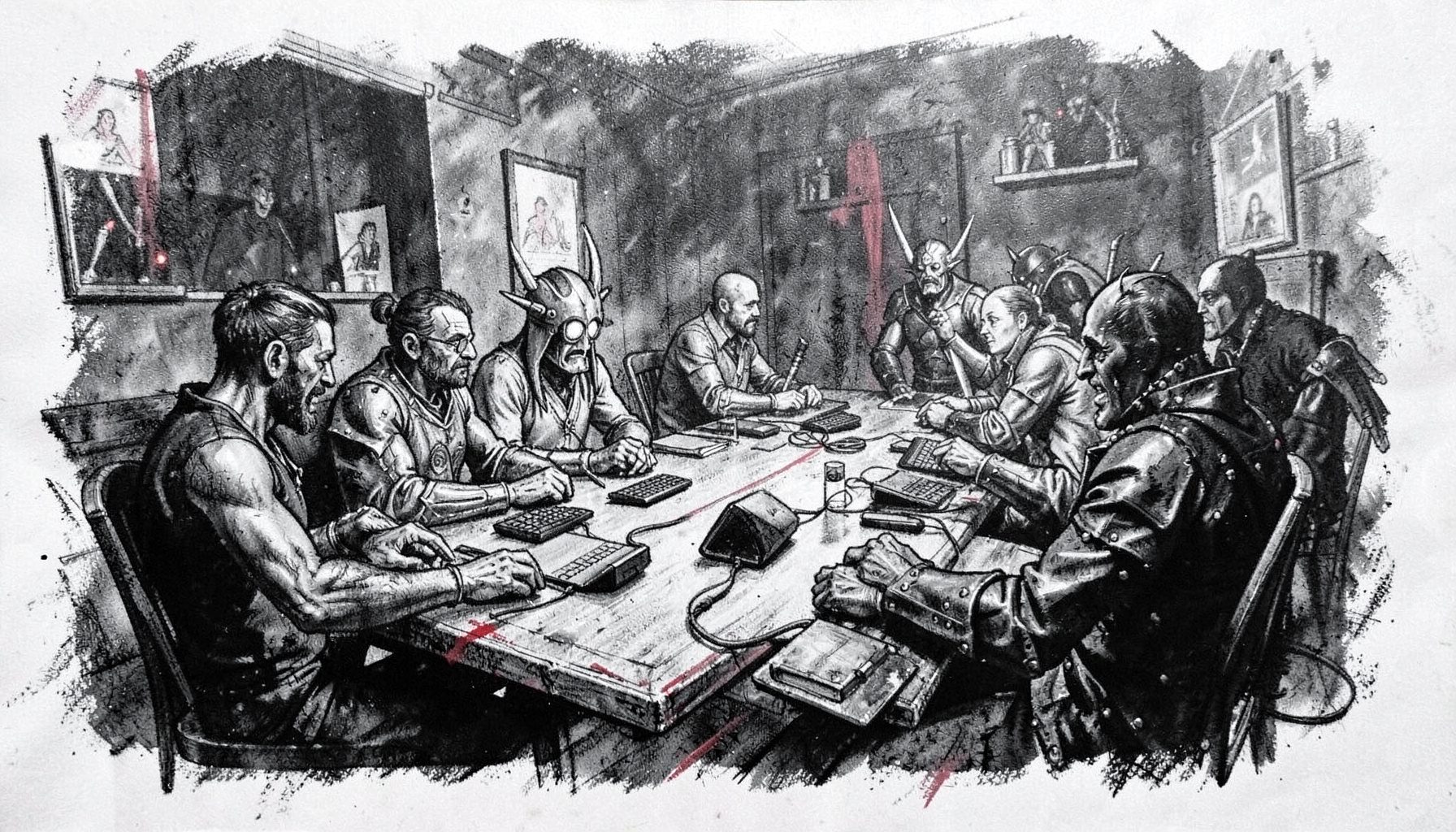
How HLGCon’s layout encouraged spontaneous gaming in hallways
At the 2018 High Level Games Convention, tabletop role-players, live-action role-play (LARP) players, designers, artists, publishers and vendors gathered inside the Showboat Hotel in Atlantic City, New Jersey. The convention combined LARP experiences, tabletop sessions, panels, workshops, an exhibitor hall and escape-room challenges, turning a hotel into a temporary home for collaborative storytelling.
Its most convincing social feature was not any single scheduled activity but the way the building invited people to play while moving between activities. By treating shared circulation routes as social connectors, the layout made spontaneous gaming in hallways a natural extension of the programme. A player could encounter a demonstration, a conversation about a rule or an unfinished group encounter, then turn that chance meeting into a brief game without first making a formal plan.
Hallways as invitations rather than leftovers
Hotels are rarely designed for convention traffic, yet the Showboat’s connected public areas gave HLGCon a useful framework. Guests moving between the exhibitor hall, programme rooms and social spaces repeatedly crossed the same paths. Those crossings supplied the raw material for chance encounters: a player with a spare hour, a designer carrying prototypes, or a group looking for one more member.
Unlike a dedicated convention centre, a hotel creates a layered social environment. LARP participants in costume, artists carrying prints and newcomers seeking a table could briefly share the same stretch of carpet. By keeping games and transitions visible, those differences invited conversation rather than concealment. The hallway became a low-pressure threshold between observation and participation.
Spontaneous gaming flourished because participation required little preparation. No advance booking, costume or specialist knowledge separated a passer-by from the action. A familiar card game, a handful of dice or a one-page scenario could turn a pause into a shared experience. That ease was especially valuable for first-time attendees who had not booked a game.
Why chance encounters became playable
The most effective encounters were not simply people talking; they offered a clear, small way to play together. A dice game on a low table, a brief character-building exercise or a rules demonstration could absorb a newcomer without demanding a full afternoon. The game supplied a reason to stop, while its short duration made commitment easy.
That accessibility mattered for a convention committed to inclusive community participation. Someone who knew no one could join a conversation before the official programme began. A shy attendee could watch a demonstration before asking a question. An experienced role-player could offer a rule without making the newcomer feel tested. Informal play lowered the social cost of entry.
The hallway also preserved player agency. Scheduled sessions offered structure, but ad hoc encounters offered choice: join this group, try that mechanic or continue walking. That contrast reduced the pressure to optimise every minute. It also made room for unexpected formats, including short live-action scenes and hybrid games that mixed physical performance with tabletop decisions.
Movement, comfort and the Showboat setting
Movement through the Showboat became part of the programme. Routes between activity areas doubled as places to compare experiences, finish a puzzle or test a prototype. This made a hotel corridor functionally different from a sealed session room: the game remained visible, and the possibility of joining stayed in view.
Physical comfort also shaped that openness. The Showboat Hotel packing guide offers practical advice for attendees preparing for a full day of convention activity. Comfortable shoes, water and a light layer supported the long walks that turned passive circulation into active participation.
Corridor activity reached people outside the pre-arranged social circle because it did not require a full session commitment. A visitor could begin with the exhibitor hall and then follow a demonstration into a hallway game. A vendor could explain a mechanic to passing players. A LARP group could use a public area for a scene before moving to a more involved encounter.
Why the layout felt familiar in Australia
Australian players already know the value of improvised play. In Melbourne, Sydney and Brisbane, board-game cafes, hobby shops and community clubs turn meeting a friend into an activity rather than a formal appointment. An empty table at a café can become the setting for a teach-in, while a convention hotel corridor can perform a similar social function on a much larger scale.
Everyday travel habits make that comparison useful. Australians commonly plan convention weekends around public transport, a light backpack and a café meetup, checking timetables and messages before setting out. Those habits reward events with visible schedules, clear signs and places to pause. They also favour a design that lets an attendee join something nearby instead of crossing a large venue for a single game.
The local market reinforces the same behaviour. Australia has established independent game retailers, volunteer-run conventions and online communities that often distribute event information through Discord or Facebook groups. Those networks thrive on visible opportunities for newcomers and regulars to meet. HLGCon’s hallway play mirrored that culture by letting conversations become participation without a membership code or pre-booked team.
Safety and inclusion in shared play
Unstructured play still needs boundaries, especially when LARP combat, escape-room puzzles and crowded corridors meet. Inclusive design depends on clear consent practices, marked quiet areas and identifiable staff who can help participants move from watching to joining with confidence. Australian organisers must also consider public liability insurance and state or territory work health and safety obligations.
Liquor rules matter where licensed drinks are served, too. Liquor & Gaming NSW regulates licensed venues in New South Wales, while games requiring an age classification work within the Australian Classification Board’s national framework. These systems differ from those in New Jersey, but the practical message travels well: an open social space still needs responsible governance.
Good design makes those permissions easy to understand. Participants can ask before joining a scene, opt out of physical interaction and find a quieter alternative. Organisers can keep escape-room traffic separate from LARP encounters without making either activity invisible. These distinctions make spontaneity feel welcoming rather than chaotic, particularly for attendees who had never tried live-action role-play.
Designing corridors for participation
For organisers considering a similar event, HLGCon’s strongest lesson is that circulation should be designed as part of the programme, not left over after rooms are allocated. A hallway game needs light, surfaces, signs and permission. The HLGCon event details page provides a reference for how the convention presented its wider offering of activities and spaces.
The following measures would preserve chance-based play while making it safer and easier to sustain:
- Place social thresholds beside busy routes so arriving players can see an invitation before committing to a formal session.
- Offer pocket-sized games and one-page scenarios that can produce a satisfying result within fifteen minutes.
- Use low, accessible tables and standing play zones to serve different bodies, mobility needs and attention levels.
- Separate noisy demonstrations, immersive scenes and quiet conversation without hiding any of them from the wider event.
- Display simple rules, consent signals, session times and the name of a nearby volunteer who can help.
- Test the flow with wheelchair users, first-time attendees and quieter participants, then adjust signs and sound levels.
Why the hallway mattered
The lesson of HLGCon was not that every convention needs a game in every corridor. It was that a successful layout makes participation discoverable, brief and low-risk. The hotel’s shared routes turned movement into a sequence of small invitations, allowing scheduled play and improvised play to reinforce one another.
Spontaneous play did not replace formal sessions. It acted as a bridge between them, giving newcomers a first step and giving experienced attendees room to share ideas. The result was a convention that felt alive between programmes, with the hallway functioning as an essential part of the community rather than an overlooked gap between events. Its lasting lesson was simple: the layout was a social instrument, not spare space.