A player’s guide to LARP social etiquette before, during and after
Live-action role-playing (LARP) turns social manners into part of the rules. A joke that would be harmless at dinner can feel exclusionary when it follows a player who has just described a fear-based character; a costume that looks playful in a photograph may reveal an unwanted stereotype; a volunteer working a late shift deserves thanks even when the final scene is chaos. Good etiquette is therefore practical rather than decorative. It helps strangers collaborate, keeps character conflict meaningful and makes the shared world safer for people with different identities, experience levels and access needs.
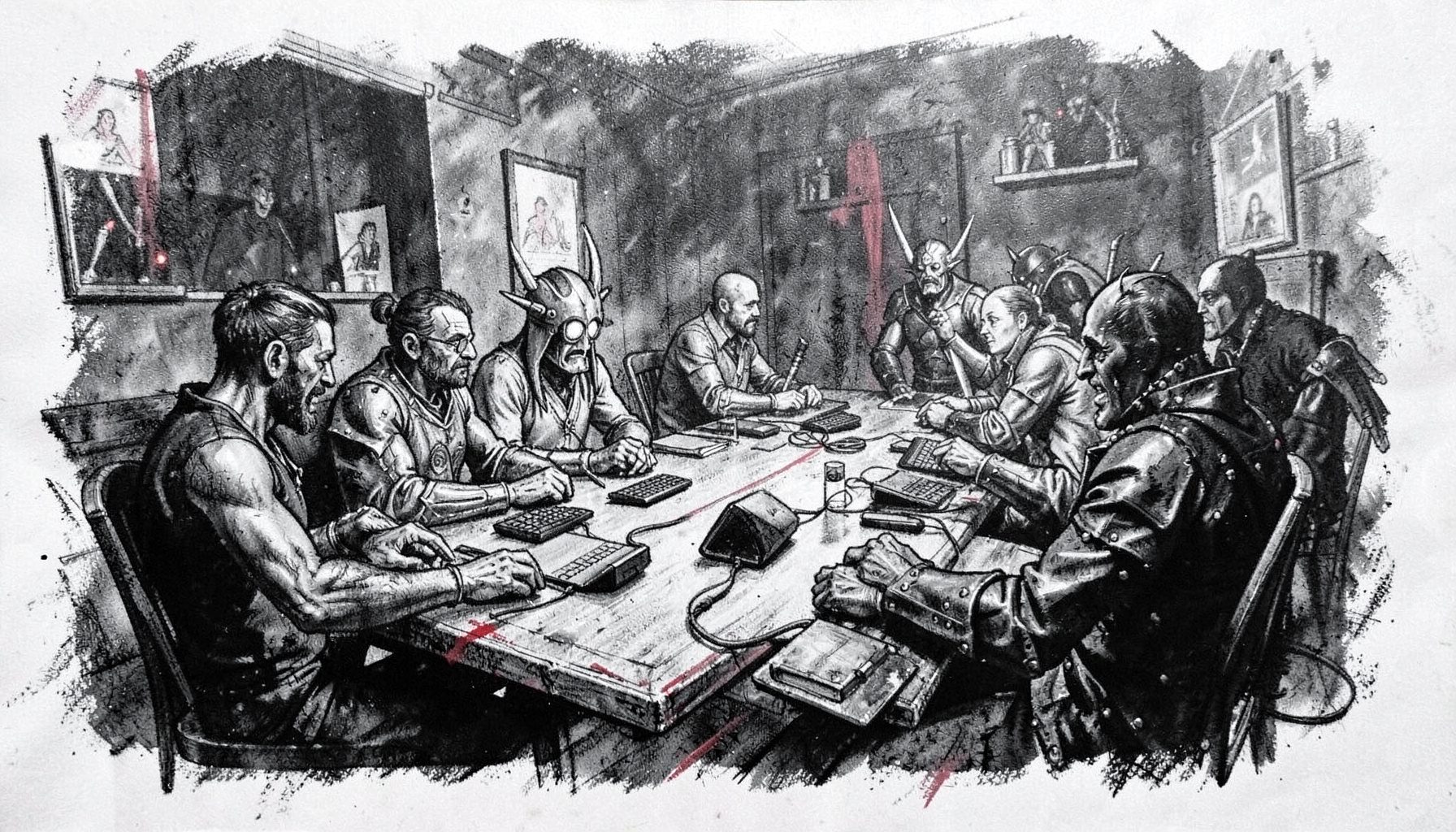
The 2018 High Level Games Convention at the Showboat Hotel in Atlantic City brought together tabletop role-players, live-action performers, artists, designers, publishers and vendors, with LARP, panels, workshops and escape-room experiences alongside one another. Crossing those formats rewards a simple habit: make expectations clear, then watch what happens in the moment. Across every phase of a game, etiquette concerns people first, play second and stories strongest.
Etiquette belongs inside the game world
LARP etiquette is not a separate code from good roleplaying. It governs the small choices that let someone enter the fiction, stay comfortable and contribute without having to defend themselves repeatedly. Organisers often encode these choices through registration questions, costume notes, safety briefings and clear labels for spaces such as quiet rooms or first-aid areas. The strongest rule is simple: never treat another participant’s discomfort as a puzzle to be solved in character.
| Experience | What players improvise | Main social pressure | A useful social cue |
|---|---|---|---|
| Tabletop RPG | Dialogue, actions and character voices at the table | Turn-taking and equal participation | Ask before interrupting or reading another player’s notes |
| LARP | Movement, speech, emotion and improvisation in a shared space | Physical space, touch and sustained immersion | Use the agreed safety phrase or gesture before approaching |
| Festival or immersive event | Movement plus structured team challenges | Crowds, noise, schedules and public visibility | Follow crew instructions and make room for others |
The comparison matters because the same behaviour can have a different impact in each format. A dramatic shove may be understood during a staged fight, yet still be unacceptable beside someone who has not consented. Facial expression can carry a scene in LARP but disappear around a virtual screen; conversely, a quiet tabletop participant may need more deliberate invitation than an animated actor. Read the format, the space and the people rather than assuming last year’s routine applies.
Scale also changes etiquette. At a small game, asking one organiser where to put a coat may be enough. At a convention with multiple tracks, players need to recognise when a scene has spilled into a public corridor or when a costumed group blocks a fire route. Clear signage, realistic scheduling and respectful movement reduce accidental disruption. The principle remains the same across live-action role-playing, tabletop sessions and hybrid play: make participation predictable without making it sterile.
Before the game: a practical etiquette checklist
Preparation begins before packing the costume. Read the event rules, character brief and venue information, then talk through anything that could affect safety or access. Start with the organiser’s no-secrets style guide and treat explicit boundaries as shared information rather than details to disclose against another person. If the event page does not answer a concern, ask privately before travel day; a quick clarification is cheaper than a painful scene.
Your arrival and preparation
- Arrive inside the published check-in window and allow for Australian travel, whether using public transport in Sydney or Melbourne or driving to a regional convention.
- Confirm parking arrangements for regional events, since long drives and poorly planned arrival times can leave players outside an essential briefing.
- Pack for Australian conditions: summer heat can be intense in Melbourne, Sydney and Brisbane, while Canberra can turn cold after sunset.
- Bring only props that the rules permit, and label anything fragile, sharp or likely to trigger allergy or sensory concerns.
Most uncertainty is resolved at the pre-game briefing. Do not treat it as an administrative formality: note the facilitator’s name, emergency arrangements, scene boundaries and the exact signal for stepping out of character. Keep emergency contacts accessible and tell a trusted person which event you are attending if that is part of your usual safety practice.
Questions to settle at the briefing
- How should a player request a pause, leave a scene or return after downtime?
- Which words or gestures signal consent, discomfort or no contact?
- What is the photography policy for scenes, costumes and social areas?
- Where are first aid, quiet space, water and accessible toilets?
During the game: make room for good play
When you reach the playing area, check your look in the context of the game. A cloak, accent, prosthetic or uniform can carry unintended meanings for another culture. Ask before touching a costume, adjusting another performer’s makeup or borrowing an object. Pronouns and names matter out of character as well: do not joke about someone’s identity, then expect them to trust you with an intense scene later.
During play, distinguish the character from the player when it matters. A villain can threaten, deceive or dominate in fiction, but the person behind that character still controls physical contact, sexual content and participation. Use out-of-character language cleanly, such as “Safety, pause,” rather than burying a request in the scene. Many organisers use coloured cards, wristbands or a buddy system; use the mechanism supplied instead of improvising a different one.
Australian conversational habits can sometimes make boundaries harder to read. Phrases such as “no worries” or “she’ll be right” may soften a concern without withdrawing it. Do not press for repeated reassurance or use casual reassurance as proof of consent. A clear “I’m not comfortable with that” is enough, and a good scene partner responds without embarrassment, argument or an attempt to bargain.
During the game: handle tension and disagreement
Good conflict needs a clear line between stakes and consent. Agree beforehand on what can be simulated, what contact is off-limits and how to escalate a problem. If a scene goes wrong, use the established pause method, step into the agreed safe area and tell a facilitator what happened in plain language. Do not solve the incident through an in-character revenge scene or recruit the rest of the party to judge someone publicly.
Disagreement is not automatically misconduct. A player may dislike a decision, miss a cue or want a different interpretation of the rules. Separate those issues from safety concerns: the first belongs in an after-action discussion with the facilitator; the second may need an immediate check-in. Keep recordings, social posts and streamed footage out of reach unless every identifiable participant has agreed, including people visible in the background.
Australian events often meet in community halls, convention rooms and licensed pubs or hotels. Venue policy still applies: follow age restrictions, responsible-service requirements and any no-alcohol area, and never pressure another participant to drink. Being an adult does not make alcohol part of play, and a sober facilitator may need to remain fully available. Local council and state rules may differ, so follow the organiser’s briefing rather than general assumptions.
After the game: close the loop properly
The final scene is not the end of participant care. Take part in the debrief, name anything that felt unsafe or exclusionary and hear other players’ perspectives. Some groups use a quick round of feedback, while others discuss incidents privately with trained staff; choose the channel that protects the people involved. If you have already filed a report, avoid retelling it to the group unless the facilitator invites you to do so.
Return borrowed props, costumes and venue equipment before leaving. Check that photos posted that evening show only people who consented, and remove or crop images when asked. Thank the game master, facilitators, volunteers and venue crew by name where appropriate. These habits matter because Australian convention scenes in Sydney, Melbourne, Brisbane, Adelaide and other cities rely heavily on volunteers whose labour is easy to overlook.
If the event improved your understanding of the rules, scene design or community care, put that knowledge back into the local scene. The event submission form provides a route for proposing a session, panel or workshop, while local clubs and conventions often use feedback surveys, member calls and volunteer rotas to decide what comes next. Share credit with collaborators and tell organisers when something worked.
Carry the standard into your next session
Etiquette that ends when the dice are put away is incomplete. The useful standard is simple: protect choice, communicate early and leave each space better prepared for the next participant. A well-timed question, an honoured boundary and a specific thank-you can prevent small problems from becoming the story everyone remembers.
Before you leave the venue, write one clear boundary phrase—such as “I need a five-minute break”—on your phone’s lock screen for your next game.