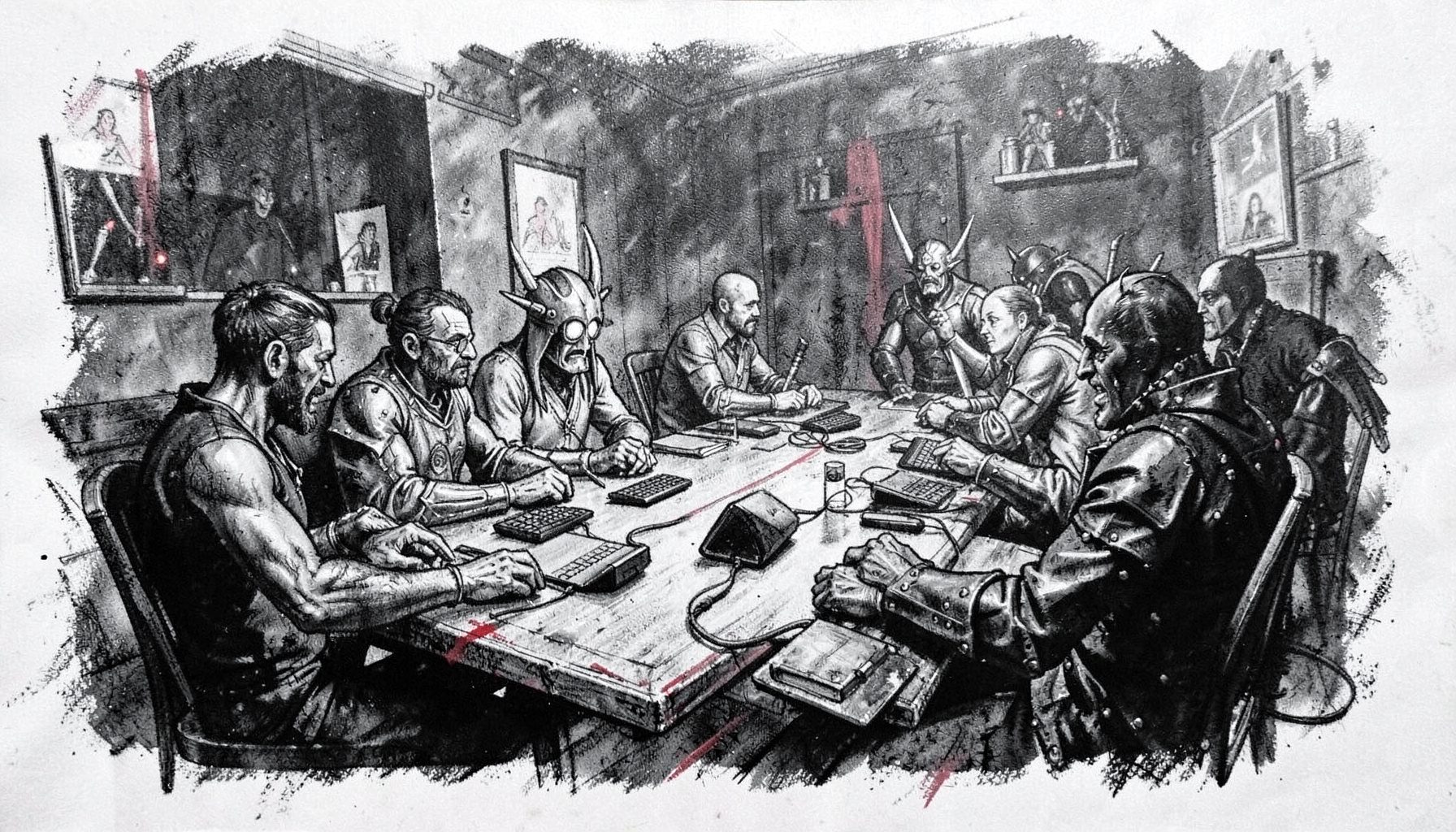
Queer Representation In Gaming: Panel Recap
At High Level Games Convention in Atlantic City, the panel on queer representation in gaming examined how tabletop role-playing games, live-action role-play and digital communities can make space for LGBTQIA+ identities. The discussion suited a convention built around collaborative storytelling: representation was treated as something shaped by designers, facilitators, performers and players together.
The panel also moved beyond the question of whether a game contains queer characters. Its deeper concerns were agency, safety, authorship and the everyday play experience. For Australian gamers, those ideas remain relevant across local conventions, home campaigns, university clubs, online groups and the expanding market for independent role-playing games.
| Panel focus | What it means in play | Relevance for Australian groups |
|---|---|---|
| Visibility | Queer characters should have meaningful lives and motivations | Avoid token roles in campaigns and LARP casts |
| Agency | Players need room to define identity and relationships | Use consent tools and session agreements |
| Authorship | Queer creators should influence the stories being told | Support Australian indie designers and artists |
| Community safety | Inclusion depends on moderation and accountability | Make venue, online and convention rules clear |
| System design | Rules can reinforce or challenge stereotypes | Review mechanics as carefully as setting and art |
Representation Needs More Than A Character
A central theme of the conversation was the difference between presence and representation. A character may be identified as gay, bisexual, trans or non-binary, yet still feel superficial if their identity is treated as decoration. Stronger representation gives that character relationships, ambitions, flaws and a role in the story that is not limited to explaining their identity to others.
This distinction matters in every format. In a tabletop campaign, a queer character should not exist solely to deliver a lesson about prejudice. In LARP, casting and costuming can either broaden participation or quietly signal who the organisers imagine as the “default” hero. In digital games, customisation options and romance systems can communicate inclusion, but only when they provide genuine narrative choice rather than a narrow set of labels.
The panel’s emphasis on lived experience also connects with Australia’s diverse gaming communities. A queer player in Melbourne may approach a character differently from someone in a regional Queensland town, while a First Nations queer player may bring cultural perspectives that a generic diversity checklist cannot capture. Representation becomes richer when creators allow for difference within LGBTQIA+ communities.
Who Gets To Tell The Story
The discussion gave considerable weight to authorship. Queer characters can be written with good intentions and still be shaped by assumptions that have gone unexamined. Bringing queer designers, editors, performers and sensitivity readers into the creative process changes which stories are considered possible and which details receive attention.
That principle applies to convention playtesting as much as published games. A useful account of convention playtesting shows how feedback from a live audience can expose unclear rules and unexpected player responses. For a game dealing with gender, sexuality or marginalisation, playtesting can also reveal when a mechanic feels intrusive, when a scene lacks consent boundaries, or when a supposedly empowering option creates pressure.
Australian creators often work in a relatively small market, with designers sharing tables, Discord servers and convention spaces across Sydney, Brisbane, Adelaide and Perth. That closeness can help new voices find collaborators, though it can also make criticism feel personal. Clear feedback processes and paid creative labour are important safeguards, especially when queer contributors are asked to supply emotional expertise.
Safety Is Part Of The Game Design
The panel linked representation with practical safety. A welcoming setting is built through procedures: lines and veils, safety cards, the X-card or other pause tools, content warnings, pronoun options and a stated process for handling harassment. These measures do not remove spontaneity from play. They give participants confidence that they can shape the intensity of a story without having to justify a boundary publicly.
For LARP organisers, safety also includes changing rooms, accommodation, bathrooms, physical contact and costume expectations. Tabletop facilitators need to consider romance, dysphoria, deadnaming and targeted violence before those themes appear at the table. Online communities require active moderation rather than a vague promise that everyone should “be respectful”.
Australian law provides a useful baseline but not a complete inclusion policy. The Sex Discrimination Act 1984 protects people from discrimination on grounds including sexual orientation, gender identity and intersex status, while state and territory anti-discrimination laws add their own rules. A convention or games club still needs plain-language conduct standards that explain what participants can expect in practice.
The Australian Gaming Context
Australia’s gaming culture is shaped by a mix of local conventions, specialist shops, online imports and independent publishing. A group in Sydney might meet after work near public transport, while players in Hobart or Darwin may rely more heavily on online campaigns and shipping from interstate. Weekend conventions frequently combine RPG tables, board games, cosplay and panels, creating opportunities for queer communities to find one another outside a regular campaign.
The local market also has its own media environment. Digital games are assessed through the Australian Classification Board, and the introduction of the R18+ classification for games changed how mature content could be labelled and sold. Classification is not the same as a judgement on whether a story handles queer themes well, but creators must understand that audience access, retailer policies and content descriptions affect how games reach players.
Everyday habits matter too. Many Australians organise sessions around long commutes, shared houses, school terms and late-night online play. A campaign may use a café in inner Melbourne, a community hall in Newcastle or a private Discord server connecting players across several time zones. Inclusive design therefore includes accessible scheduling, affordable entry points and alternatives for people who cannot attend crowded evening events.
The wider convention setting reinforced these possibilities. High Level Games Convention brought together players, artists, publishers and vendors through workshops, an exhibitor hall, escape rooms and immersive activities. Its convention community model demonstrates why representation works best as a shared practice rather than a feature confined to one panel.
Practical Lessons For Designers And Facilitators
The panel’s most useful lesson was that inclusion should be designed early. A rulebook can state that everyone is welcome, but its examples, artwork, character options and assumptions about relationships will communicate just as loudly. Designers can invite queer playtesters before publication, compensate specialist contributors and revise material that repeatedly creates discomfort.
Facilitators have a similar responsibility at the table. They establish the tone when introducing safety tools, asking for pronouns without demanding disclosure and responding promptly to discriminatory behaviour. A well-run session makes room for experimentation while ensuring that no player has to become a spokesperson for an entire community.
Practical checks for a more inclusive game include:
- Give queer characters goals, conflicts and relationships beyond identity-based trauma.
- Offer pronoun, gender and relationship options without making disclosure compulsory.
- Use content notes and consent tools before sensitive scenes begin.
- Credit and pay queer consultants, artists, writers and playtesters fairly.
- Treat reports of harassment as information requiring action, not as social disruption.
What Players Can Notice At The Table
Players also have influence over the culture of a game. Choosing inclusive language, accepting a character’s stated identity and challenging a stereotype can change the direction of a campaign quickly. The same applies to purchasing decisions: supporting queer-led small publishers and Australian independent creators helps broaden the commercial space available for different stories.
A panel recap should therefore end with more than praise for a thoughtful conversation. The lasting value of the session lies in how easily its ideas can be applied during character creation, session zero, casting, moderation and playtesting. Representation becomes credible when players can feel its effects in the practical details of participation.
Players and organisers can carry those ideas into their next session by:
- Checking whose perspectives appear in the setting, examples and promotional art.
- Asking whether a safety policy is visible, specific and consistently enforced.
- Making space for queer joy, humour, romance, friendship and ordinary adventure.
- Supporting local creators across Australian conventions and online storefronts.
- Reviewing the group’s assumptions after play and adjusting them openly.
For an Australian gaming group, the practical takeaway is straightforward: build inclusion into the rules, the room and the relationships before the first dice roll.