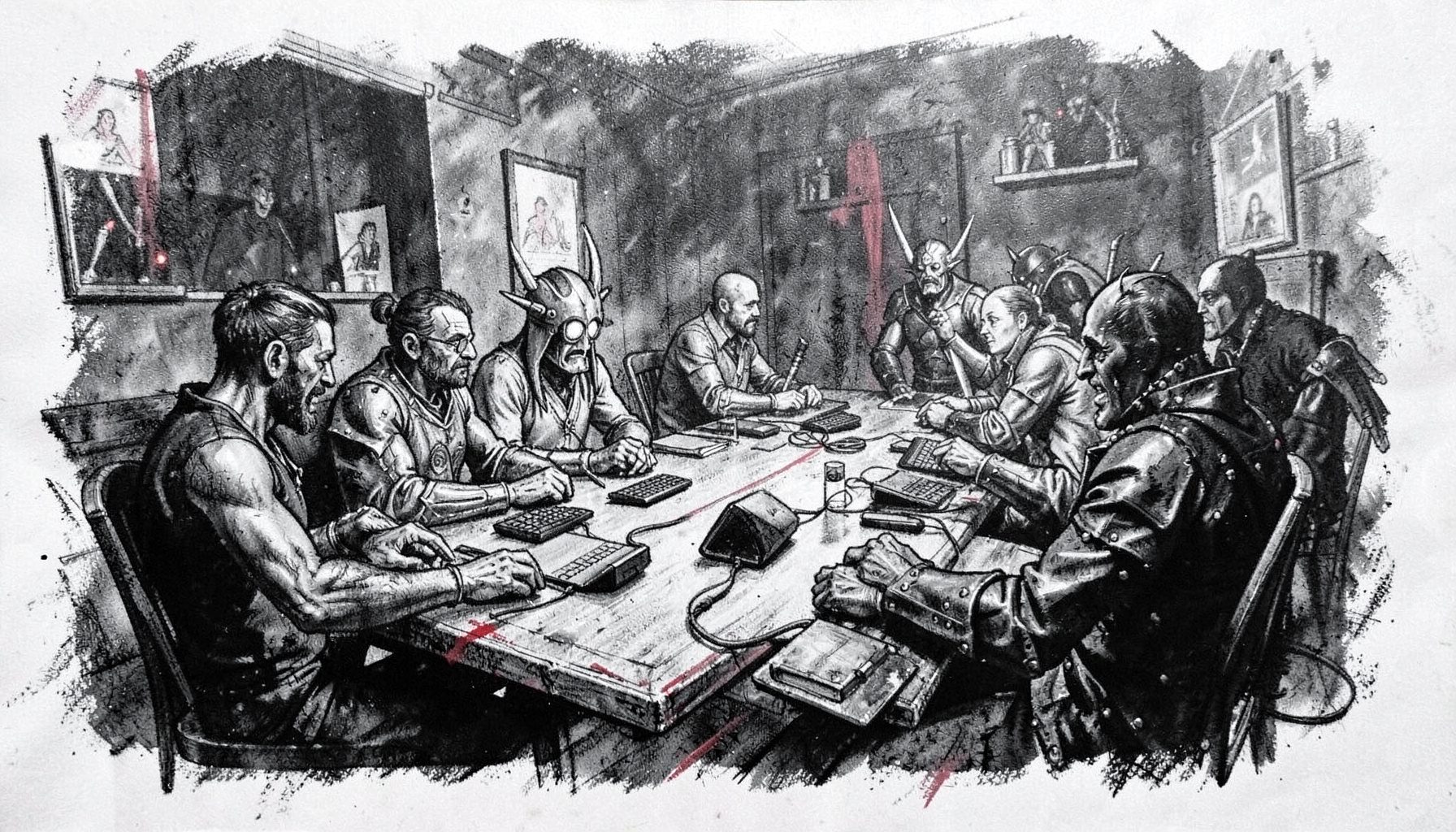
Hidden gems of the HLGCon exhibitor hall: small press standouts
The 2018 High Level Games Convention turned the Showboat Hotel in Atlantic City into something resembling a permanent game night. Tables, dice, hand-stitched screen books, and freshly printed zines crowded every corner of the exhibitor hall, and the air carried a faint coffee-and-cardstock smell that anyone who has ever walked into a local games shop would recognise instantly. Visitors shuffled between vendor booths, queued for demo tables, and swapped character sheets with strangers who quickly became collaborators.
Among the rows of banners and stacked boxes, the small press stands carried a particular energy. These were not the glossy corporate booths with corporate swag. They were run by designers who had packed their prototypes in suitcases, who knew every page of their own work, and who would happily talk for an hour about why the encumbrance rules in their game worked the way they did. Walking past a half-dozen of those stands in a single afternoon was like speed-running a graduate seminar in indie tabletop design.
Small presses occupy a peculiar role in tabletop culture. They tend to take creative risks that bigger publishers avoid because their print runs are small and their marketing budgets slimmer. They publish the games that experiment with form, pushing role-play away from dungeon crawls into stranger territory like investigative horror, school-set survival, or improvised kitchen-sink drama. At HLGCon, that experimentation was the headline act rather than a fringe offering.
For readers in Melbourne, Adelaide, Perth, or anywhere across Australia, those booths held a strange kind of promise. Many of these games never reach local game stores. The shipping cost from the United States can quietly double the price of a fifty-dollar bundle, and customs adds its own calculations on top. The exhibitor hall at Showboat therefore functioned as a kind of trans-Pacific trade fair for players who had come prepared to carry paper-and-ink treasures home in their luggage.
The vibe inside the Showboat exhibitor hall
The exhibitor hall at Showboat occupied a long, low-ceilinged room that the convention organisers had lit with a soft, even glow. Booth curtains did most of the structural work, and the layout rewarded wandering rather than efficient navigation. People leaned against table legs, sat on the carpet, and queued for fifteen minutes to roll a single d10 at a demo station run by a designer wearing a name badge with a hand-drawn logo.
An unspoken etiquette governed the space. Designers waved off questions about hype metrics and asked instead what stories you wanted to tell at your table. Several publishers set up laminated one-shots on the hour, and participants drifted between sessions like friends moving between barbecues on a long weekend. The shared experience was collaborative storytelling, and the booths felt less like retail and more like workshops that happened to accept cash.
What stood out was the visible labour behind each small press stand. Many games had been laid out by the designers themselves, often printed at short-run printers in Philadelphia or upstate New York, then ferried down the Atlantic City Expressway in coolers and tote bags. Books were trimmed by hand, cards sleeved in ziplock bags, and screen books bound with visible stitching. The aesthetic traded polish for warmth, easy to spot from across the room.
Indie publishers worth the queue
A handful of stands drew longer queues than the rest. One that kept a steady line throughout the weekend was Detention Breakout, a horror RPG where players take the role of high school students surviving a week in a school haunted by something they cannot quite name. The designers ran short demo sessions every ninety minutes. The game reads on its cover as a loving parody of teen drama, but the mechanics push hard into investigative dread.
Other small presses worth braving the elbow-room for included horror-leaning outfits running ambient sound demos, larp-forward publishers staging short corridor scenes, and a half-dozen narrative-leaning projects with names that rhymed or punned. A side-by-side comparison of a few of the standouts looked something like this:
| Publisher / Game | Genre | Tone | Price (USD) | Format |
|---|---|---|---|---|
| Detention Breakout | Horror / School survival | Comedic-tense | $35 | Hardcover book |
| Magpie Lab | Interstitial fantasy | Whimsical | $28 | Saddle-stitched zine |
| Lantern Moth Press | Investigative occult | Slow-burn dread | $40 | Hardcover plus handouts |
| Folk Arcana | LARP / Folk horror | Earnest, eerie | $25 | In-tabletop box |
What the table cannot capture is the texture of each booth. The Magpie Lab crew had hand-lettered every banner. Lantern Moth Press offered an in-game archivist role. Folk Arcana handed out small wax-sealed envelopes with a single line of fiction. Each small press brought its own production values and its own argument about why role-play could feel different.
Australian tables meet American small press
Players in Australia have been hungry for these games for years. Local conventions such as PAX Aus in Melbourne, Game Plus in Sydney, and Supanova events in Brisbane have grown dedicated indie sections, and meetups in places like Brunswick, Fortitude Valley, and the Adelaide Hills run regular one-shot schedules. The appetite exists, and the supply chain is where the friction lives.
Several designers at HLGCon were already aware of this. Some had shipped games to local distributors who passed them on to stores such as Games Empire, Milsims, and the Escapist in Brisbane. Others relied on fan communities on Discord and shared documents like the no-secrets style guide, a resource several indie publishers had started posting openly to help international groups translate American-flavoured content. The cross-pollination was visible in the friendliest possible way.
Conversations at the small press booths often drifted toward currency conversions, postcodes, and the patience required to wait for a zine to clear Australian customs. The designers listened, nodded, and asked which local stores their players had tried. The exchange felt less like a sales pitch and more like two branches of the same hobby figuring out how to talk across a long ocean.
Currency quirks and shipping realities for Aussie fans
The sticker shock for Australian buyers is real. A thirty-five dollar hardcover from a US small press can easily land at ninety Australian dollars once shipping, currency conversion, and GST on imports are factored in. Smaller presses do not always offer tracked shipping, and a lost parcel becomes quietly devastating. The exhibitor hall at Showboat offered a way around that calculation for anyone willing to carry a couple of kilos of books in their suitcase.
Players wanting to support small presses between conventions found workarounds. Group buys through local Discord servers could split freight across five or six players, bringing costs down. Some local stores were carrying curated American small press games on consignment. A handful of Australian designers were publishing their own work locally, keeping the import maths out of the loop.
Several publishers had begun quoting shipping in either direction and accepting foreign currency. For a small press, the cost of accepting an overseas order was small compared to the goodwill generated, and that goodwill mattered because word-of-mouth in Australian gaming communities travels fast through Facebook groups, tabletop forums, and weekend meetups in suburban pubs from Cottesloe to Camberwell.
Stories travelling back to living rooms across Australia
What the exhibitor hall really offered was a chance to meet the people behind the games. A designer writing a zine about cursed mining towns in regional Australia could shake the hand of a Perth player who recognised the landscape. A larp writer who set his game in an abandoned shopping centre could compare notes with a Sydney player who had grown up near one. The games were the artefact, but the conversation was the point.
By Sunday afternoon, many small press booths had sold out of their flagship titles and were running print-on-demand back at the hotel business centre. Designers were scribbling signatures across title pages. The hall smelled like ink and warm cardboard, and the convention felt less like a marketplace and more like the closing hours of a long, friendly arvo spent rolling dice with strangers who were no longer strangers.
Practical takeaways for Australian players
- Pre-order directly through small publishers when possible, since postage from the publisher is often cheaper than retail mark-ups.
- Join a local group-buy through Discord or Facebook to split shipping costs across multiple buyers in the same suburb.
- Ask Australian game stores such as Games Empire, Milsims, and the Escapist about consignment stock, since consignment orders may already be on the shelf.
- Watch PAX Aus in Melbourne, Supanova in Brisbane, and Game Plus in Sydney for indie sections that often showcase the same small presses.
- Subscribe to designer newsletters for early access windows, which often ship before the convention rush.
- Bring a list of your group's table preferences, since a list of preferences helps small press designers recommend the right title.
What stays with anyone who walked those aisles is the sense that tabletop role-playing is a craft made by people, not corporations. The small press stands at HLGCon were the clearest expression of that craft, and the titles that travelled in luggage and in the memory of players who promised to run them at the next meetup will keep finding tables for years.