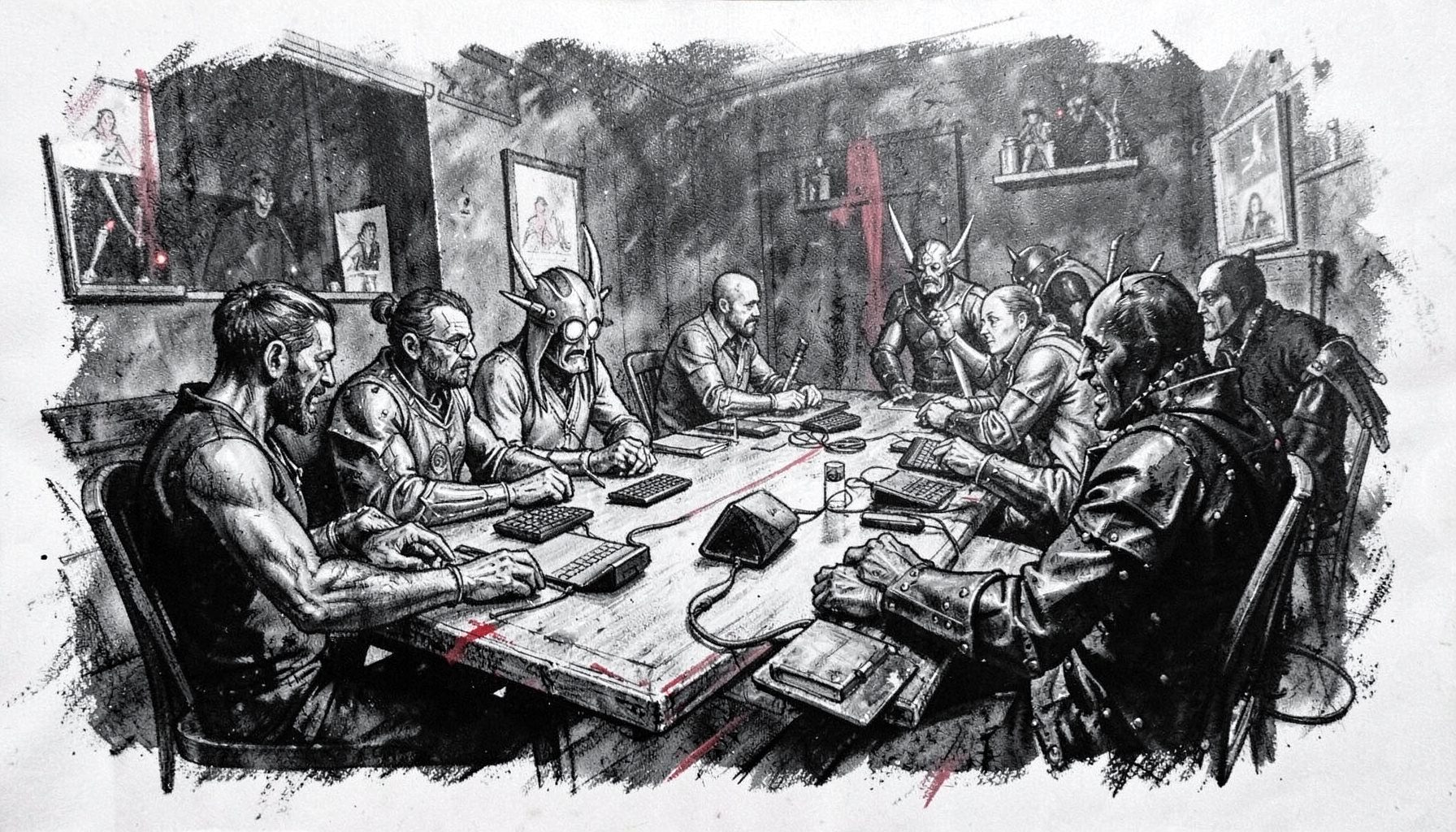
Running a TTRPG for total newbies without losing your mind
Running a tabletop role-playing game for players who have never rolled a d20 can feel like hosting a backyard barbie where nobody owns a pair of tongs. The good news is that almost every veteran game master remembers that first session, and most of them will admit the table full of curious strangers somehow became a weekly ritual.
Across Melbourne's packed board-game cafes, Brisbane's back-room gaming clubs, Sydney's late-night home groups and the regional meet-ups that pop up around Geelong or Hobart, the appetite for pen-and-paper RPGs keeps growing. New players are drawn by streaming shows, fantasy films, and a craving for offline social time in a country that lives on pub culture and footy banter.
The trick with absolute beginners is that they do not yet know what they are supposed to find fun, so the facilitator has to remove friction without removing agency. When a guest runner at a PAX Australia panel asked the room how to handle first-time players, the loudest answer from the audience was simple: give them something to do before they have time to feel shy.
What follows is a practical playbook stitched together from conventions, local hobby-shop wisdom and years of weekend one-shots. None of it requires a hefty budget or a borrowed dungeon kit, and none of it assumes the group will play more than a single evening. The aim is to make that first night feel earned, not intimidating.
Set expectations early with a real session zero
A pre-game chat is the single highest-leverage move a new GM can make. Call it a session zero, a kitchen-table meeting, or a quick video call, but treat it as a separate event from the first adventure. Half an hour of conversation beforehand saves three hours of awkward silence once dice hit the table.
Use this time to ask what kind of stories each person enjoys, what topics they would prefer to avoid, and how they feel about conflict at the table. Some players want heroic fantasy, others want cosy slice-of-life, and a few quietly admit that horror squicks them out. The friendly tone set here carries into every later session.
This is also the moment to share the group's ground rules in writing, alongside the Con Policies and Code of Conduct that any established event expects participants to follow. Print the page, screenshot it, send it through the group chat, and check in at the start of every session so consent stays active rather than assumed.
Choose a rules-light or onboarding-friendly system
System choice matters more than first-timers realise. Heavy simulation games with tables on tables can swallow a whole evening before any drama appears. A rule-light framework, by contrast, gets characters into conflict within an hour and lets the GM spend their energy on story rather than bookkeeping.
Many Australian home groups lean on well-known entry points such as dungeon-crawler starters, narrative-driven indie picks, or Aussie-designed micro-rulesets that fit on a single A4 sheet. Picking something built for beginners usually includes pre-generated characters, one-page references, and advice on how to explain mechanics in plain language.
Borrow before you buy. Local libraries from Parramatta to Fremantle now stock beginner sets, and most hobby shops will happily lend rulebooks to first-time GMs. If nobody owns a copy yet, treat that as a reason to schedule a quiet shopping afternoon before the campaign begins.
Build characters together at the table
Pre-made character sheets handed out at the start of a session make role-playing feel like a school exam. Building characters together, in front of each other, turns character creation into a bonding exercise that sets the tone for the months ahead.
Walk absolute beginners through the choices that matter: who am I, what can I do, what do I want, and who do I know. Skip dense lists of minor gear. Focus instead on the handful of stats that will see regular use at the table. The exact mechanics differ between systems, but the social contract stays the same.
Starter checklist for a brand-new character
- One clear reason the character meets the group, tied to the adventure hook.
- One strong personality trait the player can lean into during role-play.
- One simple combat ability the player understands by the end of the session.
- One soft vulnerability or flaw that creates future story hooks.
- One visual detail, drawn on the sheet or sketched on scrap paper, that helps them describe the character in third person.
When the sheet is finished, ask each new player to introduce their character in a single sentence. That quick ritual shifts everyone out of audience mode and into participant mode before the first scene has even begun.
Run a first session built around a single clear hook
The first adventure should feel like a short film, not an open-world playground. One location, one problem, one obvious first action, and a tidy resolution that hands each player at least one moment of personal triumph. Anything more ambitious usually exposes new players to the parts of the hobby that feel like homework: tracking travel, managing downtime, or negotiating with indifferent NPCs.
Open in media res, somewhere after the boring introduction. The party meets over a shared situation: a locked door to crack, a missing person to find, a strange guest at a suburban Aussie footy club. Cheeky familiar settings work well, whether it is a Bunnings car park at midnight, a Bondi bus route gone wrong, or a Melbourne laneway that suddenly opens onto another world.
End the evening on a soft cliffhanger rather than a clean wrap-up. An unanswered question, a rumour overheard at the pub, or a new face watching from across the room. That lingering beat gives the group something to chat about long after the dice have been packed away, and creates a natural reason to reconvene next week.
Teach rules through play, not through lectures
New GMs often try to front-load explanations in the hope of avoiding confusion. The opposite tends to work better. Introduce each rule the moment it becomes useful, then reinforce it with a quick example the group can react to.
When a creature appears that targets one player specifically, that is the moment to explain how armour class and attack rolls interact, ideally with a printed reference card the GM holds in plain view. When a player decides to climb, jump or haggle, that is the moment to bring in the relevant skill or check. The rules enter the table like guests arriving at the right scene rather than as an opening tutorial.
A small playbook of teaching moments
- Hold a cheat sheet of four to six core mechanics within easy reach.
- Summarise each rule in one sentence using the current action as the example.
- Ask the targeted player to roll their own dice instead of rolling for them.
- Pause immediately after a critical failure or success to celebrate the result.
- Invite questions, then answer with the character's next decision in mind, not the rulebook.
If a rule is taking too long to explain, skip it and improvise a fair outcome. Returning later with the actual mechanic is far more valuable than grinding the session to a halt while everybody else zones out.
Make safety tools and inclusivity part of the room
A welcoming table is not created by good intentions alone. Newer players, in particular, watch small cues to figure out whether their ideas will be respected or shut down. A friendly rule about rewinding scenes, a clear way to pause the action, and an open-door policy about table talk go a long way.
Many Australian gaming groups have adopted lightweight safety tools built into the start of every session. A quick phrase players can say when a scene turns uncomfortable, a clear off-ramp for breaks, and a designated check-in time after the first hour take only seconds to set up and prevent the slow simmer that turns into a later blow-up.
Diversity of thought, background and play style should be treated as a feature, not a complication. Encourage quieter players to describe actions as well as the experienced role-players do, and gently soften the loudest voice in the room when someone new is still finding their feet. The first campaign rarely becomes a long-running saga, but the people around the table often do.
The night before the planned first session, schedule a thirty-minute text exchange with each player. Send one question about what excited them most when they signed up, and ask them to bring either a short note about their character or a specific snack for the table. Combine their answers into a one-page briefing, print it twice, and keep one copy visible during play. That tiny bit of preparation is usually the difference between a hesitant first table and a group that walks out asking when the next session is, and where to find the next con listed on the event details page.