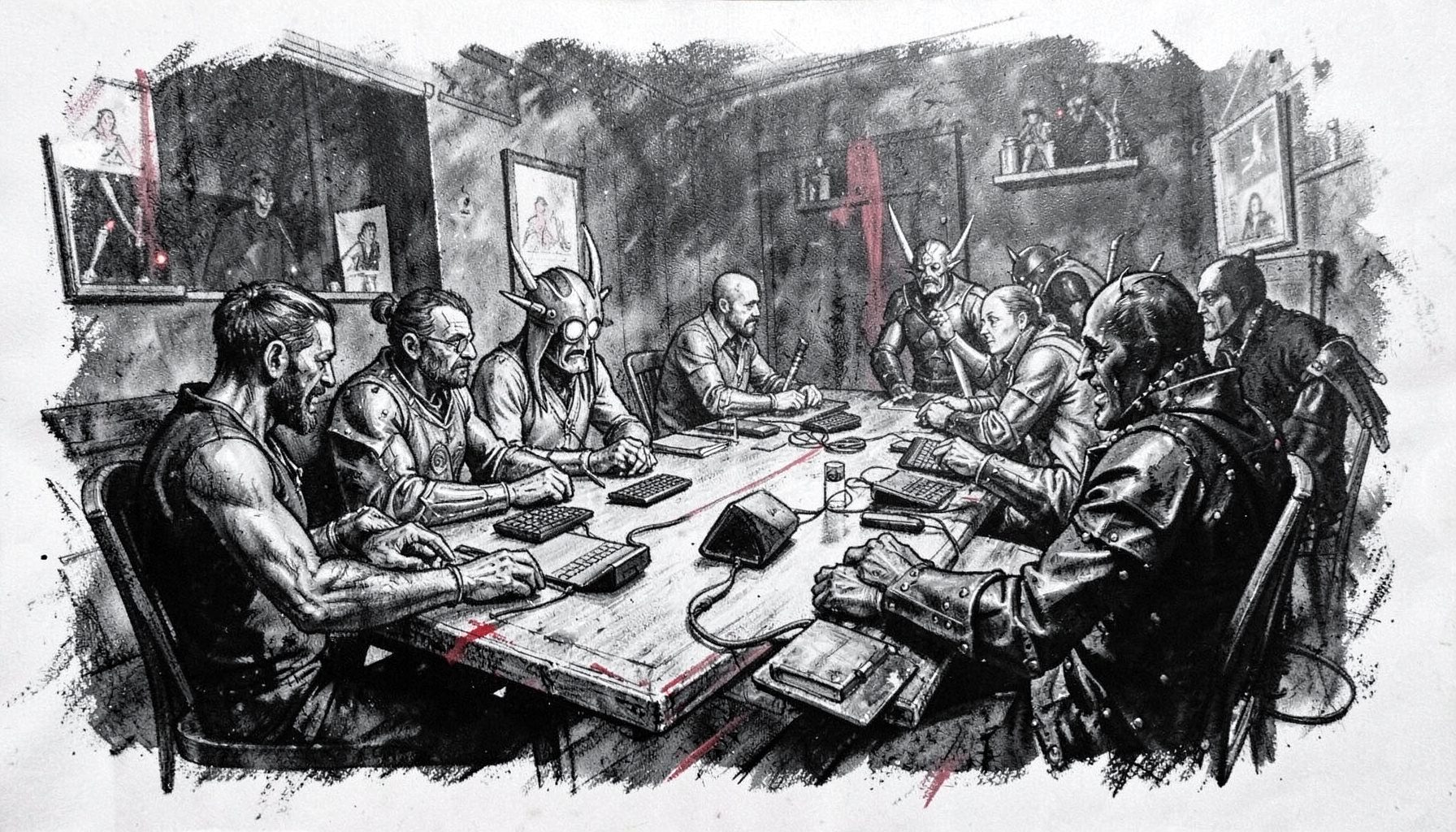
How to Host a Themed Tabletop RPG One-Shot at a Convention
A themed tabletop RPG one-shot gives convention attendees a complete story in a single sitting, with enough atmosphere to feel special and enough structure to keep the session moving. The strongest games combine a clear premise, memorable characters, accessible rules, and a facilitator who can make newcomers feel welcome from the first scene.
That approach suited the spirit of High Level Games Convention, held at the Showboat Hotel in Atlantic City, New Jersey, in 2018. Its mix of tabletop sessions, LARP experiences, workshops, panels, vendors, and immersive activities showed how a convention game can become a shared event rather than simply a scheduled play session. Australian hosts can apply the same thinking at events in Melbourne, Sydney, Brisbane, or smaller regional conventions.
Build A Theme That Supports Play
A theme should give players an immediate sense of place, purpose, and tone. “A haunted lighthouse during a storm” is more useful than “a spooky adventure” because it suggests locations, obstacles, characters, and visual details. Likewise, a detective story set on an overnight train creates natural scenes and a reason for the party to remain together.
Choose one central question for the session. The players might need to discover who sabotaged a mining settlement, escort a magical creature through a flooded city, or survive a diplomatic dinner where every guest has a secret. A focused premise prevents the game from becoming a collection of unrelated encounters.
Keep the concept welcoming to people who have never played the chosen system. Avoid requiring detailed knowledge of a long fictional history or a complex setting guide. A brief handout can explain the world, the immediate problem, and the assumptions that shape the story. If the theme draws on Australian folklore, local geography, or First Nations stories, research carefully and avoid treating living cultures as decorative fantasy material.
A successful convention one-shot also needs a firm boundary. Decide whether the experience is comic, tense, heroic, eerie, or family-friendly, then make the character options and encounters reflect that choice. A consistent mood is easier for a new group to understand than a session that shifts randomly between horror, farce, and high melodrama.
Design For The Convention Clock
Convention games operate under practical limits. Players may arrive late after navigating a busy venue, pause for announcements, or need time to learn unfamiliar rules. Plan for around three hours of play, with a short break if the session is longer. A four-hour booking should rarely contain four hours of essential plot.
Use a simple rhythm: an opening problem, a discovery phase, a major complication, and a decisive final scene. Each stage should offer a meaningful choice rather than a chain of clues that must be solved in one exact order. If a group spends too long investigating one lead, move useful information to another scene instead of allowing the adventure to stall.
Prepare scenes that can expand or contract. An optional social encounter can become a quick role-play exchange when time is short, while a dramatic confrontation can receive extra room if the table is moving quickly. This flexibility matters at large conventions, where room changes, noise, and crowded corridors can affect the schedule.
For Australian events, account for travel and venue habits. Players may have taken a train across Melbourne, driven from an outer Brisbane suburb, or arrived early to find parking near a Sydney venue. Start with a clear welcome and avoid making attendees rush into character before they have settled in. If the event uses Australian Eastern Standard Time or daylight saving, check the published timetable rather than assuming every state follows the same clock.
Prepare Characters And Table Tools
Pregenerated characters are usually the best choice for a one-shot. Give each player a distinct role, a small number of abilities, and a personal reason to care about the central problem. A character sheet should show the information needed during play without forcing a beginner to search through a rulebook.
Write two or three prompts on each sheet. These might include a relationship with another character, a private fear, or an opinion about the mission. Prompts create instant material for conversation and help quieter players enter the fiction without being placed under pressure to improvise a detailed backstory.
Useful table materials include:
- Large-print character sheets with key rules summarised
- A one-page setting guide with names, locations, and tone
- Tokens, index cards, dice, pencils, and a visible timer
- Safety tools such as lines, veils, and an easy pause procedure
- A sign showing the game title, system, duration, and content notes
Test every character before the convention. Run a short mock scene to check whether one build dominates combat, whether a key ability is unclear, or whether the party lacks a way to investigate. A balanced group does not require identical power levels, but every player should have a useful contribution.
Bring backups for the realities of a public venue. Printed materials are safer than relying entirely on a phone or laptop, and spare pens disappear faster than expected. Australian attendees may also appreciate clearly marked dice and materials that work under bright hall lighting. If you are selling or displaying independent game products, quote prices in Australian dollars and account for GST when planning the event budget.
Create A Welcoming Convention Table
The game begins before the first dice roll. Greet each player, explain the premise in two or three sentences, and state the session length. Clarify whether people may take breaks, ask rules questions, or pass on a scene. This small orientation reduces uncertainty and establishes an inclusive table culture.
Use safety tools as an ordinary part of play rather than as a dramatic warning. Lines identify topics that will not appear, while veils allow a subject to exist without detailed description. A pause card, hand signal, or simple verbal check-in gives participants control without requiring them to explain personal reasons publicly.
Facilitators should share attention deliberately. Invite a player who has not spoken to describe a reaction, but do not force a performance. When someone proposes an unexpected idea, treat it as an opportunity to build the story rather than an attempt to derail it. Collaborative storytelling works best when the facilitator protects the premise while allowing the group to influence how events unfold.
At a convention such as High Level Games Convention, the atmosphere extends beyond the individual table. Attendees may have just left an escape room, a LARP briefing, or an exhibitor hall filled with independent artists and publishers. In Australia, similar energy appears at events such as PAX Aus and local tabletop conventions, where many people move between games throughout the day. A visible title card, clear seating arrangement, and concise content notice make your session easier to find and easier to join.
Run The Session With Purpose
Open with action. Instead of beginning with a long explanation of the setting, place the characters in a situation that requires a decision. The airship is losing altitude, the museum’s protective wards have failed, or the town’s mayor has vanished during the festival. Once players are involved, reveal setting information when it becomes relevant.
Keep the rules moving by explaining only what matters in the current moment. If a system has a complicated mechanic, demonstrate it through a low-stakes action before it becomes vital. When uncertain, make a temporary ruling, note the question, and continue. A convention one-shot gains more from momentum than from proving every rule interpretation.
Track spotlight time across the entire group. A useful pattern is to alternate between investigation, character interaction, and action, giving different players natural opportunities to lead. During combat, ask players to consider their next move while others act, but allow enough time for new participants to understand their options.
A practical session checklist includes:
- Arrive early enough to check the room, signage, and table layout
- Place safety information and character sheets where everyone can see them
- Explain the premise, tone, boundaries, and finish time before play begins
- Call for a midpoint pause and quietly check whether the pace feels comfortable
- Reserve the final twenty minutes for the climactic choice and aftermath
End with consequence rather than an abrupt stop. Ask each player to describe what their character does after the central conflict, then thank the group for contributing. If the convention uses scheduled registration, direct interested attendees to the official event details page for the wider programme rather than interrupting the closing scene with announcements.
A host should also know how players found the session. If the game is part of an organised programme, direct them to the convention’s registration page when appropriate, preferably after the story has finished. This keeps administrative information separate from the fictional experience and leaves the table on a positive note.
The best themed one-shot is carefully prepared but appears responsive in play. Write a compact adventure, rehearse the opening, prepare adaptable scenes, and provide clear choices instead of a rigid script. For the day itself, pack printed materials, accessible safety tools, spare stationery, and a visible timer; those simple preparations turn a good idea into a smooth convention experience.