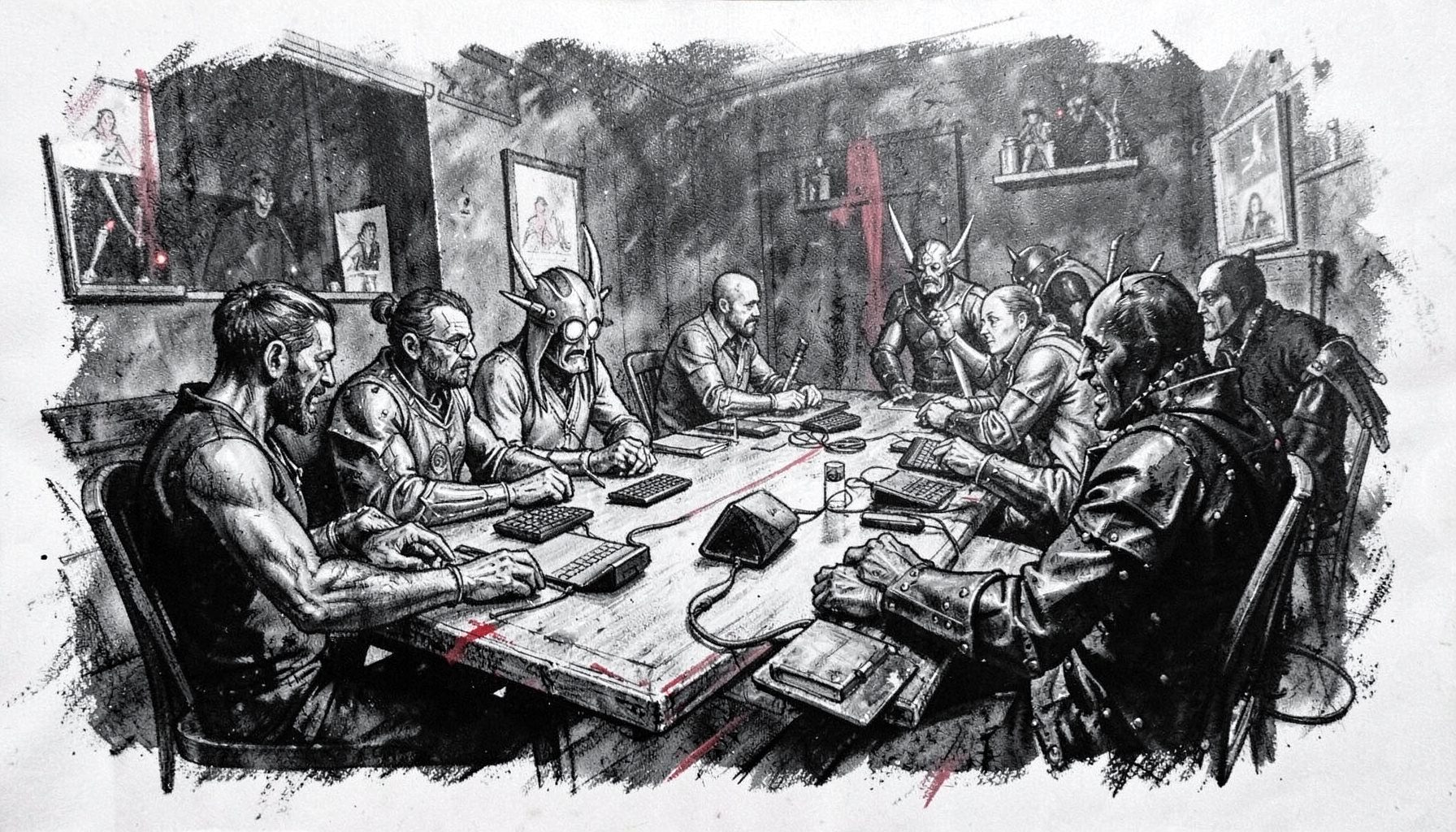
Building tables where every voice shapes the story
The lights stayed low long after the last dice stopped rolling. That is how the organiser I sat down with remembered the closing night at the Showboat Hotel in Atlantic City, where High Level Games Convention brought together a thousand or so strangers who left as collaborators. Walking through the corridors afterwards, you could still hear fragments of half-finished stories drifting out of side rooms, the way you might catch a kookaburra laughing in a Brisbane park at dusk, a sound that belongs to the place and to no single person at the same time.
Inclusive storytelling is not a checklist or a marketing line, it is the load-bearing wall of every good game. The 2018 gathering was built on the idea that role-playing games, whether run with pencils and paper or staged as live-action events in a darkened ballroom, work best when the people holding the dice see themselves inside the fiction. The interview took place in a quiet lounge overlooking the boardwalk, but the subject matter reached far beyond one weekend in New Jersey.
For readers catching up from Melbourne, Sydney, Adelaide, or anywhere across the Pacific, the themes translate directly. Australian tabletop communities have spent years building safe, welcoming spaces in suburban loungerooms, hobby shops, and university clubs, and the lessons from a single American convention can sharpen practices that already exist in the Southern Hemisphere. The point is not to copy what happened at the Showboat, it is to borrow what works and adapt it to the local rhythms of Australian play, where the arvo session, the footy-club crossover crowd, and the diehard larper all have a seat at the same table.
Events of this scale run on community effort, ticket sales, and the goodwill of sponsors, and Australian conventions held in regional halls work the same way. Understanding that scaffolding helps readers appreciate why a convention's values show up in everything from its sponsor the convention page to its opening ceremony.
The moment the philosophy clicked
The organiser first discovered the power of inclusive storytelling while running a Call of Cthulhu scenario for a mixed group of newcomers and veterans. One player, a quiet teenager who had barely spoken all night, finally took the spotlight and improvised a speech that completely changed the direction of the story. The room shifted. Suddenly the entire table was leaning forward, responding to a perspective nobody had planned for. That moment taught the organiser that a good game does not impose a single vision, it hands the microphone around the circle and lets each voice reshape what is possible.
From that night on, every session they designed began with the same question: whose story are we telling, and who has yet to be heard. The organiser started writing session briefs that left deliberate gaps for player-driven material, vetting published modules for assumptions that quietly exclude people at the table, and reading widely from Indigenous Australian writers, Asian-Australian game designers, and queer creators working in independent publishing, because the voices that shape a game matter as much as the rules that govern it.
What inclusive storytelling looks like at the table
A lot of people hear the word inclusive and picture a regulatory document stapled to the front of a campaign. The organiser pushed back on that framing. Inclusive storytelling, in their telling, is closer to good hospitality. It is the difference between hosting a barbie where the only food is something half your guests cannot eat, and one where you have thought about dietary needs, music volume, shade, and seating without being asked. You are not restricting yourself, you are making sure everyone can actually enjoy themselves.
In practical game terms, that looks like concrete habits. Pregenerated characters are written with a range of backgrounds, gender identities, and motivations rather than defaulting to one cultural template. Safety tools, including the X-card and lines-and-veils, are introduced during session zero, not after something has gone wrong. Plot hooks are seeded for multiple character types, so the player who wants to investigate and the player who wants to start a business in town both have something meaningful to do. The goal is not to police imagination, it is to widen the door. The convention embodied this with rules that felt less like restrictions and more like shared agreements. The no-spoilers style guide on the event site set expectations about how to talk about other people's characters, and the same language carried into live-action scenes where physical boundaries had to be negotiated in real time. None of this dampened the drama, it sharpened it, because players felt safe enough to take bigger risks.
Safety tools with a local flavour
Australian players have embraced safety tools with their own tone. The organiser pointed out that tools like the X-card, lines and veils, and the open door policy were not invented in 2018, they had been evolving in the larping and indie design communities for years. What the convention did was normalise them in a public, large-scale setting, treating them as standard equipment rather than optional add-ons.
There is a particular Australian texture to how these conversations tend to unfold. At clubs in Perth or community meetups in Hobart, players often use dry humour to navigate awkward moments, and the safety tools have to work with that cultural grain rather than against it. The most successful groups are the ones where a player can say "I am not comfortable with this" without anyone pretending it had not been said. When that culture is in place, players start to take ownership of the story in a way that goes beyond their character sheet, because they trust the table enough to contribute their own ideas, fears, and hopes to the shared fiction.
Lessons from the LARP floor
The LARP experiences at the convention offered some of the most vivid examples of inclusive storytelling in action. Players who had never met before walked into a makeshift detective office, a haunted forest, or a starship corridor, and within minutes they were co-creating something none of them could have written alone. The organiser described watching a scene where two players from completely different backgrounds built a friendship that became the emotional spine of an entire three-hour scenario. The story only existed because both of them showed up willing to listen.
That kind of spontaneous collaboration does not happen by accident. It requires careful design, clear consent structures, and GMs who know when to step back. It also requires a community that values process as much as outcome, and that is where Australian game culture has a real advantage. Hobby scenes in places like Canberra's gaming hubs or regional towns running weekend one-shots have long traditions of players helping newcomers, sharing rulebooks, and running sessions that prioritise collective fun over competitive win conditions. The convention was, in many ways, a louder version of what already happens in loungerooms and community halls across the country.
Common myths about inclusive design
During the interview, the organiser addressed a few recurring objections to inclusive design, and the responses are worth sharing with anyone running a game at home.
- Inclusive games are less fun, because the GM cannot run the dark story they want. In practice, safety tools give players permission to engage more deeply, which usually makes the fiction stronger, not weaker.
- It is political, and games should just be escapism. Every story makes choices about who matters, and naming those choices is not politics, it is craft.
- New players will slow things down. The opposite tends to happen, because the social contract is clear from session zero and awkward conversations have already been had before the dice hit the table.
- Only certain identities benefit. Thoughtful design improves the experience for everyone, from the shy first-timer to the twenty-year veteran.
These reframings matter because the loudest voice in any room tends to set the tone. When the loudest voice is also the most welcoming, the entire table relaxes.
A short checklist for your next session zero
For anyone running a game in the next few weeks, here is a small set of habits to try.
- Ask each player, in plain language, what they want out of the session and what they would rather skip.
- Offer at least one safety tool by name, even if your group is experienced, because the offer itself sets the tone.
- Seed two or three plot hooks that respond to different character motivations, so the quiet player and the loud player both have something to do.
- Close the session with a quick debrief, even five minutes, to surface what worked and what to change next time.
Bringing the philosophy back to the loungeroom
For Australian readers, the practical next step is to look at your own game group and ask what assumptions are baked in. The organiser suggested starting with a session zero conversation, even for one-shots, where players briefly share what they want out of the evening and what they would prefer to avoid. It takes fifteen minutes and it changes everything. The convention published its event planning documents openly, and the event schedule is a useful case study in how to structure a multi-track gaming event that does not leave anyone out. For anyone thinking about running a local convention, a club day, or a regular home campaign, those resources are worth studying alongside the approaches used by Australian events like PAX Aus and the various state-based community cons that have grown up around the country.
Pick one element of your next session and adjust it with a player you do not usually think about in mind. Maybe it is the way you describe a non-player character, the cultural background of a pregenerated hero, or the kind of conflict at the centre of your scenario. Then run the session, watch what happens, and bring what you learned to the next game.
Run a session zero this Saturday with your regular group, even if you have been playing together for years, and notice how the table feels when everyone has had a chance to speak before the first dice are rolled.