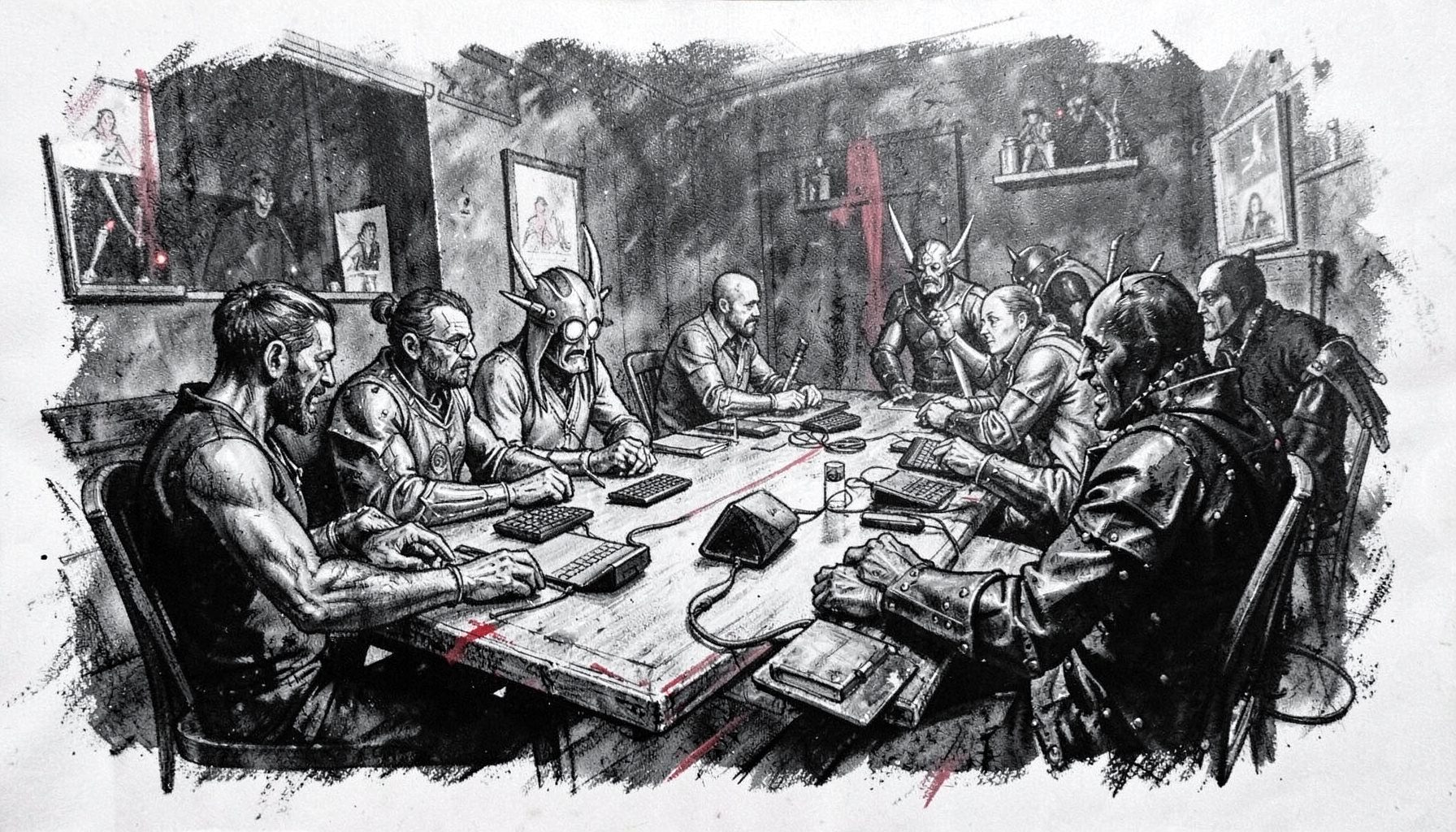
Interview With a Game Master Who Ran a 12-Hour Marathon Session
At High Level Games Convention, a tabletop role-playing session could become far more than a game on a timetable. Held at the Showboat Hotel in Atlantic City in 2018, the convention brought together players, designers, artists, publishers, live-action role-players and curious newcomers. Among its memorable experiences was a twelve-hour tabletop RPG marathon led by a Game Master who had to balance story, stamina, rules and the unpredictable energy of a convention crowd.
For Australian players, the appeal is easy to recognise. Whether a group has travelled from Melbourne to PAX Aus, gathered for a long weekend in Sydney, or driven several hours to a regional gaming convention, extended sessions create a special kind of shared memory. The following interview explores how a Game Master prepared for an all-day adventure, supported players through fatigue and kept collaborative storytelling alive long after the first dice were rolled.
The Briefing Before The Dice Hit The Table
How did the idea for a twelve-hour game begin?
“I wanted to create something that felt like a complete campaign compressed into one day,” the Game Master explains. “A normal one-shot can be satisfying, but a long session gives the group time to form relationships, make mistakes, change direction and see consequences unfold. The aim was never to trap people at the table for twelve hours. It was to create a flexible story that could breathe.”
Preparation began with a broad narrative framework rather than a rigid sequence of scenes. The adventure had a clear opening crisis, several possible objectives and a final confrontation, but the middle remained adaptable. That allowed the players to pursue their own theories instead of being pushed from one encounter to the next.
The Game Master also prepared more material than could realistically be used. “I had enough encounters for perhaps sixteen hours, but that did not mean I expected to run them all. Extra content gives you options. It lets you cut a combat that is slowing the table down or add a social scene when everyone needs a change of pace.”
Pacing A Session That Lasts All Day
A twelve-hour RPG session needs an actual schedule. The group divided the day into distinct chapters, with short pauses between major sections and a longer meal break in the middle. Each chapter had a different mood: investigation, travel, negotiation, danger and resolution. This helped prevent the adventure from feeling like one endless stretch of combat.
The Game Master compared the structure to a convention programme. A session listed on a published schedule gives players an expectation of what they are joining, but the experience still depends on the people in the room. “You need a timetable, but you also need to read the table. If players are engaged in a difficult conversation, you do not interrupt simply because the next scene was planned for ten minutes ago.”
Attention levels changed throughout the day. Early in the session, players absorbed setting details and rules quickly. After several hours, they benefited from concise descriptions, visible objectives and more opportunities to make meaningful choices. Near the end, the group wanted momentum. The Game Master reduced exposition, clarified stakes and made sure each player had a chance to shape the final sequence.
For Australian groups, the practical lesson is especially relevant when a session involves travel across large distances or a late finish. A game beginning after lunch in Brisbane may still be running when public transport options are narrowing, while a regional Victorian event may require players to plan a long drive home. Pacing has to account for the journey beyond the gaming room.
Food, Fatigue And Table Culture
What kept the group functioning for so long?
“Breaks were treated as part of the game, not as an interruption,” the Game Master says. Players were encouraged to stand up, stretch, refill water bottles and step outside the room. A meal break gave everyone permission to stop thinking about dice and character sheets for a while.
The group also agreed on simple table expectations before play began. Players could ask for a rules pause, request a scene change and flag when they needed a break. These agreements helped avoid the common problem in marathon sessions where one exhausted person quietly disengages while everyone else continues.
Useful supplies included:
- Water available throughout the session
- Quick snacks that did not make the table messy
- Spare pencils, dice and printed character information
- A visible clock for breaks and chapter changes
Food choices mattered more than expected. Heavy meals made the post-lunch section sluggish, while smaller snacks helped maintain concentration. In Australia, a practical convention table might include muesli bars, fruit, sandwiches and coffee bought during an arvo break, with dietary requirements discussed before the session rather than discovered halfway through it.
The Game Master also watched for social fatigue. “The loudest player is not necessarily the most engaged player. Someone may be quiet because they are thinking, or because they have not found an opening. I used direct invitations, such as asking what a character noticed or what they wanted to investigate, without forcing anyone to perform.”
Keeping Every Player Involved
A long session magnifies differences in experience. Some participants know every rule and speak confidently in character, while others may be trying tabletop role-playing for the first time. The Game Master designed encounters with several ways to contribute: combat, deduction, negotiation, exploration and character-driven decisions.
Character creation was handled before the convention where possible. Players received a short setting guide, a description of the campaign tone and a request to identify one personal goal. This reduced the amount of time spent explaining basic concepts at the table and gave the Game Master useful material for weaving individual characters into the plot.
The group also used rotating moments of focus. During an investigation, the observant character might lead; during a negotiation, the social specialist could take centre stage; during a dangerous escape, the tactician might coordinate the plan. The story remained collaborative because spotlight time was treated as a shared resource.
That approach reflects the wider spirit of High Level Games Convention, where tabletop gaming sat alongside LARP, workshops, panels and immersive activities such as escape rooms. A convention audience brings different expectations, and a strong facilitator creates room for both highly experienced players and newcomers who may have discovered the hobby through a local game shop or an online group.
Rules, Safety And The Convention Environment
How did you handle rules disputes and safety during such a long game?
The Game Master used a temporary ruling system: make a fair decision, keep the story moving and check the rule after the scene. If the ruling needed correction, it was adjusted during a natural pause. “A ten-minute debate about a modifier can drain more energy than the rule itself is worth. You can preserve fairness without allowing the handbook to become the main character.”
Safety tools were explained before the first scene. Players could signal discomfort, ask to fade away from sensitive material or request a private conversation. The Game Master made clear that these tools were available to everyone, including experienced players, and that using them did not require a public explanation.
Convention organisers also provide a wider framework for respectful participation. Reading the event’s community policies before attending helps players understand expectations around conduct, accessibility and shared spaces. For Australian conventions, this is increasingly important as the local market grows through independent publishers, actual-play communities, organised play and dedicated events in cities such as Adelaide, Perth and Canberra.
The same preparation applies to online and hybrid groups. A safety tool may be a card at a physical table or a private message in a virtual game. The format changes, but the principle remains: everyone should know how to pause the fiction without having to negotiate their wellbeing in the middle of a dramatic scene.
What A Marathon Session Leaves Behind
By the final hour, the adventure had changed from a planned scenario into a story shaped by the group’s decisions. The Game Master remembers an early clue that players ignored, a secondary character who became unexpectedly important and a solution to the final problem that had never appeared in the original notes.
“That is the reward of a long session,” they say. “You begin with an idea of what the story might be, but the players create the version that actually exists. My preparation gave them structure. Their choices gave it meaning.”
The experience also changed how the Game Master approached convention events. A twelve-hour marathon is demanding, but a well-designed four-hour session can benefit from the same principles: clear expectations, flexible scenes, planned pauses, inclusive spotlight management and a willingness to follow player interest.
Game Masters interested in presenting their own work can use the event submission form as a model for thinking through session length, audience, accessibility and practical requirements. Whether the result is a compact mystery in a Melbourne community hall or an ambitious campaign session at a major Australian convention, good information helps players choose an experience that suits them.
The final takeaway is simple: design the day as carefully as you design the adventure. Give the group a strong premise, prepare flexible material, schedule real breaks, protect the table’s social energy and leave enough space for players to surprise you. A marathon session succeeds when everyone reaches the last scene feeling involved, respected and ready to remember what happened.